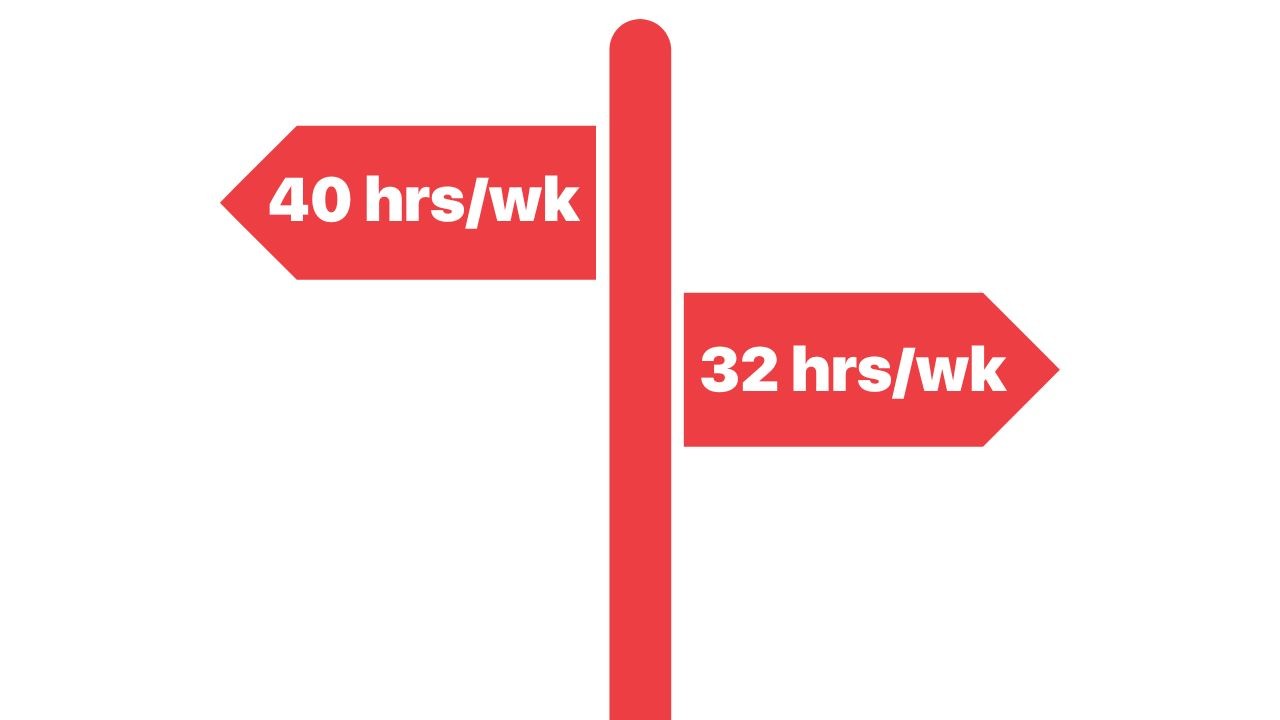
In 1940, the United States government set 40 hours as the basic workweek. Since then, pay for hours worked above 40 has been calculated at time and a half. The government passed this law only after workers engaged in massive struggles, including taking over factories until the bosses met their demands, which included not only pay increases but also an end to back-breaking workloads. But over the eighty years since 1940, everything about work has changed.
Today workers in the United States produce almost five times the products and services each hour that our great-grandparents did in 1940. Since 1940, the real value, taking account of inflation, of what we can buy with our paychecks has only gone up by less than one-and-a-half times. The difference between the rise in productivity as compared to our wages explains why we have so many billionaires while many people are living paycheck to paycheck. Corporate profits increased from $767 Billion in 2000 to $2.77 Trillion in 2021. After adjusting for inflation, corporate profits have about doubled in 23 years. Not only are U.S. workers not seeing the benefit of our higher productivity, many of us have to work a lot of overtime or get a second or even a third job to make ends meet in these inflationary times.
The President of the United Auto Workers (UAW) shocked corporate America when he announced two weeks ago that the standard workweek in auto should be cut to 32 hours with no cut in pay. He also said autoworkers should get the same 40% increase in pay their bosses have received in the last four years. While the UAW has moderated its demands in the last few days, it remains a fact that working people have more than earned the right to a shorter workweek coupled with a big raise in pay.
To have a shot at winning this goal, workers will have to organize mass movements just as radical and militant as those of the 1930s. Just like in the 1930s, workers today need to realize what many of our grandparents and great-grandparents learned from experience: that we live in a society divided into classes full of conflict over the wealth our work alone creates. We can learn something else from the successful struggles of their day; the rich may rule but by organizing we can break their haughty power and take what we need.