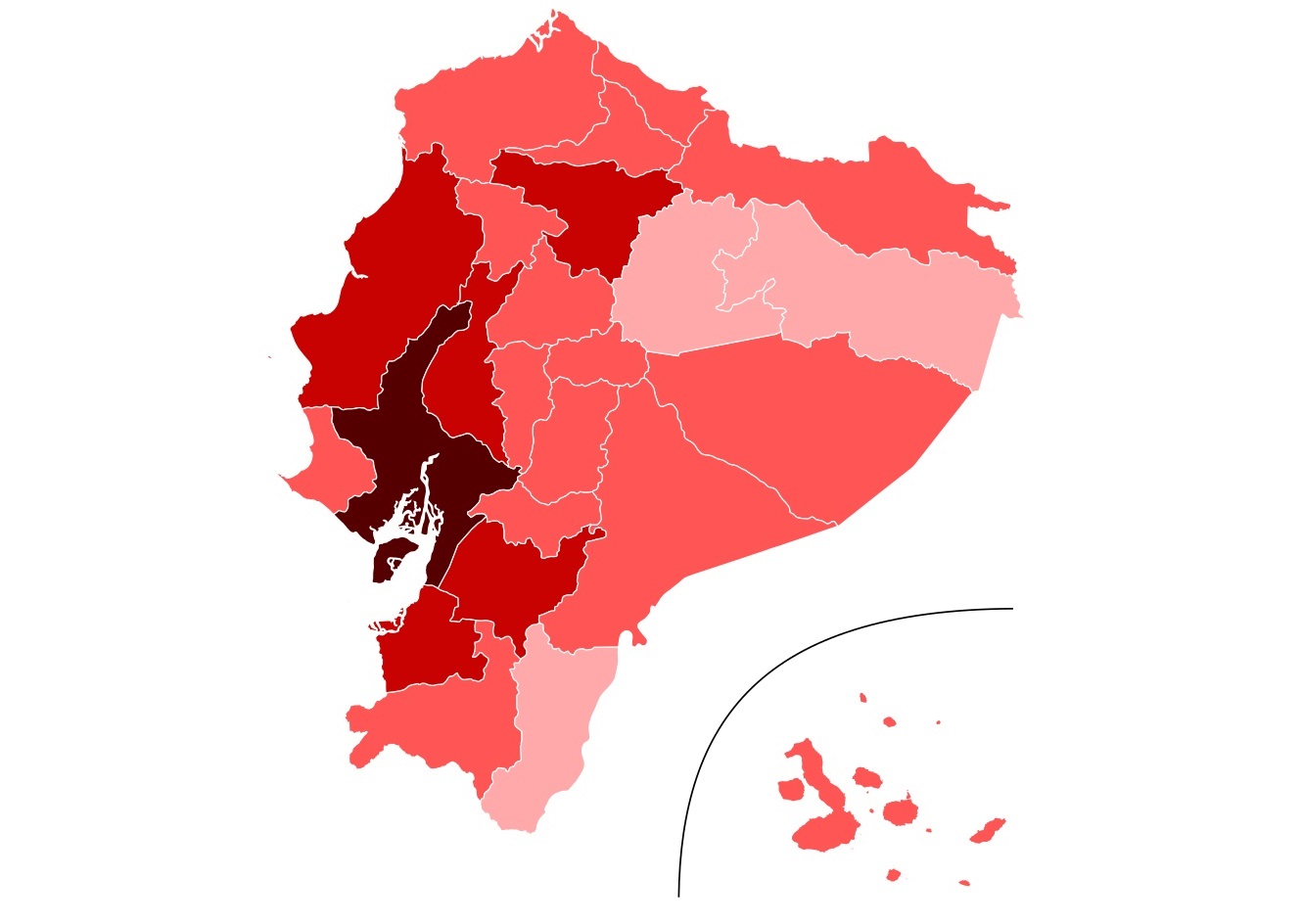
If you google the COVID-19 emergency in Ecuador, you will see videos of corpses on the sidewalks, outside front doors and in the middle of the streets. They’re covered with sheets, plastic bags, and a few are now ashes on the streets. In Guayaquil – the capital of Guayas province on the Pacific coast and the epicenter of the outbreak – people are calling and pleading the authorities to pick up the bodies of their loved ones that have died at home. In most cases, they’ve been waiting for several days as the bodies decompose and release an awful smell. With a lack of testing, most have no way of knowing who among the dead were COVID-19 victims. Hospitals are beyond capacity, patients are dying while waiting for care, and body bags line the halls.
Up until April 8th, there were 4,450 confirmed cases and 242 total deaths in Ecuador, of which 69% are in Guayas. Authorities expect the death toll to surpass 3,000 in the Guayas province alone. How did the emergency reach such a critical point in Ecuador?
Once the virus arrived in Guayaquil, the local authorities were slow to react and expressed poor judgment when they did. After the local government did take action, the citizens of Guayaquil were slow to take the quarantine measures seriously. As a consequence, the government implemented a state of emergency and a nationwide curfew. A slow response from the government and citizens, in combination with a saturated health system, helped contribute to this crisis. However, pre-existing social conditions made Guayaquil a hotspot for the outbreak.
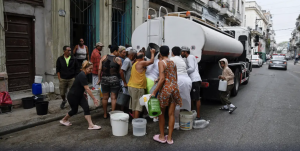
According to the local institution SICES (Integrated System of Knowledge and Social Statistics), 34% of Guayaquil residents lack basic services such as running water and indoor sanitation services, and 22% live in overcrowded homes (3 or more per room). In addition, Guayaquil – compared to other major cities in Ecuador – has the lowest number of public hospital beds per capita (1.61 per 1,000 residents) and the largest gap between the availability of private versus public medical services.
When you combine poverty and a lack of medical services, people with symptoms not only fail to receive medical treatment, but they must also continue interacting with others in order to survive. As a result, the virus spreads. When people die at home either because they can’t access or afford medical services, in a city with temperatures above 90°F most of the time, families have no choice but to remove their deceased loved ones from their houses.
As the crisis grows, the authorities and other parts of the population have blamed the people of Guayas for the growth of the pandemic, acting as if the only reason the pandemic has spread was due to them not following government curfew. However, the deep economic and social inequality in Guayas and most parts of Ecuador should be acknowledged as a key reason the country has been vulnerable to this pandemic.
Featured image credit: Wikimedia Commons