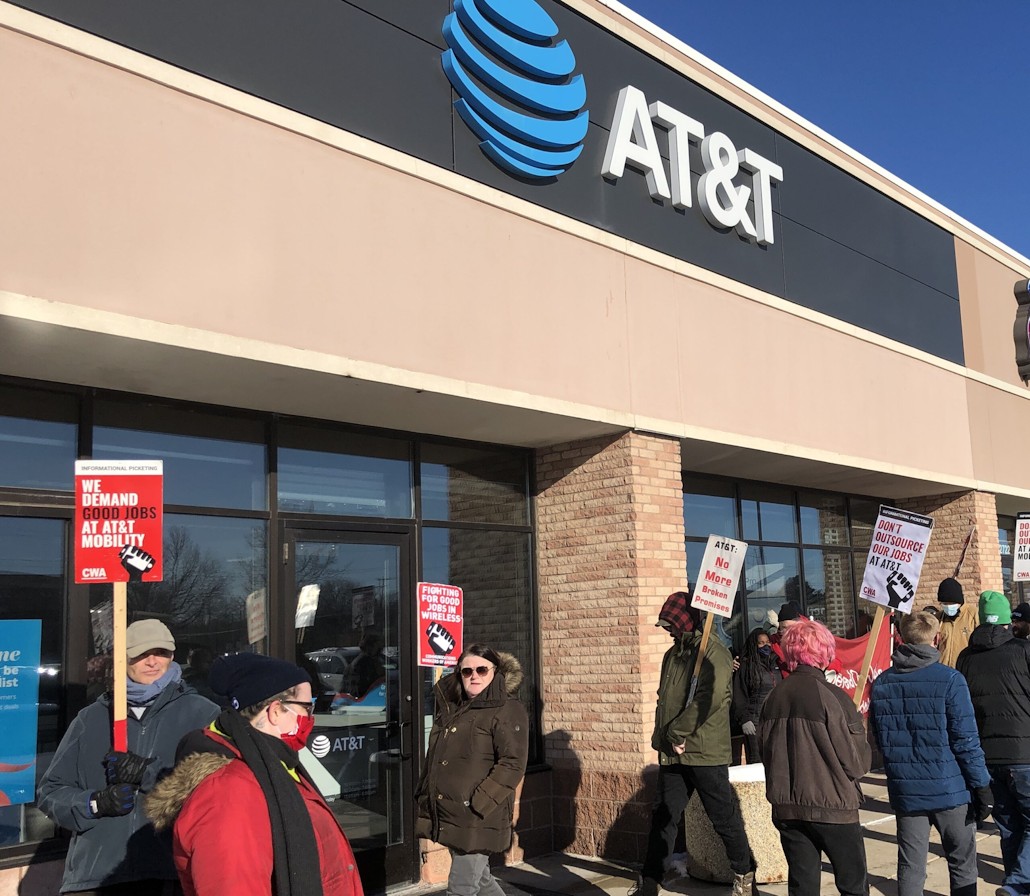
The Communications Workers of America (CWA) contract with AT&T expired on August 3, but bargaining began months earlier. Dozens of meetings between CWA and AT&T failed to bring agreement on CWA’s main demands, which include the elimination of a two-tier pay scale, strong language prohibiting contracting out bargaining unit work, blocking efforts by AT&T to raise health care charges, and a significant wage increase to counter inflation.
Saying that AT&T was not bargaining in good faith, 17,000 CWA technicians and support staff began an Unfair Labor Practice (ULP) strike on August 16. A ULP strike blocks the company from hiring permanent replacements. The bargaining teams still meet nearly every day, but the union continues to charge AT&T with only going through the motions of bargaining, for example by not empowering its bargaining team to make decisions.
AT&T is attempting to operate with non-union contractors and managers from other parts of its operations. Nevertheless, customers report that both new service orders and repairs are backed up for weeks. The nine Southeastern states are all “right to work” states and upwards of 1,500 non-union AT&T techs are not honoring picket lines. However, few union workers have gone back to work. AT&T demanded that the union schedule votes on what it deceptively called its best and final offer, but the effort fell flat on its face.
CWA members are now receiving $300/week from the union’s defense fund. However, AT&T could up the pressure by cancelling the strikers’ health benefits, which the union says it doesn’t have the money to cover. Meanwhile, CWA members working for AT&T in California have just voted down the tentative contract with AT&T. This opens the possibility that AT&T could face another strike of about 9,000 west coast workers. West coast CWA members had ample reasons to vote down a contract which included a meager wage increase adding up to only 15% over 4 years, and an increase in pensions of only 1% per year.
AT&T has successfully taken advantage of the fact it negotiates separately with different branches of the CWA covering separate groups of workers. This lack of coordination makes it easier for AT&T to impose poor contracts on all of them. Many of these contracts expire within months of each other. That CWA doesn’t engage in joint bargaining and strike action makes no sense to its members. Now that CWA members on the West Coast have rejected their contract, will the top officials at CWA take advantage of the opportunity to up the pressure on AT&T by calling a strike vote of its locals on the west coast? So far, all the top CWA officers have said is that CWA members on the west coast need to be prepared for all eventualities. If the top officers blow this opportunity to activate the potential power of a more united work force, they will give new life to the bitter old joke that the initials CWA stand for “Can’t Win Anything”