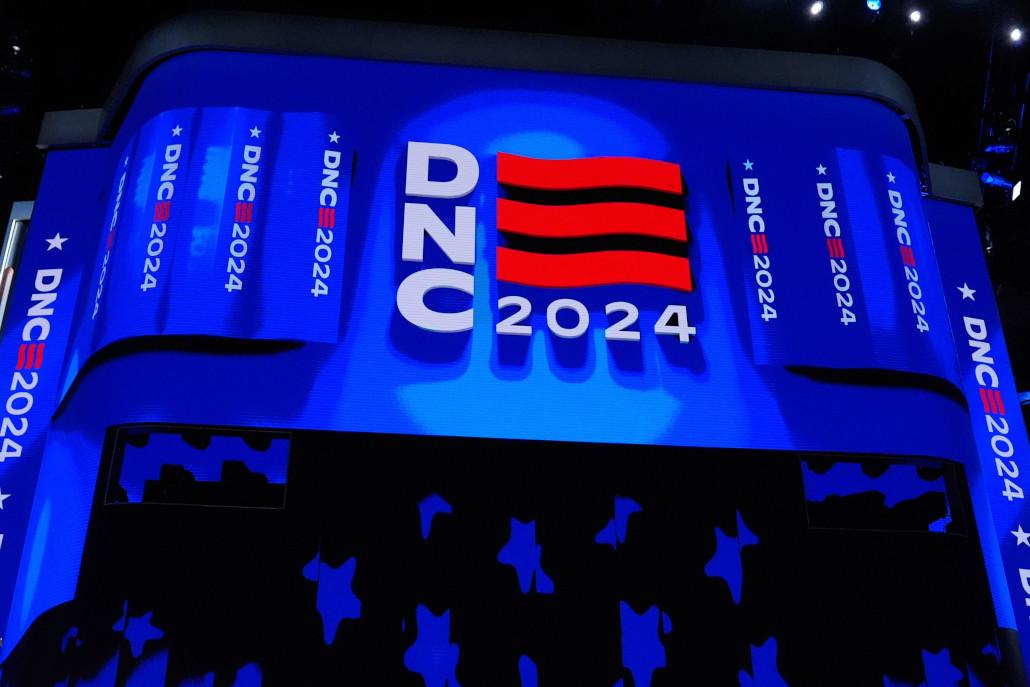

When facing a society in serious crisis, and a government that doesn’t represent our interests, how should we respond? This is the question posed by activist and organizer Tom Hayden in the opening scene of Aaron Sorkin’s movie, The Trial of the Chicago 7. He was not referring to the pandemic, nor Trump or Biden, but the nomination of Hubert Humphry at the Democratic National Convention of 1968. We hear him say that neither Humphrey nor his opponent Nixon are different enough to make a difference – that if there is going to be a change, it is going to be up to them to fight for it. Hayden was speaking at a meeting of Students for a Democratic Society (SDS), which grew out of the social discontent of the 1960s, in resistance to violent racism and the ongoing bloodbath that was the Viet Nam war. SDS was one of many groups that formed in a period when, as Hayden says in the movie, the business as usual of choosing between political candidates that at best represent the lesser of evils was no longer morally acceptable. Civil rights activists of his time didn’t wait for politicians to shove unsavory decisions down their throats, but instead banded together to fight for a society without war, corrupt politicians, racism, and inequality. This is something to remember at a time when no real solutions are coming to us from those in power.
The Trial of the Chicago 7 tells of the 1968 trial of Abbie Hoffman, Jerry Rubin, Tom Hayden, Rennie Davis, David Dellinger, Lee Weiner, John Froines, and Bobby Seale, which followed the organization of a mass protest outside the Democratic National Convention. Over the course of five days, hundreds of thousands of people demonstrated and fought to defend themselves against police who teargassed, beat, and arrested them. In the aftermath, the Chicago 7, who were originally the Chicago 8, including Bobby Seale, were arrested for “inciting a riot.” The story is emblematic of the time period, showing the organizers of the protests seeking permits for their demonstration, and being denied. It portrays the protest arising organically out of the failure of the system to respond with solutions, and so many young people in 1968 refusing to accept the notion that they had no say in the ongoing wars, inequality, and the racist injustice of society.
It’s clear that the movie must be limited in what it shows of the great upheaval of 1968, because its scope is limited to eight defendants, in the confined space of one courtroom. While an attempt is made to display what was going on outside the courtroom walls, one movie and a few flashbacks cannot encompass the sheer weight, depth, and importance of the movement, so no one will walk away from the movie with a true understanding of its breadth, or even what these eight individuals were truly like. Some who were at the trial have commented that the depictions are skewed or misrepresented by Sorkin. There are hints at tensions or misgivings between Bobby Seale and Tom Hayden. While differences and tensions along racial lines did emerge at times during the movement, this focus in the trial came out of Sorkin’s mind rather than reality. More often than not, white and black activists of the time had each other’s backs, and knew they were all putting themselves at risk in order to fight for a better world.
Other notable misrepresentations are that Tom Hayden wasn’t overly subservient to the court, and Jerry Rubin was never seduced and left heartbroken by a police spy, so be sure to take all of the characters’ personal stories with a large grain of salt. And most importantly, though there are moments in the film (we won’t include any big spoilers) that suggest that the sympathies of the anti-war organizers were focused on lost American lives, this couldn’t be farther from the truth. Unlike the current day “New York Times” style of valuing American lives over the lives of people native to other countries in war, the war resisters in the 1960s centered their protests around the Vietnamese who were being terrorized by the United States military. Condemning America’s actions was not about fighting to reclaim America’s superiority or to just protect American lives, but a criticism of its deadly imperialism. Protesters cared not only about U.S. citizens, but were were willing to risk their lives and livelihoods for all the human beings who were being murdered for the sake of the U.S’s global dominance, regardless of their country of origin.
This being said, the story of the Chicago 8 needs to be told. Watch The Trial of the Chicago 7, and remember that it doesn’t tell the whole story, and there is some important distortion. At the same time, it reminds us that our ability to stand up, resist, organize, and even win a different course for humanity is a possibility. It’s an opportunity for us to imagine banding together courageously again to resist this system that is rigged against us.