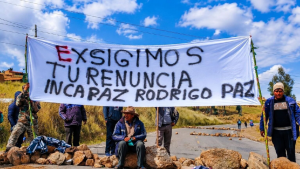
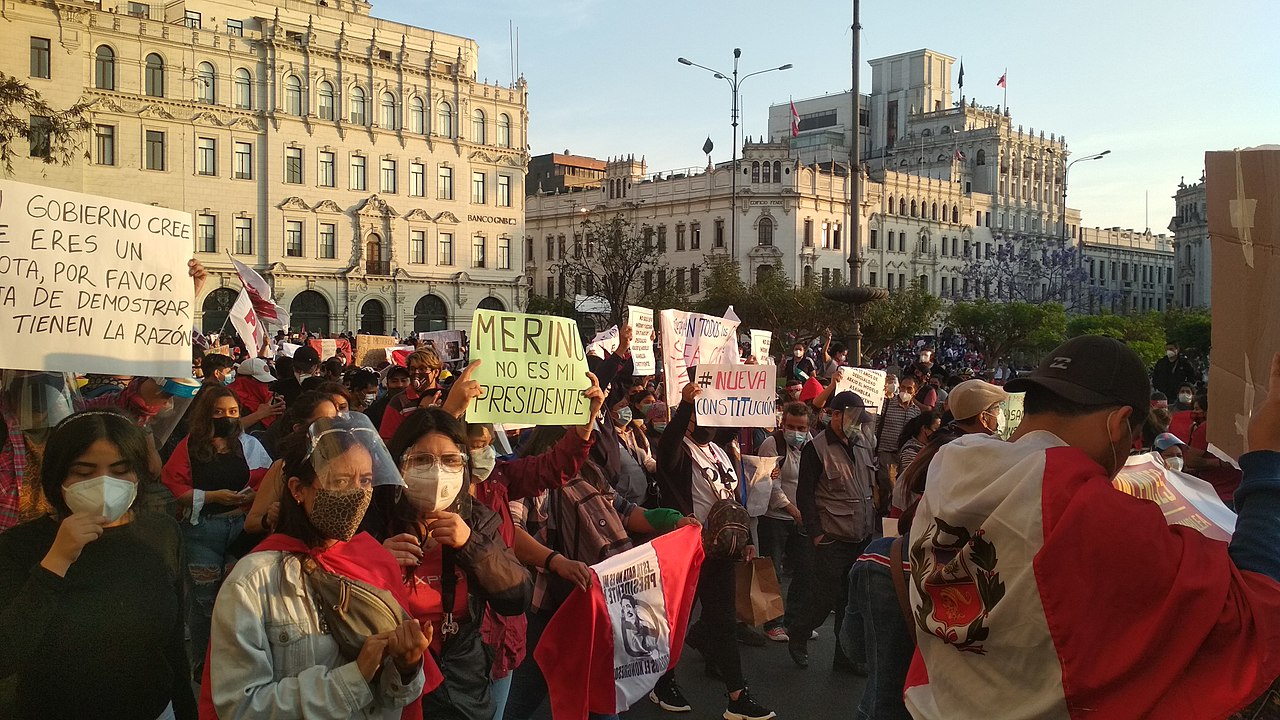
Since November 9, a mass movement of workers, the poor, and youth has swept across Peru, already ousting a President.
The pandemic has been devastating in Peru. With over 934,000 cases and over 35,000 deaths, Peru has the highest number of deaths per capita in the world, double the death rate of the U.S. At the same time, the pandemic has led to the worst economic crisis on record in Peru.
In this setting, five weeks before the next scheduled presidential election, members of parliament carried out a rushed impeachment of then-President Martín Vizcarra. Opposition members of the Peruvian Congress accused Vizcarra of corruption, claiming he accepted bribes and payouts from a large Brazilian construction company.
It’s very possible the corruption allegations against Vizcarra are true since they’ve been true for the past six presidents before him and also for the many members of Congress who voted to impeach him. Once the impeachment was carried out, a new President, Manuel Merino, was quickly voted in and appointed a new cabinet.
Many Peruvians did not doubt the allegations against Vizcarra and wanted him to face the charges in a real trial. But the rushed impeachment was seen by many in the population as an attack on their democratic rights, amounting to no more than a Congressional coup, and tens of thousands of people poured into the streets in protest.
The Peruvian National Police responded to the protests with extreme violence, killing at least two, wounding hundreds, and disappearing dozens. After the attacks, the numbers in the streets grew to hundreds of thousands across the country, calling on members of the government to resign. Five days after he was sworn in as the new president, along with the members of his cabinet that he appointed, Merino was forced to resign – the shortest presidential term in Peru’s history.
But the protests haven’t ended there. People continued to take to the streets every day, and every day the focus of the protests widens. Before the pandemic, Peru was marked by a growing inequality and a series of corrupt politicians that all benefitted from the wealth that was accumulating at the top. And now, similar to the U.S. and many other countries, these same corrupt politicians have overseen a completely failed response to the pandemic and a massive economic downturn that is devastating the majority of the working class and youth of Peru.
This explosion of anger in Peru is not unique. Many of the same conditions of inequality, corruption, police violence, and regular attacks on the working population are happening all over the world. If Peruvian workers and youth can fight back, so can the rest of us — and many around the world have already begun.