The death of Black people at the hands of police continues with a horrifying regularity in the U.S. The killing continues in spite of numerous protests and promises from politicians to end police brutality. Kehinde Wiley’s exhibit, “An Archeology of Silence,” is a direct and gut-wrenching response to this tragedy. It honors the fallen and urges visitors to consider society’s role in this ongoing injustice.
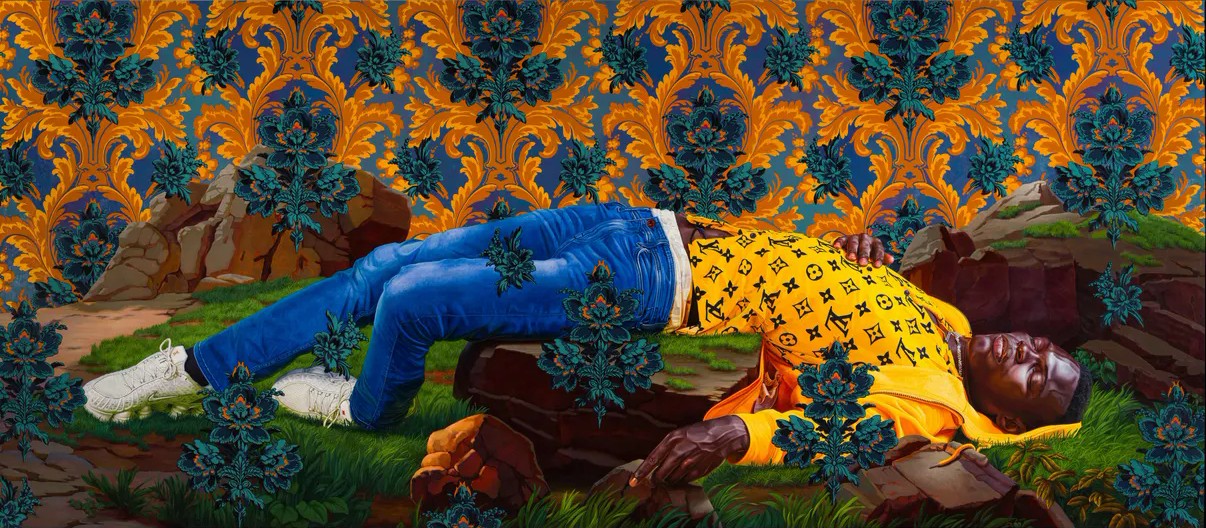
The exhibit ranges from small paintings that ask you to walk up close and inspect each brush stroke, to imposing sculptures over 17 feet tall that make you feel small and vulnerable. Each piece focuses on a Black person against a backdrop of vivid flowers and plants, usually in a restful pose, eyes closed. Wiley does a magnificent job at illuminating his human subjects and making them feel heavenly, drawing inspiration from classical art pieces and lighting techniques. He flips what you usually would expect in such paintings and statues on its head – making artwork that portrays ordinary people in the style that other artists have used to honor kings and generals. At the same time, he intentionally makes us question why we’re so used to seeing Black people lying on the ground.
Walking around the exhibit, the silence is evident. Each piece has so much to say, but we, as visitors, can do nothing but watch. Though we are meant to honor the people in the artwork, it has us grapple with the discomfort of being used to having Black bodies as subjects of study. In news stories of all the killings, in pop culture and social media, we are aware of the pain inflicted on the Black community. Still, it feels that our society remains a silent witness. Perhaps it’s because we’re stunned at the injustice, or the beauty of the artwork – it’s silence all the same. The exhibit makes us ask: “What will it take to finally bring justice to the fallen and their families?”
“An Archeology of Silence” offers a space to grieve, to be angry, to be struck by beauty and sorrow. It invites us to honor the lives stolen by this violent system. Of course, to truly honor the dead, we must be silent no more.
The exhibit is at the de Young Museum in San Francisco until October 15. Saturdays are free for residents of the Bay Area.