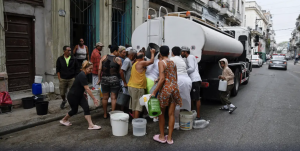
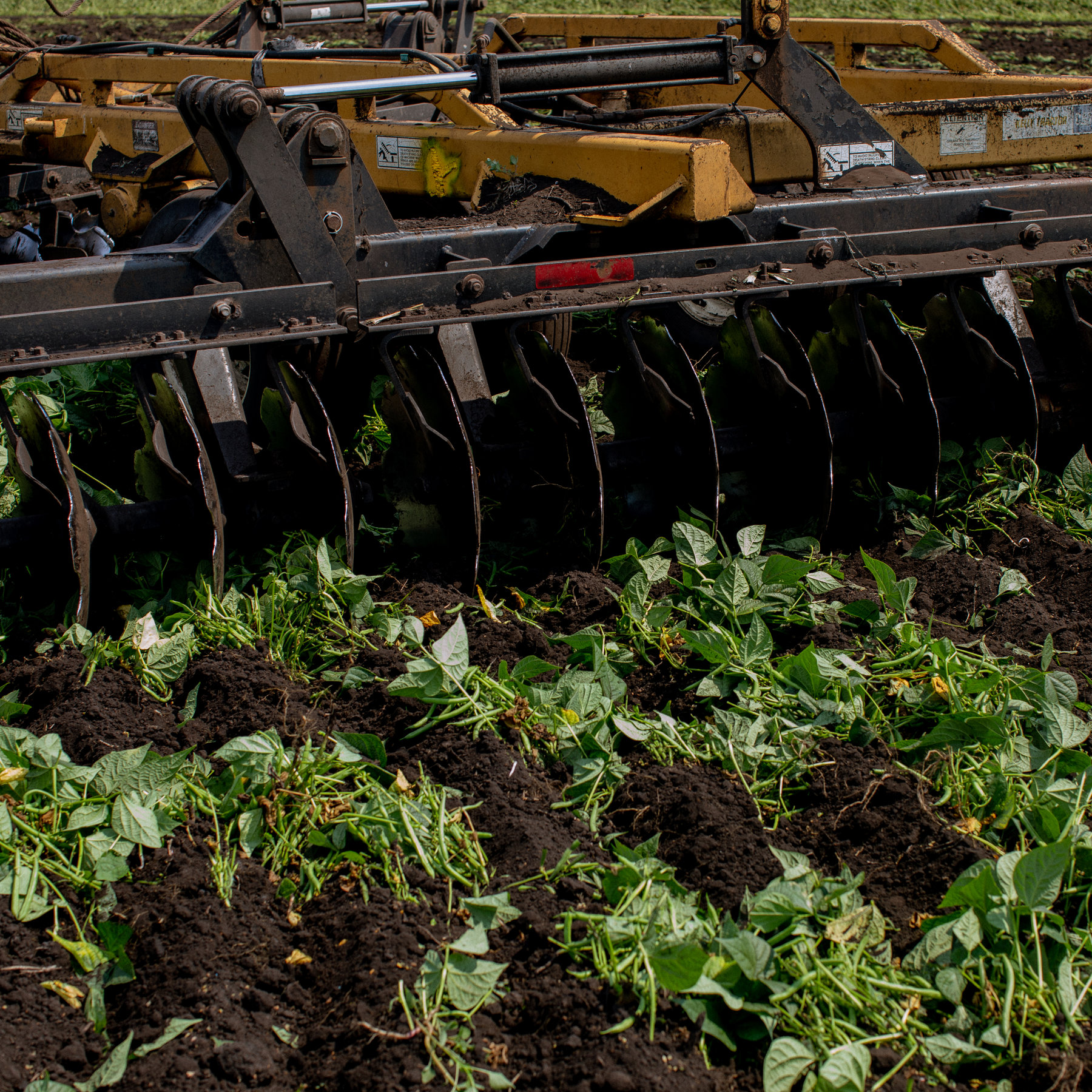
It’s totally insane that companies that produce food are destroying massive amounts of crops, milk, and other products while people across the United States are standing in lines at food banks! And people across the world are standing in even longer lines, and many are in fact starving.
Why are the agribusinesses destroying food in the midst of the pandemic? Because restaurants, schools, colleges, cruise ships, sports arenas, and other large commercial food purchasers are shut down. And they normally buy more than half of the food produced in the U.S.
There are two different supply chains that distribute food – the consumer side, which serves grocery stores and convenience stores, and commercial, which services these larger buyers. Both are complex and rely on just-in-time production. They’re also both extremely concentrated, meaning only a few companies deal with farm to consumer/commercial distribution. This means supply chains are very vulnerable to disruptions.
Additionally, the harvesting and packaging of food for consumers requires a lot of labor, which is harder to come by in the pandemic. It also requires different processing and packaging than for commercial use, and not all farms have the necessary equipment for a transition. So as a result of this plunging commercial demand, a worsening shortage of labor, and the small window available to pick produce, it has simply become cheaper to let it rot in the fields.
If we lived in a centrally planned economy, it would be easier to absorb this excess food and distribute it to where it’s needed. Some states have been working on converging these two supply chains, allowing commercially prepared food to be available direct to consumers, but production and distribution are so disorganized under capitalism, that this isn’t happening fast enough.
The food system was not designed to feed the most people the most efficiently. It was developed, like the rest of the capitalist economy, to make profits. It’s clear in moments like these, that organizing for profit, instead of need, will always spell disaster. The food system is just one example of capitalism’s inefficiency, especially in the face of a crisis.
Even before the pandemic, more than 25,000 people around the world were dying everyday because of hunger, mostly children! Even in “normal times,” the people who control food production and distribution don’t care about ordinary folks.
It is definitely time to change the system!
Featured image credit: Rose Marie Cromwell / NY Times