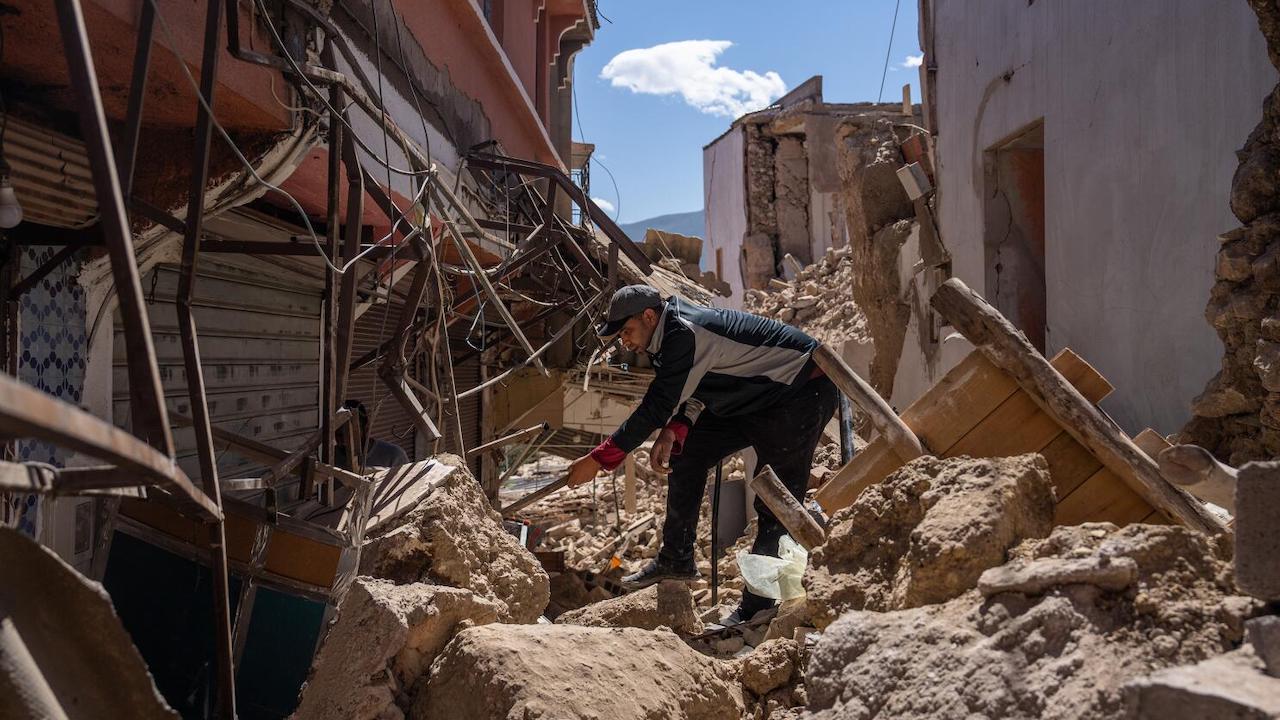
On September 8, an earthquake of magnitude 6.8 hit southern Morocco, 50 miles southwest of the city of Marrakesh. The earthquake devastated the region of the Atlas Mountains. Nearly three thousand people are believed to be dead after the earthquake and thousands more are injured.
The descriptions of what’s happening on the ground are horrendous, with whole towns reduced to rubble. Poor infrastructure and road access have meant that emergency services cannot reach many towns and villages that have been destroyed. In some cases, the dead have been left in the sun and open air because there is no one to bury them. In other towns, people have had to bury bodies with their bare hands because there are no other tools. Survivors are left to huddle in the cold night without electricity or heating.
The devastation this earthquake caused has been anything but natural, however. Northern Morocco, along the coastal cities of Casablanca, Tangier, and Rabat, the country’s capital, are highly industrialized and developed. But southern Morocco, where the earthquake hit, has been neglected by both the Spanish and French colonial regimes that ruled Morocco until 1956, and by the post-independence monarchy that has ruled Morocco since then.
The government has refused to invest in basic infrastructure in the region. The main reason why it has taken so long for aid to reach the region is because the roads in the Atlas Mountains, where the earthquake took place, are extremely poor. It has been incredibly difficult for emergency services to reach the region. There are few hospitals located in the Atlas Mountains — most people who were injured in the earthquake had to be transported to Marrakesh. The hospitals that are located in the affected area of the earthquake are underfunded and understaffed, and have been completely overwhelmed by the number of people injured by the earthquake.
The king of Morocco, Mohammed VI, one of the wealthiest men in the world, has made just three public appearances since the earthquake, and has yet to visit the site of the earthquake itself. The spokesman for the government has made just one appearance to announce a fund for victims of the earthquake — but refused to take any questions. This response of indifference to the suffering is expected from a government that is only concerned about the interests of the wealthy and the big corporations, and has always neglected the needs of the poor and working class in Morocco.
This earthquake may be a natural disaster — but the consequences are anything but. Like the recent dam collapse in Libya, or the earthquake in Turkey earlier this year, the death and destruction from this earthquake are results of the policies of the capitalist system and the governments that serve to defend it.