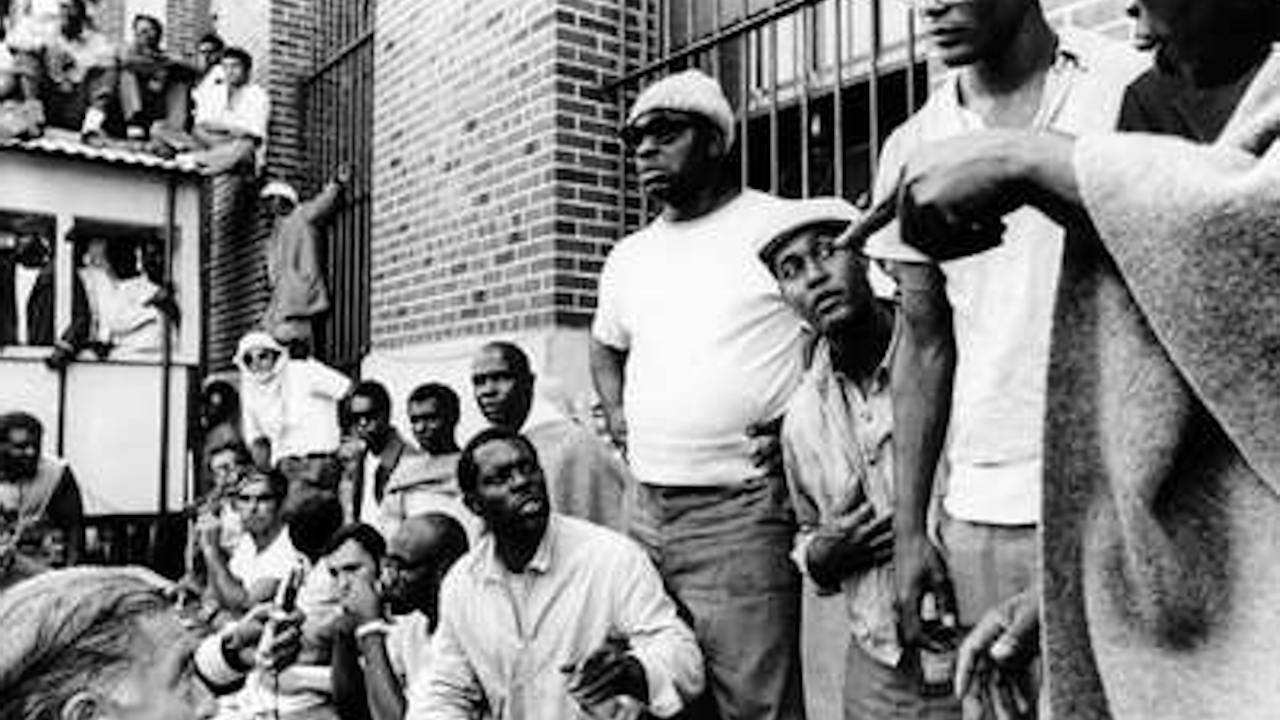
September 9, 2021 is the 50th anniversary of the beginning of the rebellion that took place in the Attica Correctional Facility in New York. It immediately became a major symbol for the resistance of prisoners.
Prisoners faced harsh conditions. They were kept in cells for up to 16 hours per day. The majority Black prison population was subject to constant racist harassment and violence from the prison guards, who were almost all white.
The uprising took place in the context of the struggles of the 1960s and 1970s, including the Black Power movement, Puerto Rican movement, and Vietnam anti-war movement. Weeks before the Attica uprising, George Jackson, a Black revolutionary held in San Quentin State Prison in California, was murdered by guards, setting off enormous anger in prisons across the U.S. The Attica uprising began in response to events that took place on September 8, when a fight between two inmates evolved into a confrontation between some inmates and guards. On the following day, September 9, the guards punished one of the prisoners who was involved in the scuffle by keeping him locked in his cell during the breakfast mealtime. Other prisoners opened his cell. When officials found out, the inmates expected punishment and fought back against the guards. This open rebellion spread quickly throughout the prison. By noon, it was reported that the prisoners were in control of around half of the prison by using makeshift weapons. They held 42 officers and other prison employees hostage. The hostages faced almost no violence from the prisoners and were used as a way to push for negotiations with prison officials.
As prisoners were able to control their sections of the prison, they began to organize themselves by drafting a list of demands, electing a negotiating team, and creating a medical team and a security team. Among the demands were better medical treatment, religious freedom, better wages for work, an end of physical abuse, access to basic necessities like toothbrushes and showers every day, and access to newspapers and books. They demanded outside observers to be present during the negotiations, including civil rights lawyers, journalists and others active within the Black Power movement.
One of the members of the negotiating team, 21-year-old Elliott James “L.D.” Barkley, shared a statement with the press, saying that, “We are men! We are not beasts and we do not intend to be beaten or driven as such. The entire prison populace, that means each and every one of us here, have set forth to change forever the ruthless brutalization and disregard for the lives of the prisoners here and throughout the United States. What has happened here is but the sound before the fury of those who are oppressed. We will not compromise on any terms except those terms that are agreeable to us. We’ve called upon all the conscientious citizens of America to assist us in putting an end to this situation that threatens the lives of not only us, but of each and every one of you, as well.”
Despite previous racial tensions in the prison, there was a sense of unity. One Black rebel said, “I never thought whites could really get it on…I actually cried it was so close, everyone so together.”
Updates from negotiations took place in open-air meetings for all of the prisoners to weigh in and feel their collective strength. In the negotiations, the prison officials were able to agree to almost all of the demands except for two main areas, amnesty for the prisoners involved in the uprising and the firing of the current prison warden. Negotiations broke down. But behind the scenes, the Commissioner of Corrections, Russell Oswald and New York Governor Nelson Rockefeller secretly plotted to retake the prison using the state police.
On the morning of September 13, Oswald cynically offered a negotiations proposal that he knew the inmates would not agree to. Following the rejection, troopers with shotguns and tear gas were sent in to retake the prison. Within 15 minutes, the troopers put down the rebellion and took control of the prison. They shot 128 inmates, killed 9 hostages, and killed 29 inmates. Prisoners were shot even when they were trying to surrender. A follow-up commission on the event later described it as the “bloodiest one-day encounter between Americans since the Civil War.” The media was prevented from the area and only learned of the brutality through leaked reports by police and survivors.
In the aftermath, Oswald and Rockefeller both claimed in the media that the hostages died because their throats had been slit by the prisoners. But medical examinations made it clear that these hostages died from bullet wounds from the guards.
As we look back on the Attica rebellion, we recognize the courage of the prisoners and brutality of the prison officials to defend their system. Attica is still a reminder for all of us of how people are capable of standing up for themselves, no matter how oppressed we might be and no matter how bleak the situation might be. Whether we are behind bars or not, we can take the memory of Attica to remind us of what it truly might mean to live as dignified human beings and fight to free ourselves.