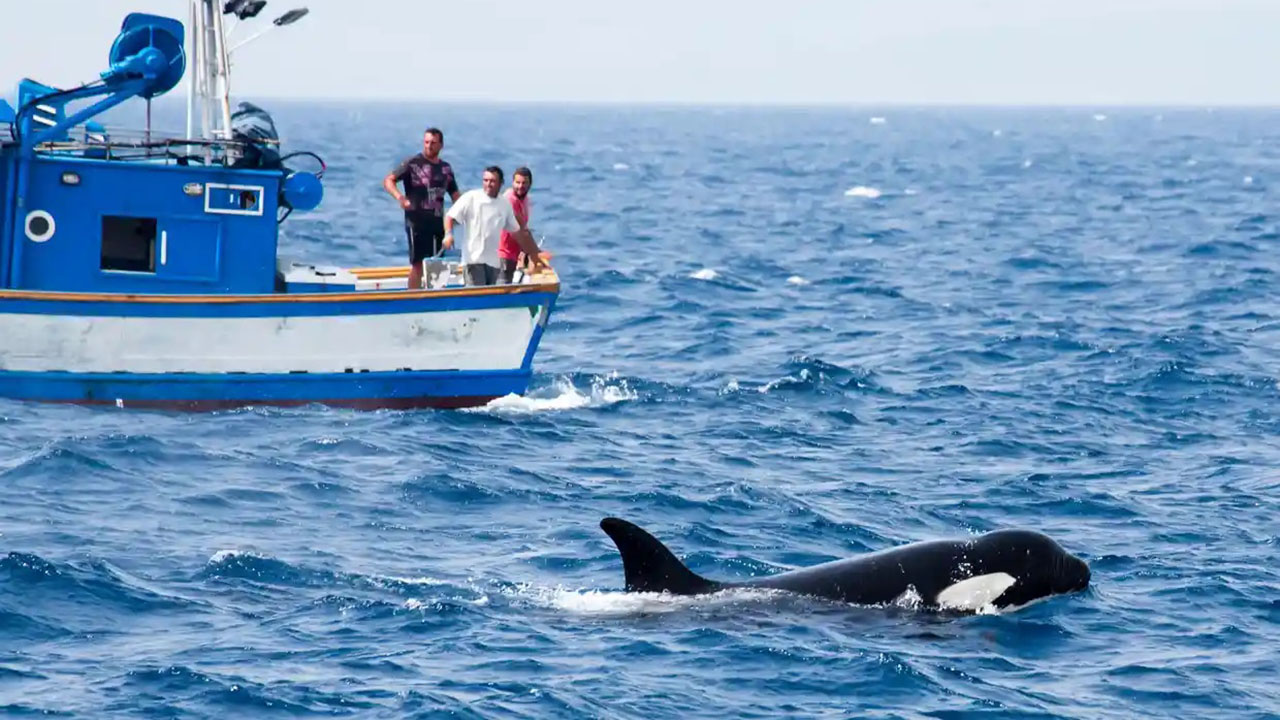
Reports of orcas ramming boats near the coasts of Spain and Portugal have been flooding in. In July and August, in numerous separate incidents, sailors reported being rammed repeatedly by orcas (also known as “killer whales,” though they are actually the largest of the dolphins), sometimes for over an hour, with rudders bitten off, boats turned around and even partially lifted, many too damaged to continue. One report was of a boat surrounded by nine orcas coordinating a boat-bashing session the sailor was convinced was “totally orchestrated.” The orcas were communicating with each other so loudly during the ordeal, the sailors had to shout to hear each other. Another report said, “at least one pod appears to be pursuing boats.”
Orcas are highly social and intelligent mammals. Modern science is only now discovering the role that culture plays in orcas’ lives, shaping what they eat, how they have fun, choose mates and communicate. We now know that pods of orcas sharing the same waters can have vocalizations from pod to pod as different as Greek is from English. Other orca pods sharing waters may only eat chinook salmon, while others prefer sockeye. These are cultural traits passed down from mother to calf for generations.
Scientists are not sure how to explain the orcas’ behavior. But when we look at the plight of these orcas in the waters off Portugal and Spain, the picture becomes clearer. Not only are they endangered, there may be only thirty to fifty individuals left. Their main food source in the region, bluefin tuna, is being overfished and the orcas seem to know who is responsible. Bluefin tuna is highly prized for sushi and can fetch extraordinary prices. One weighing 612 pounds was sold at the 2019 new years auction in Japan for three million dollars! Nets, lines and hooks fill the waters, trapping, maiming and killing orcas in the quest for tuna profits. Then there is evidence of fishermen attacking orcas out of anger. It turns out tuna is so overfished the orcas have resorted to eating them off the fishing lines. The relentless push for profit is not only driving tuna towards extinction, it’s also pushing orcas to the brink.
So maybe the rudder-ripping orcas are getting revenge for murdered calves caught in lines? Maybe it’s driven by anger at people for stealing all their fish and attacking orcas? Maybe they loved how quiet it was during the COVID lockdown, and now they’re angry with all the noise of boats invading their waters?
This sort of behavior is not unheard of by other sea mammals. “Moby Dick” is the story of the white whale who takes revenge on sailors who are killing whales for oil (which was extracted from their blubber), turning the hunters into the hunted. Herman Melville’s famous book was inspired by true events that took place in the South Pacific in the early 1800s. “Mocha Dick: Or The White Whale of the Pacific,” published in 1839, was explorer Jeremiah N. Reynolds’s collection of first-hand accounts of an albino sperm whale that would strike back when attacked by harpooners. He was feared among sailors. When he was killed in 1838, while supposedly helping another whale, they found the remnants of 19 harpoons in his 70-foot-long body. The sinking of the whaling ship, the Essex, in 1820 which was rammed twice by a sperm whale, and the written accounts by survivors Thomas Nickerson and Owen Chase also inspired Melville, as well as the basis for the more recent book and movie “In the Heart of the Sea.” And these were not the only reports of whale attacks on ships during the long and violent history of killing whales for profit.
Many humans have become used to seeing animals caught, caged or killed without a fight, or an entire species driven to extinction without a rebellion or slaughtered by the ton with barely a cry. So, we are amazed when a mammal seems to understand that our actions are in conflict with their lives and gets organized. We all depend on the health of this planet for our existence. And maybe our not-so-distant relatives in the oceans will awaken us to the reality of the societies we live in that put profits before our well-being and theirs. Maybe they will encourage us to take action. Until then, long live the Moby Dicks of the oceans!