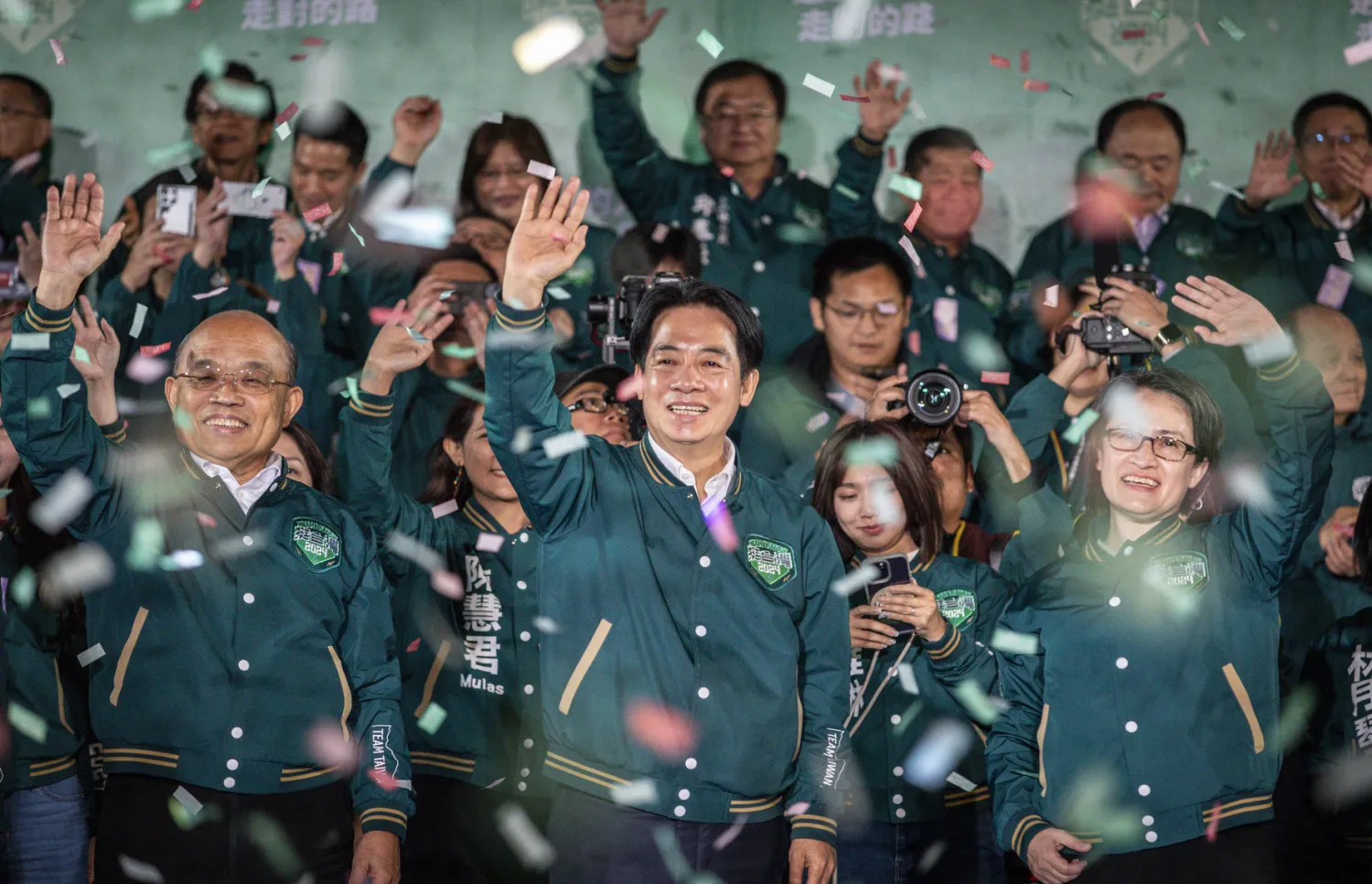
On Saturday, January 13, Taiwan held its presidential and legislative elections to determine who will replace the term-limited president Tsai Ing-wen of the Democratic Progressive Party (DPP), who has served two four-year terms.
The presidential election, which was conducted using single-round plurality voting, resulted in the victory of the DPP’s Lai Ching-te, the current vice president, with 40 percent of the vote. Lai’s opponents were Hou You-yi of the Kuomintang (KMT, or Chinese Nationalist Party) and Ko Wen-je of a relatively new third party, the Taiwan People’s Party (TPP). Hou, who received 33.5 percent of the vote, is a former director of the national police and former mayor of New Taipei City. Ko, who received 26.5 percent of the vote, is a former mayor of Taipei City.
The DPP supports Taiwanese independence from China and closer relations with the U.S., although Lai stated that he intends to keep the status quo and not declare independence outright. The KMT and TPP favor easing tensions with mainland China. The KMT traditionally supports the 1992 Consensus with the mainland’s Chinese Communist Party (CCP), which defines “one China” that includes Taiwan, though it disagrees with the CCP on who is the legitimate government of China. The mainland-Chinese government has threatened to attack Taiwan if it ever makes a formal declaration of independence.
In the legislative elections, conducted using a mixture of district-based plurality and party-list proportional representation, the DPP lost its majority, winning 51 of 113 seats. The KMT won 52 seats, and the TPP won eight seats. Two KMT-aligned independent candidates were also elected.
The TPP appealed to younger voters who were dissatisfied with the traditional KMT-DPP two-party system that was seen as unable to solve corruption and a rising cost of living. Since neither major party won a legislative majority, the KMT and DPP will have to appeal to TPP legislators to implement policy.
The Chinese government has previously called the DPP a “party of separatists” and banned Lai and his running mate, Hsiao Bi-khim, from entering mainland China.
Immediately after the election, the U.S. Secretary of State Antony Blinken congratulated Lai, and an unofficial U.S. delegation was sent to Taiwan on Monday to meet Tsai, Lai, and Hsiao, aggravating the Chinese government.
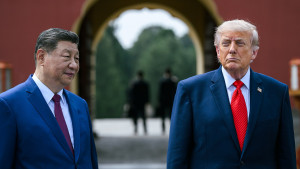
Taiwan is caught in the middle of an economic competition between the U.S. and China that threatens to escalate into a military conflict. A dispute over Taiwanese independence could be a spark that starts a war. The U.S. has conducted war games with other countries in the South China Sea in 2023 and sold weapons to Taiwan, while China has been regularly deploying military aircraft and ships near Taiwan. Both the Chinese and U.S. imperialists see the people of Taiwan as pawns in the superpowers’ military game of chess.