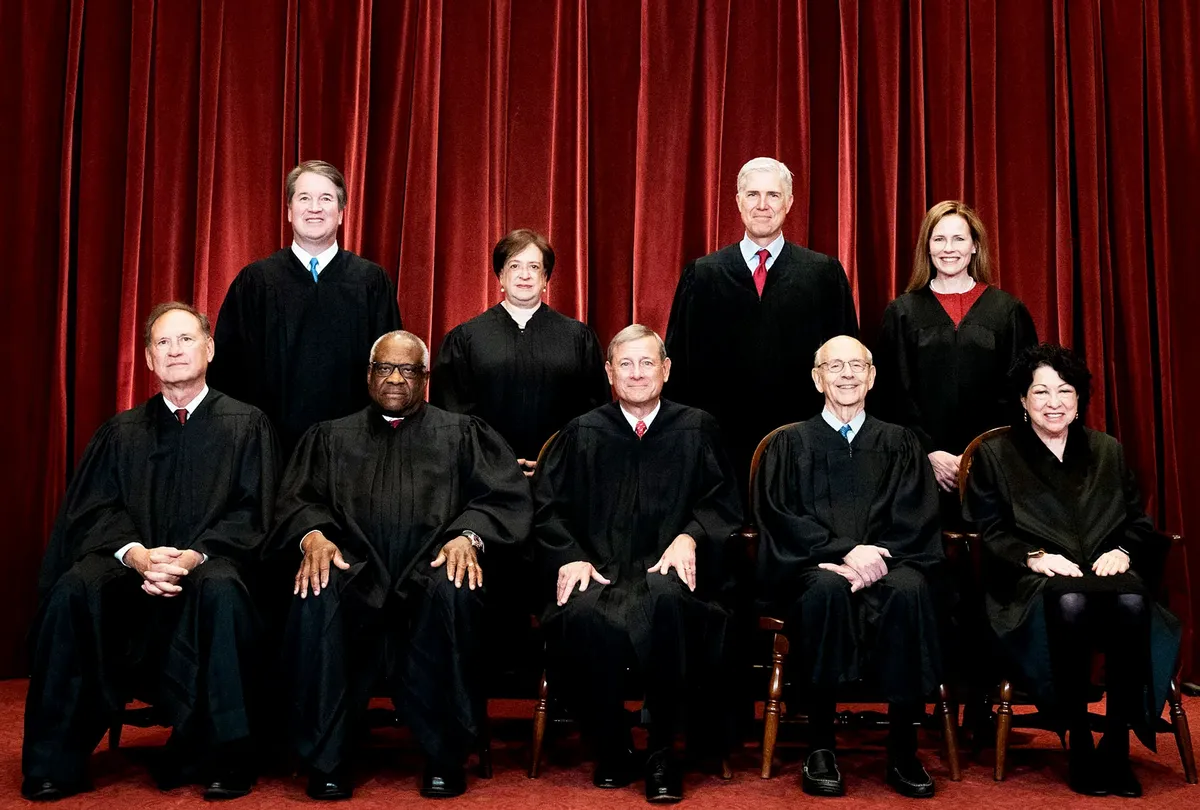
The U.S. Supreme Court ruled 6-3 last week that the Occupational Safety and Health Administration (OSHA) was not allowed to mandate that companies with over 100 employees require their employees to be vaccinated. This ruling indicates yet again just how little the Supreme Court cares about the health and safety of workers.
We can and should be critical of state mandates for vaccines and many other things. We should instead rely on our own informed understanding of medical science and public health needs in making our decision to get vaccinated. Nevertheless, this case is a blow to workers. This is because tens of millions will remain unvaccinated, giving the virus more unvaccinated bodies in which to spread and evolve into new variants, killing thousands more along the way. This ruling shows that the Supreme Court simply does not care if workers get sick and die, and that it is simply unwilling to do anything to slow the spread of the virus.
The ruling has little to do with health considerations. The purposes behind it is to free corporations from regulations that cut their profits. OSHA has officially one main task: keeping workers safe and healthy on the job. Over the decades, it has enacted thousands of rules and regulations that businesses are supposed to follow to ensure their workers a safe and healthy work environment. The Supreme Court has previously ruled that Congress and the Supreme Court should defer to the expertise of administrative agencies in cases like this. But its latest ruling says that OSHA has overstepped its boundaries by trying to enact a mandate designed to protect workers. This is laughable. If anything, OSHA doesn’t do enough to prevent exploitative bosses from putting workers in hazardous conditions. Injuries and deaths of workers occur every day due to corporations cutting corners and endangering their workforce. And now the Supreme Court wants us to believe that OSHA would be doing too much by protecting workers from COVID?
The ruling is easily understood if we listen to the bosses themselves. As one loyal spokesperson for the capitalist class recently wrote, “Placing constraints on the administrative state is a defining concern of the Roberts court.” In other words, businesses hate regulations that protect workers. They and their allies in government (including on the Supreme Court) are using this ruling to limit OSHA’s ability to make and keep workplaces safe. The Supreme Court once again demonstrates its loyalty to the capitalist class, and shows just how little it cares about us.