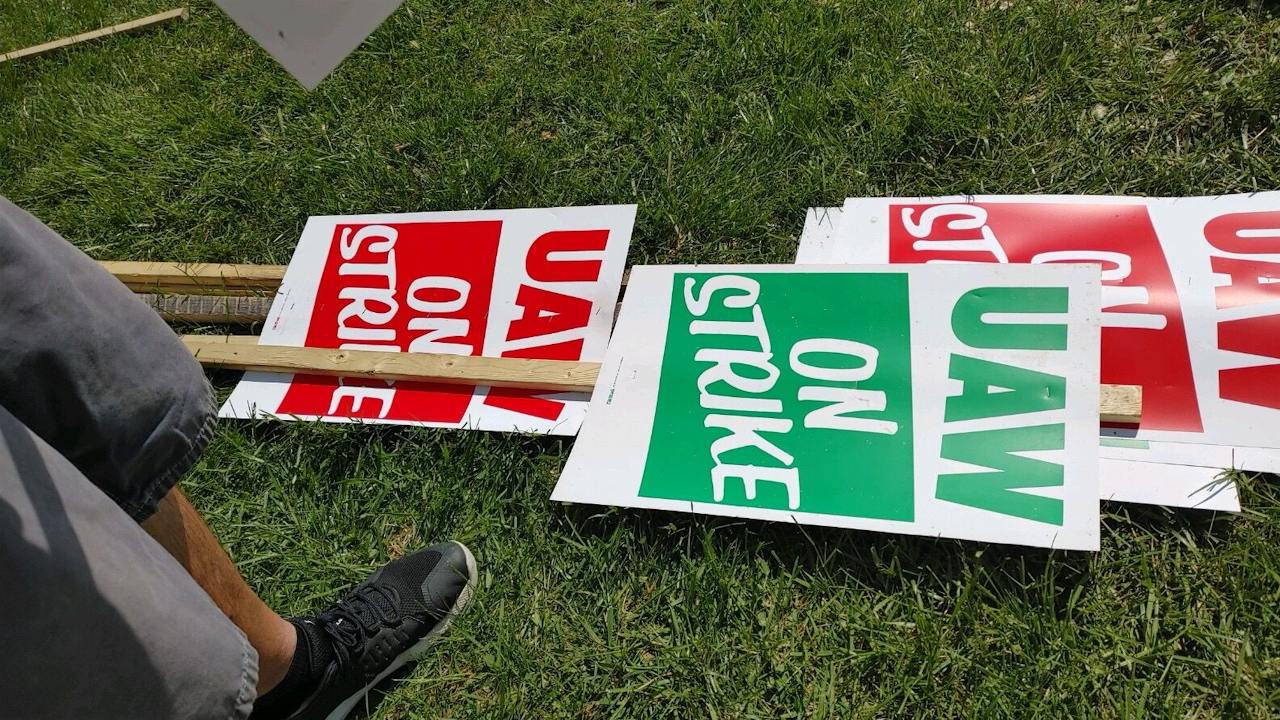
On April 17th, 2,900 auto workers went on strike at the Volvo truck factory in Dublin, Virginia. The strike was solid, and shut down the largest Volvo truck factory in the world. But thirteen days later United Auto Workers (UAW) officials told striking workers they should go back to work, the strike was over, and that only later would they learn what had been agreed to in order end the strike!
One month earlier, 98% of the 2,900 workers had voted to strike. They wanted an increase in pay, but they also wanted to stop the rising costs of their health care, to end a two-tier wage system that puts newer workers at a significantly lower pay rate, and to hold off the use of “alternative work schedules” that inconvenience workers while giving management more flexibility in scheduling.
What they got was something different. The new contract – which was not shared openly before UAW officials negotiated an end to the strike – instead included an increased worker contribution to health care costs and a higher deductible, acceptance of the alternative work schedules, and the continuation of the two-tier pay scale. UAW International leaders had negotiated a contract that agreed to almost all the things their rank and file were against!
At first the UAW didn’t want to share the text of the contract with members. Instead they put out a pamphlet of “highlights,” focusing – of course – only on “the good stuff.” But when members did get hold of the actual agreement, they were angry. And when they voiced their unhappiness, a member of the UAW international leadership told one member “if you don’t like the agreement, you can go work somewhere else.”
This strike and its outcome highlights a consistent conflict between union bureaucrats and rank-and-file workers.
On May 16th the Dublin workers refused to ratify the sellout contract, voting 91% against. As of now, the workers are back in the factory, with no new contract and no date set for more negotiations.
The workers of the Dublin Volvo factory showed that they don’t need to accept a bad contract. That’s a good thing, but workers can do much better than just say no to bad contracts. We can organize ourselves and build our power on our own, with or without the so-called official “leaders.” Just like workers don’t need the boss, we sure don’t need a bad union leader! If workers organize and stand together, we can fight effectively with or without union officialdom.