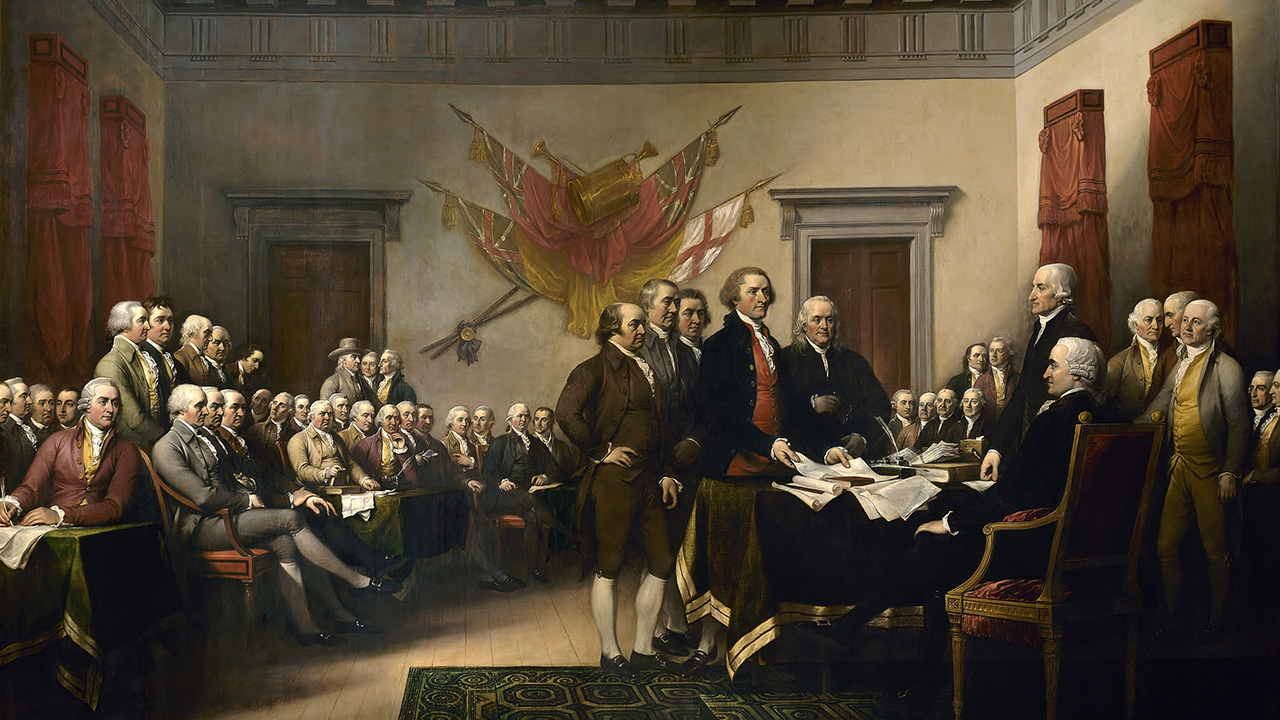
July 4, the United States celebrates Independence Day. But what does that mean? And independence for whom?
On July 4, 1776, thirteen colonies on the continent of North America declared themselves to be independent from Britain, after a year-long conflict against British soldiers. The American Revolution, the struggle for national independence, lasted for seven more years. This struggle was in response to years of taxes imposed on the American colonists, due to Britain’s rising military debts from its imperialist plunder in India and Canada. The colonists also revolted against Britain’s strict control over the colonists’ access to markets, credit, and trade. The Americans had had enough of the British ruling class siphoning off and impeding the growth of their wealth. They were also sick of being a colony ruled over by a foreign power with no political rights.
American colonists resisted British rule by boycotting and rioting, confronting customs men and soldiers, and burning down tax and other government offices. The core of the resistance was supplied by small traders and landowners, but common people also joined the fight with the goal of gaining their own rights and liberties. The rich wanted the freedom to make greater profits on their own terms. The working masses opposed the foreign occupation of their country. And it was ordinary people that did the bulk of fighting and dying for the ideas of “Life, Liberty, and the Pursuit of Happiness.”
But the Constitution that resulted from the American Revolution protected the rule of property, including the enslavement of the black population. It defended free markets rather than free people. The new country was governed by a ruling elite of landowners, merchants, and bankers. With the end of British rule and the reduction of the political domination of the southern plantation owners, the American capitalists were able to pave the way for capitalism to develop. They were able to enrich themselves, within the confines of their own independent nation state.
The American Revolution in 1776 won independence from the imperialist power of the day. Later the American Civil War of the 1860s ended the system of chattel slavery. It opened up the country for unobstructed industrial development on the backs of the working class, using racism to try to keep the working class divided.
The task of our next revolution will be to take society out of the hands of the One Percent and put it in the hands of the majority. That will be the true American Revolution deserving of a celebration.