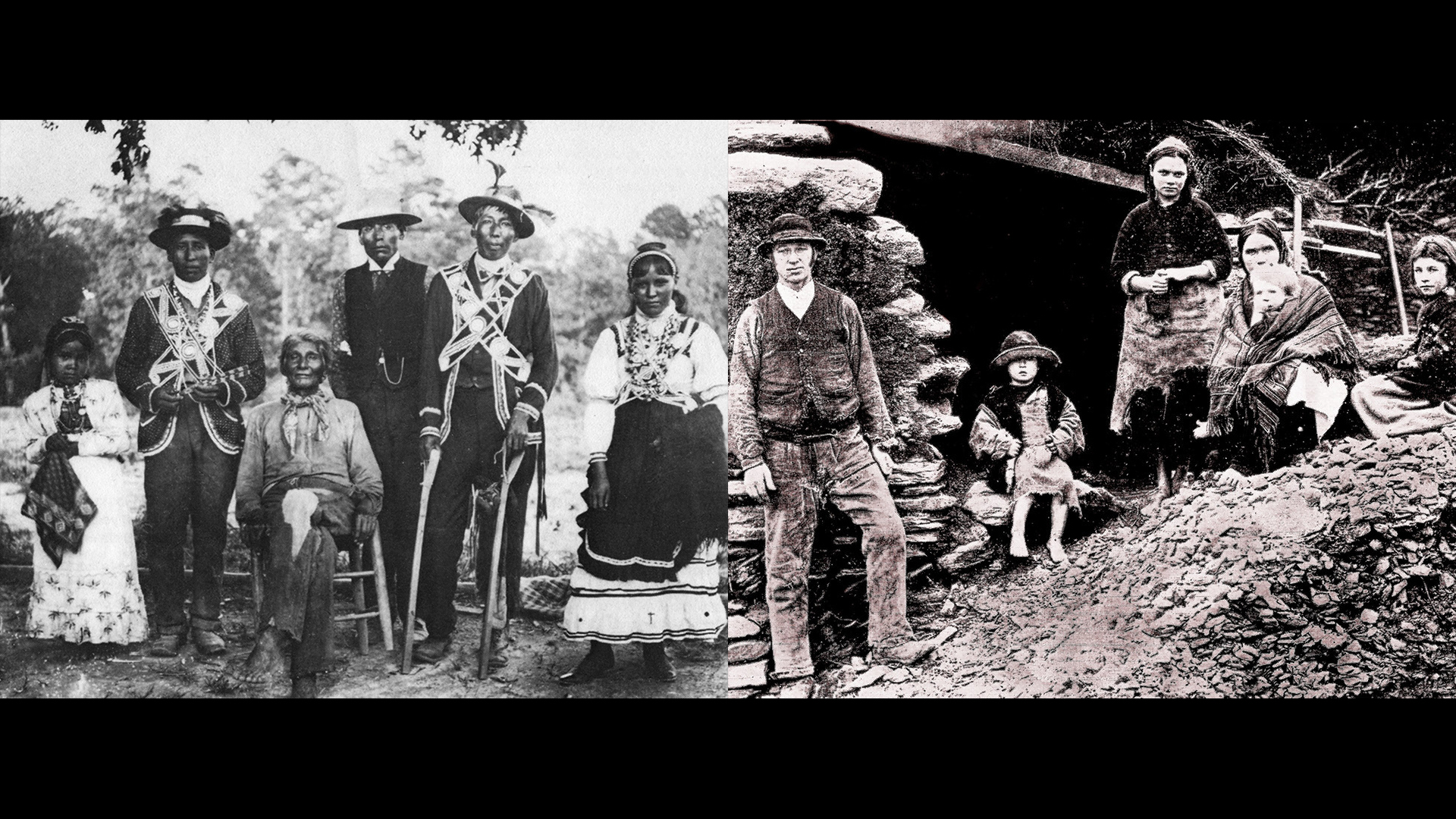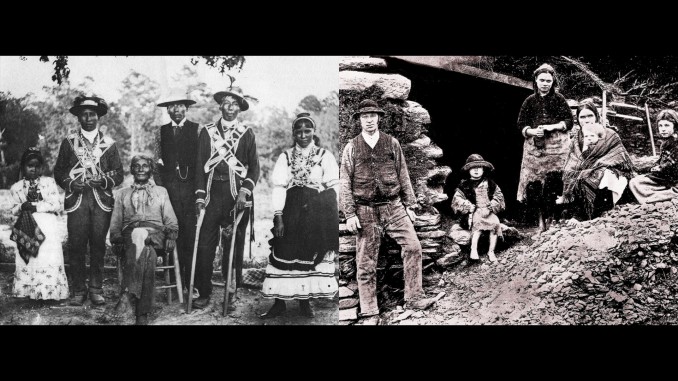
Over $2 million has been donated by people around the world to help Navajo and Hopi Native American communities get necessary supplies during the coronavirus pandemic. A quarter of the funds were from Irish people, who have a deep memory of the solidarity Native Americans showed them over 170 years ago. One 11-year-old boy sent $22, a note, and a picture of his dog (to cheer people up). He’d read in his history book that during the Irish potato famine, “Native Americans sent money to help even though they were not rich,” and he decided he wanted to help them now.
In 1847, Choctaw people raised $170 to help the Irish people during the famine (which today would be the equivalent of $5,000). Just 16 years earlier, the U.S. government had forced them from their ancestral lands in the southeast. At gunpoint, 21,000 people walked a thousand miles on the Trail of Tears. Half of them died.
When a blight destroyed 75 percent of the potato crop in Ireland and the British government didn’t help, the Choctaw knew they were in the same boat. At the time, Ireland was ruled by Britain. The government set up projects for starving tenant farmers to work on in order to get food. Thousands were too weak to work, therefore getting nothing. Meanwhile British officials said that the famine had been sent from God to “improve” the island. A million Irish people died and another million fled the country for survival and better lives.
Today, indigenous people around the world are under the threat of COVID-19, and under the boot of governments that have seized their lands and exploited their resources. In the U.S., cities and states have received inadequate emergency funds for needed equipment and medical response, while indigenous tribes and nations must make special applications for aid, adding delays of weeks to urgently needed supplies and support. If the Navajo Nation were a state, it would have the second highest rate per-capita of confirmed coronavirus cases after New York, but is given none of the resources.
170 years later, governments of the ruling class are still the same: they’re perfectly comfortable letting thousands or millions die. Luckily for us, working and oppressed people have a long history of solidarity and collective struggle to remind ourselves that we’re the only ones who have helped each other.
As Irish poet Seamus Heaney wrote:
“History says don’t hope
On this side of the grave.
But then, once in a lifetime
The longed for tidal wave
Of justice can rise up
And hope and history rhyme.”
Featured image credit: Wikimedia Commons / Jim Griffin
Left: A Choctaw family in Mississippi, 1908
Right: An Irish family of evicted tenant farmers, c.1890