(this is a repost; originally written in 2021; slightly edited)
87 years ago, longshore workers all along the Pacific coast were on strike. The strike began in May 1934, during the Great Depression. At the time, the conditions that existed were brutal. Every day, workers showed up at “the slave market,” where crew managers would pick their crews for the day. There was no consistent work or pay, shifts were long, dangerous, and hiring practices were discriminatory. Longshore workers were demanding union control of their hiring hall, a coast-wide contract with the same wages and protections, and a six-hour workday.
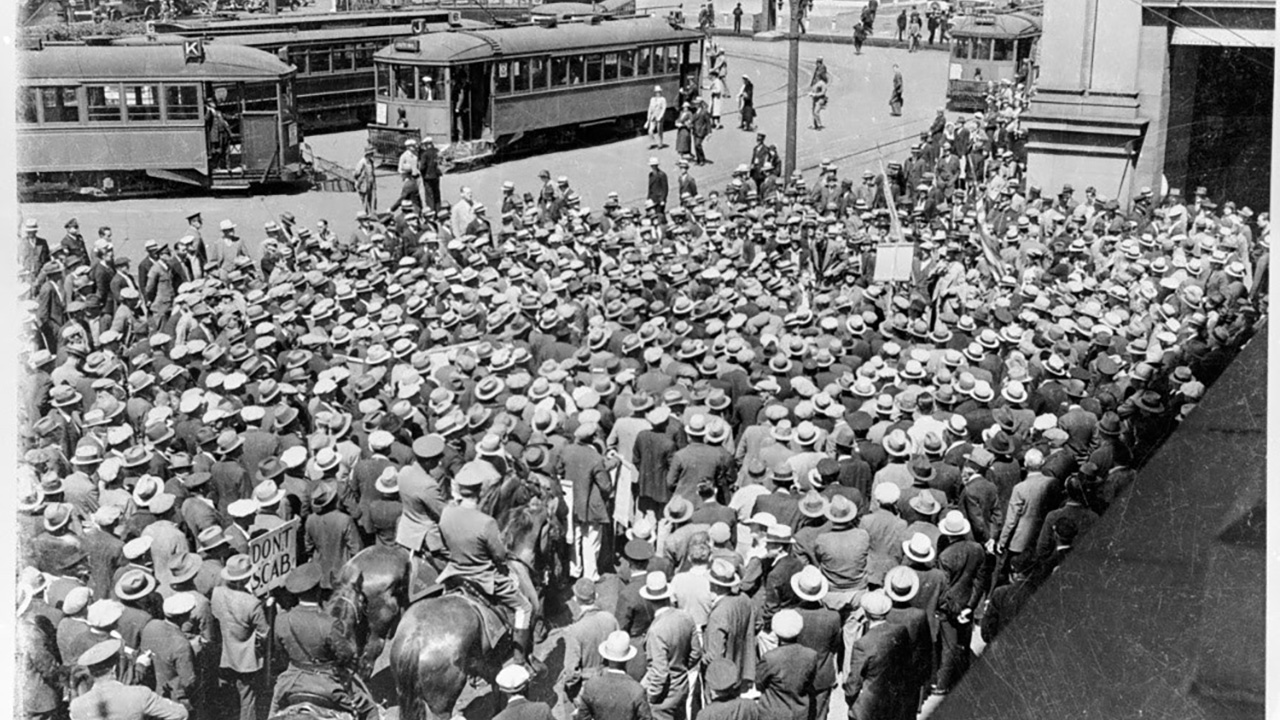
In San Francisco on July 5, the employers’ association tried to forcefully open the port. They called in the police and National Guard to open the port using guns and tear gas, injuring and arresting hundreds of strikers and bystanders. This day became known as Bloody Thursday after two workers (one a longshoreman, the other a Communist Party organizer and unemployed cook) were killed.
In reaction, tens of thousands of workers all over the city stood in solidarity, first in a funeral march, and later, workers walked out in a general strike that lasted for four days and brought the whole city to a standstill. The strike came to an end when conservative union leaders called it off, and the longshoremen’s fight ended in arbitration. But for the first time in the history of the waterfront, workers had won control of their own union halls.
The 1934 strike was also the first time Black workers were allowed into the Longshoremen’s union. Historically the leadership of the union had a racist policy, excluding Black workers. Because of the anti-racist leadership of Harry Bridges and other revolutionaries on the waterfront, the longshoremen reached out to the Black community and promised that Black workers would always have a place on the waterfront. This strike was the first longshore strike in San Francisco in which Black workers joined in, helping the strike, rather than taking jobs as strike breakers. Black workers became integrated into the longshoremen’s union, and because of worker control of their union hall, longshoremen could guarantee that their Black coworkers would have stable hours and jobs.
Bloody Thursday and the West Coast maritime strike was a struggle. Workers were on the defensive and under attack. The strength of the strike came from the efforts workers took to reach out to others and expand their forces. The San Francisco general strike is a testament to the strength of working class solidarity, which allowed this strike to win against all odds.