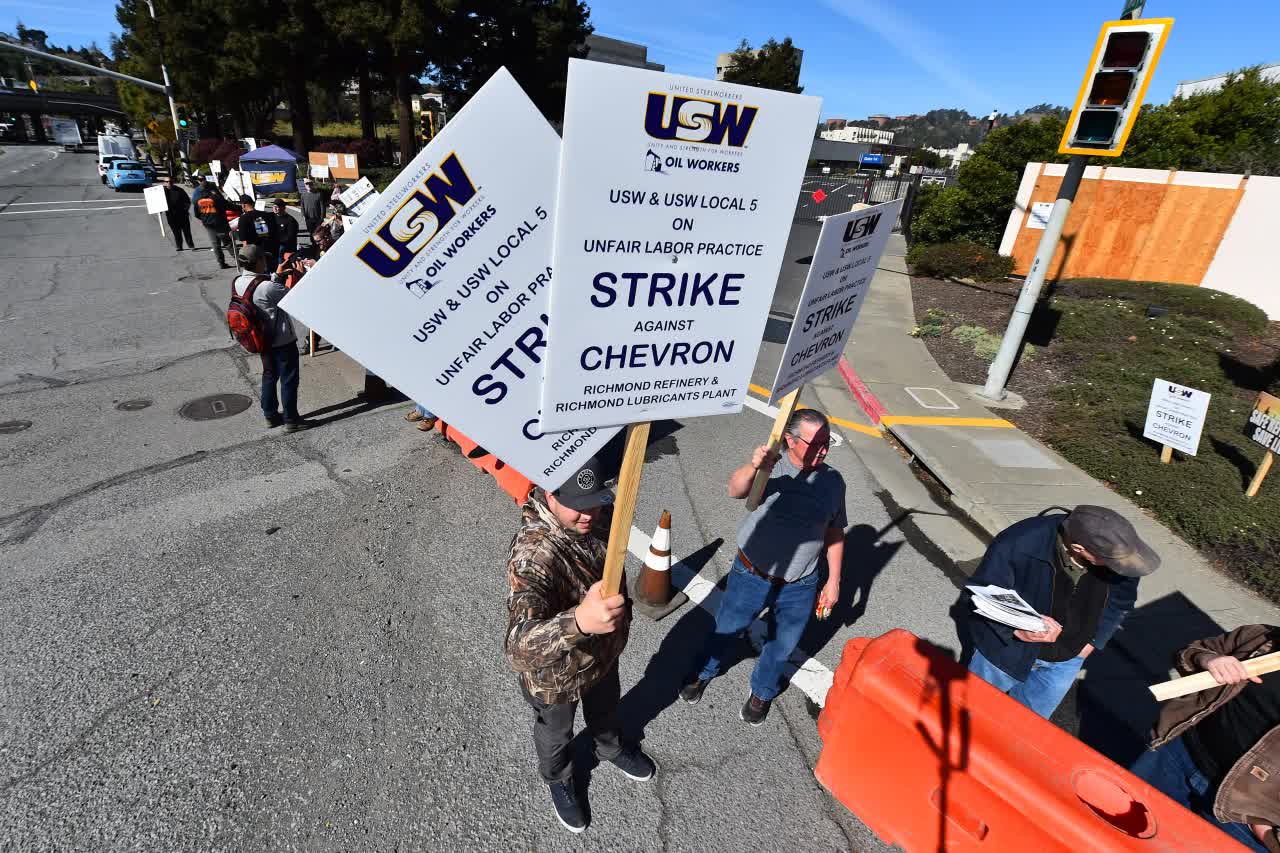
More than 500 workers, represented by United Steelworkers (USW) Local 5, went on strike last week at Chevron’s refinery in Richmond, California. The vast majority of them, including pipe fitters, machinists, lab technicians, and warehouse workers, voted down the most recent contract offer, which they believed fell short of meeting their demands. Chevron responded by refusing to renegotiate further, pushing workers to walk off their jobs and form picket lines.
Chevron workers are on strike over multiple issues including inadequate wages and benefits. Medical costs for some went up by 23% last year without any increased contributions from the company. Given the high cost of living in the Bay Area, they are also asking for a 5% pay raise on top of the 2.5-3.5% national yearly wage increase that was agreed upon between USW and the majority of U.S. refineries in February after weeks of nationwide protests. Even if the workers win the extra 5% raise, this would barely cover the rate of inflation in the Bay Area, which is currently at around 7.5-8%. However, Chevron, which raked in $15.6 billion in profits last year and whose CEO made $29 million in 2020, seems unwilling to share anymore of its wealth.
The strikers also want the company to hire additional workers to help reduce their work hours which for some can be as high as 60-70 hours per week. To add to this, some have to spend long hours commuting to and from work, which only lengthens their work days even more.
In order to maintain operations, the company began replacing the striking workers with non-union staff which raised questions about safety. Management claims that the replacement workers have been adequately trained to run the facility. But within hours, Chevron notified the local county of the need to use open-air flaring, a safety measure designed to prevent explosions. Chevron’s neglect of safety is not new. The refinery has a long history of air and water pollution and has been fined millions of dollars by the federal government for failing to replace outdated equipment.
The refinery is a key energy hub for the state, processing about 250,000 barrels of crude oil a day. It accounts for about 14% of the state’s gasoline production and provides 65% of jet fuel used by major Bay Area airports. Some media outlets have raised concerns that the strike could lead to an increase in gas prices in California, which already has the highest gas prices in the U.S. But it is neither the strikers’ fault nor ours that gas prices are through the roof right now. It is the owners of the gas companies that fix the prices, not the workers. Chevron workers should not be discouraged from standing up for their livelihoods. We should not let the bosses and the corporate media pit us against other workers who are fighting for decent wages and benefits. Their fight is our fight!