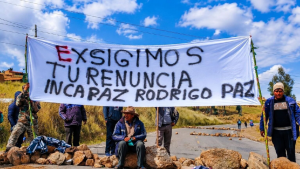
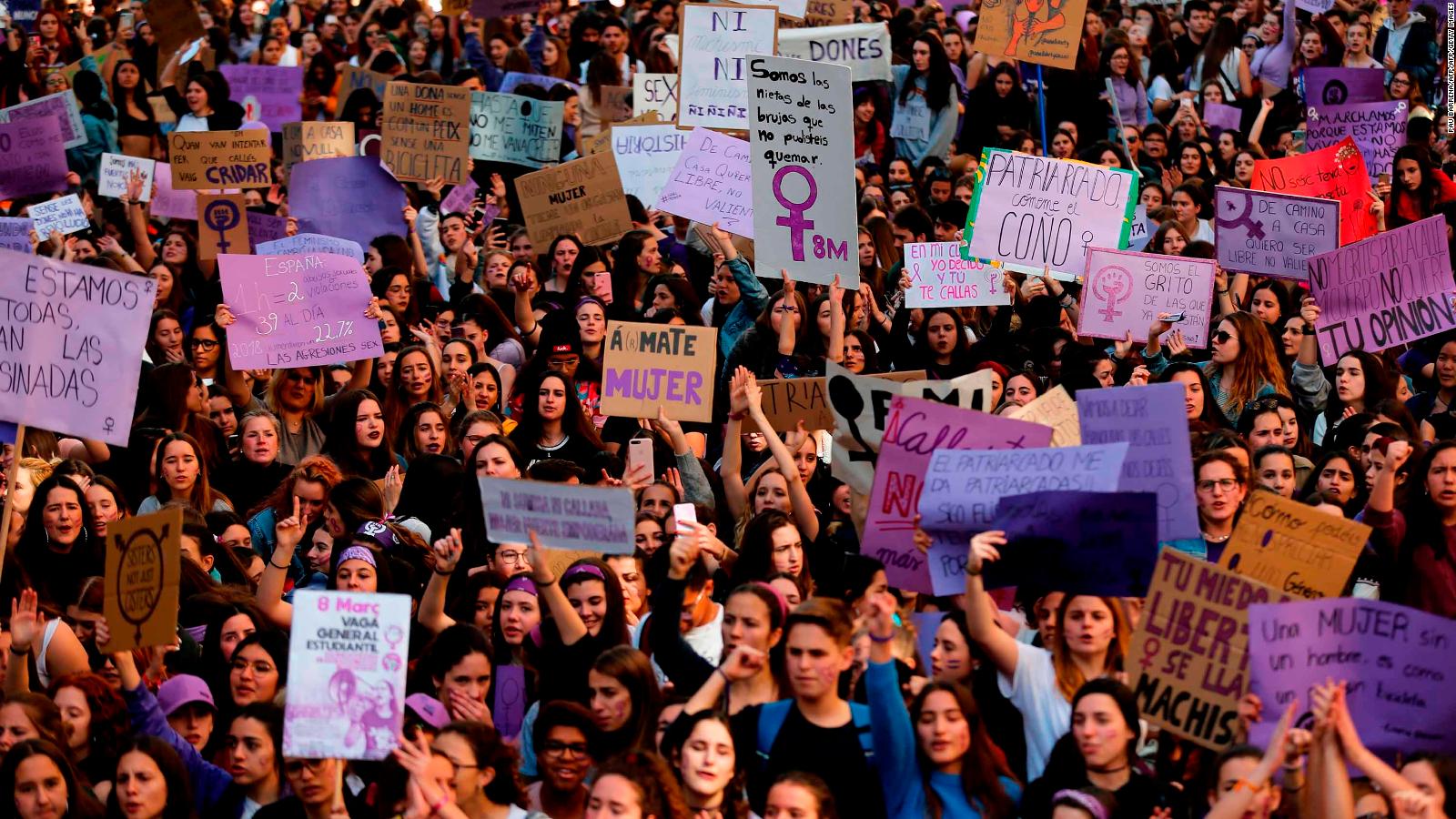
As we celebrate another International Women’s Day on March 8th, we see continuing attacks on women’s rights around the world. Women have disproportionally been affected by the pandemic. The rate of poverty and of violence towards women increased during the last two years. Women suffer the most as climate refugees, subjected to violence and poverty at higher rates than men. Reproductive rights are under attack. In the U.S. we are currently facing the possible decision by the U.S. Supreme Court to overturn the landmark abortion ruling, Roe v. Wade.
Since the inception of class societies and private property, the oppression of women has been essential to the functioning of these exploitative societies. But women have always found a way to organize themselves and fight back.
One example of such efforts is the history of International Women’s Day (IWD). Over a hundred years ago, the first International Women’s Day was called for during the International Socialist Women’s Conference in 1910. This call was inspired by the celebration of National Women’s Day by the U.S. Socialist Party. During the first IWD in 1911, over one million people joined demonstrations demanding a woman’s right to vote and to hold public office, as well as for protection against gender discrimination in employment. During 1914, IWD demonstrations included slogans against World War I.
In commemoration of International Women’s Day in 1917, women textile workers in Petrograd, Russia called for a demonstration for “Bread and Peace”. Little did they know that this demonstration, which was joined by other factory workers and housewives, would be the catalyst for what would become the Russian Revolution.
IWD was initially celebrated in what became the Soviet Union, but the holiday became widely popular on an international scale during the 1960’s. Since then, it has been celebrated across the world, including massive demonstrations in which women came together to voice their concerns and demand an improvement in their conditions.
The slogan “Give us Bread and Roses” has been associated with women workers’ struggles, and especially with International Women’s Day. The slogan was first used in the successful textile strike in Lawrence, Massachusetts in 1912, when women textile workers demanded “Bread” – an improvement in their pay and working conditions, but “Roses too” – signifying also having time to enjoy art and culture. The slogan was inspired by the poem below, written by James Oppenheim, to honor the strike.
Bread and Roses
As we come marching, marching, in the beauty of the day,
A million darkened kitchens, a thousand mill-lofts gray
Are touched with all the radiance that a sudden sun discloses,
For the people hear us singing, “Bread and Roses, Bread and Roses.”
As we come marching, marching, we battle, too, for men—
For they are women’s children and we mother them again.
Our days shall not be sweated from birth until life closes—
Hearts starve as well as bodies: Give us Bread, but give us Roses.
As we come marching, marching, unnumbered women dead
Go crying through our singing their ancient song of Bread;
Small art and love and beauty their trudging spirits knew—
Yes, it is Bread we fight for—but we fight for Roses, too.
As we come marching, marching, we bring the Greater Days—
The rising of the women means the rising of the race.
No more the drudge and idler—ten that toil where one reposes—
But a sharing of life’s glories: Bread and Roses, Bread and Roses.
James Oppenheim, 1911