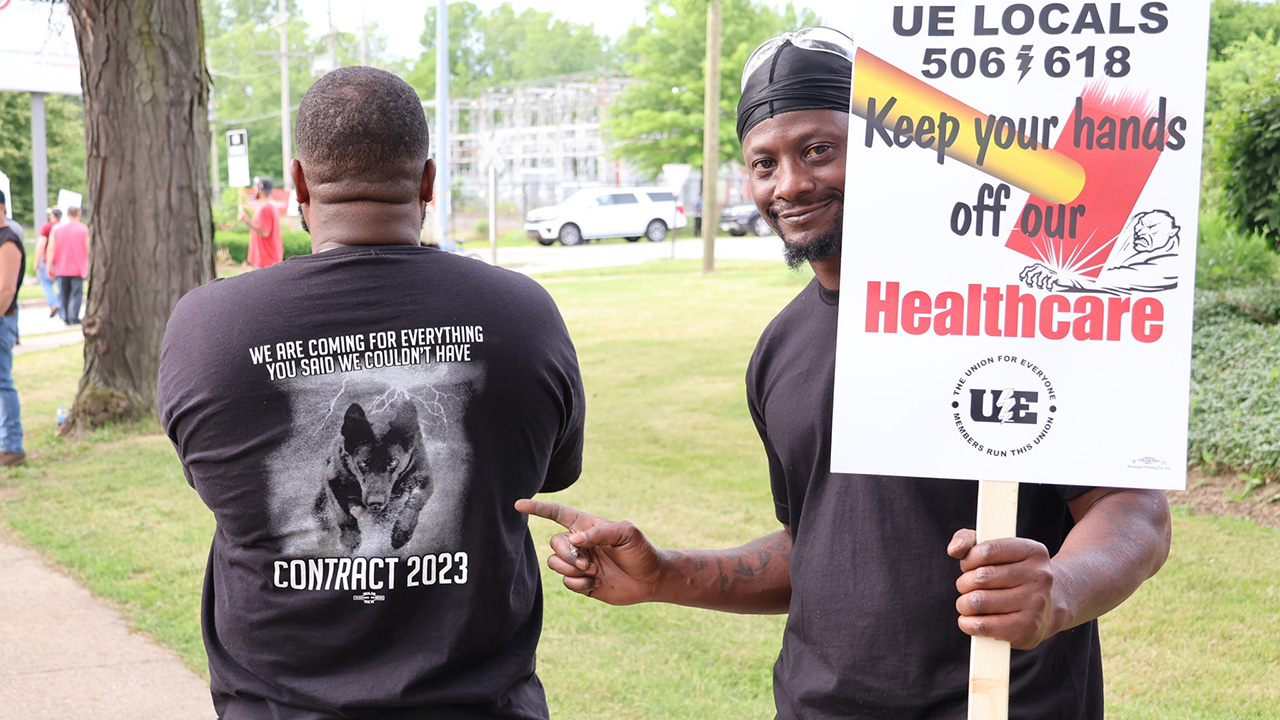
In late June, 1,400 workers in Erie, Pennsylvania went on strike against the Westinghouse Airbrake Technologies Corporation, better known as Wabtec, one of the few U.S.-based manufacturers of railroad locomotives and train technology. We support them in their strike, which has some typical features of most labor conflicts. Demands for better pay and better treatment on the shop floor, as well as opposition to healthcare cuts are all part of the mix. But two demands being made by members of the United Electrical Workers (UE) Local 506 and Local 618 are exceptional, and show the potential that workers’ organizations have.
The first unique demand is that the company manufacture more emissions-reducing locomotives that meet the Environmental Protection Agency’s “Tier 4” standards. These locomotives, while not electric, produce about 70% less emissions than most locomotives. The UE workers are demanding that Wabtec expand their production of these locomotives, which are currently not their primary product. The union says they want to contribute to a cleaner and safer environment in the population centers that trains roll through as well as for the world as a whole. And they also believe that expansion of this new green train technology will create at least 2,600 new jobs in and around Erie. They see the potential link between concern for the environment and job creation.
The second unique demand in this case is that the workers in the Erie factory are demanding the right to strike to resolve grievances – a right they had under old ownership until just a few years ago. Now if this sounds out-of-the-ordinary, that’s because it is. Most unions, when they sign a contract, accept a clause that bans any work stoppages during the course of the contract. Grievances that the workers have are then put on paper, negotiated, perhaps filed with an arbiter, and this supposedly impartial arbiter eventually (sometimes years later) makes a ruling about who is right or wrong. And usually, the worker and the union lose. This contract clause and this grievance procedure, some forms of which are nearly universal in union-negotiated contracts, are two of the most significant factors that keep workers from taking action where it matters most – on the shop floor at the time the harm and injustice occurs. They stifle worker activity and militance and create a slow-moving bureaucratic process that generally turns workers off to filing grievances and weakens morale among workers. These UE workers know this, because until four years ago, they actually had the contractual right to stop work over a grievance, and they lost it with the last contract. They can see the difference, and now they want it back!
By connecting larger political concerns about the environment with a so-called non-economic concern about their grievance process, these two UE locals are demanding positive changes far beyond what most unions are willing to bargain over. And by striking over these and other demands, the union is also doing something most unions have been unable or unwilling to do in recent decades – strike. We support the 1,400 workers in Erie for the courageous decision to strike and for the incredibly smart decision about what to strike for. These workers are showing the way. We encourage all working people to follow their lead.