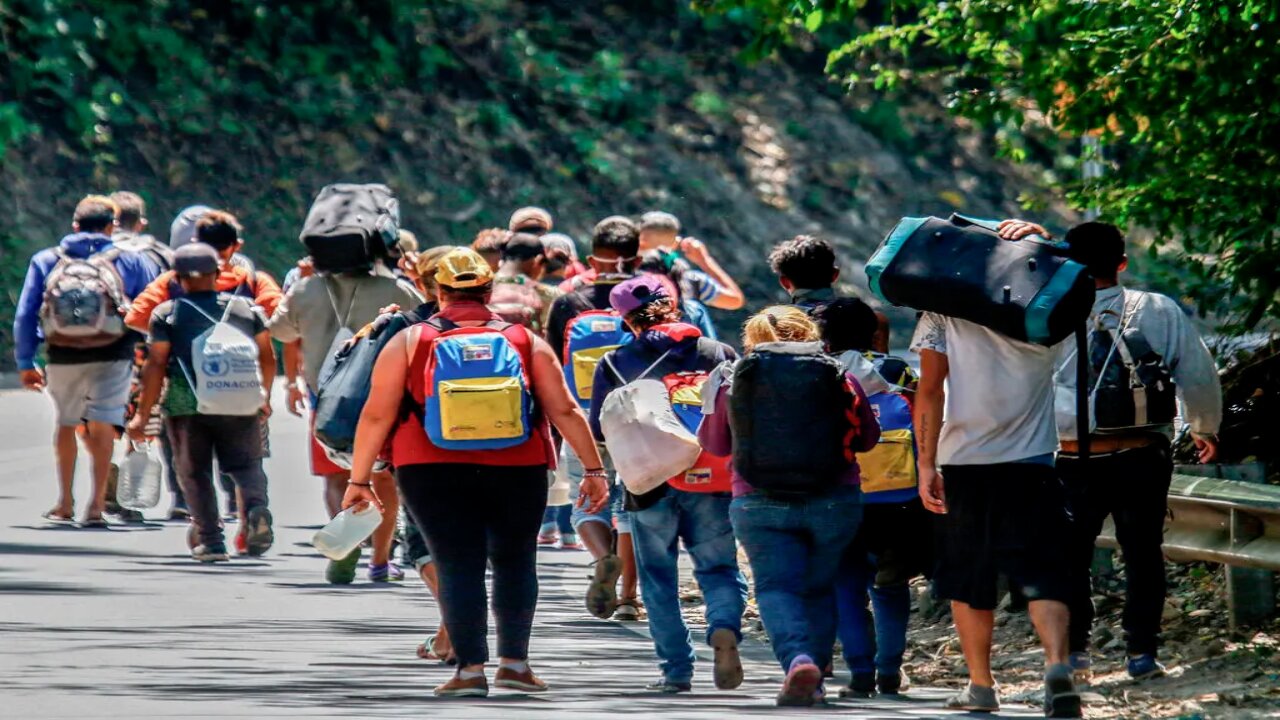
The COVID pandemic is causing record levels of forced migration from South America into the United States. Before the COVID pandemic, most migrants arriving at the southern border came from Mexico and Central America. Since the pandemic has started, however, more migrants from South American countries such as Ecuador have been forced to flee their country and seek refuge in the United States. In 2021, the U.S. Customs and Border Protection (USCBP) agency reported an 800% increase in Ecuadorian nationals arriving at the U.S. border compared to 2020. A similar rise in migration is seen from other South American countries such as Brazil, Colombia, and Venezuela.
The main reason behind this forced migration from South America is the need to find jobs in a ravaged economy. These South American countries have been devastated economically by COVID, as many businesses have been forced to shut down. The common migration method so far has been to travel to Mexico (which did not require a visa), and then pay a smuggler to gain entry into the United States. Due to the increase in migration, the Mexican government has recently outlawed visa-free travel to Mexico for Ecuadorians. The result was a drop in migration to the U.S.
But the long history of border control and migration from Central and South America shows us that this drop can only be temporary. The economic crises in these countries force people out, and border control measures cannot stop this dislocation – all they can do is increase the risk for the migrants. As border control tightens, South American migrants are forced to find increasingly dangerous routes such as trying to arrive to Florida by ship. Since 2014, more than two thousand people have died in this perilous journey. This level of risk is only undertaken by families who find themselves at even greater risk for their life in their home country.
COVID has only exacerbated this migrant crisis, but it has been going on for over a century – it is as old as U.S. imperialism. The root cause is the capitalist system, which destroys entire economies in the interests of a tiny minority of billionaires, causing millions around the world to flee their homes and their countries. Only by getting rid of this system based on profit and exploitation can we end forced migration and poverty.