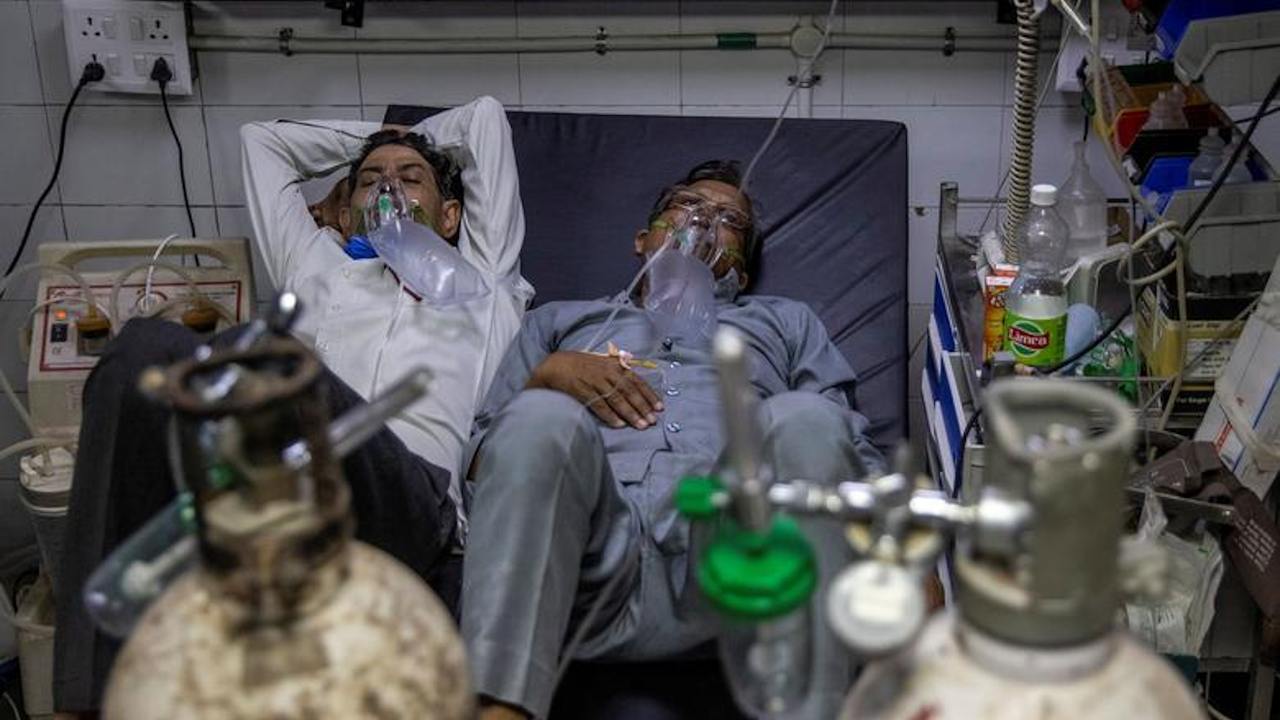
A massive new wave of COVID-19 infections has hit India, with 310,000 new infections on Thursday, April 22, and growing. Hospitals are jammed, cries for help from dying victims on social media go unanswered, oxygen supplies are running critically low, and a leak from an oxygen tank led to the deaths of 22 patients in one hospital. Delhi state’s Chief Minister said of his state’s healthcare system, “I do not say that the system has collapsed, but it has reached its limits,” and added that harsh measures would be necessary to prevent total collapse.
India is a textbook example of how a capitalist economy can’t even address run-of-the-mill healthcare, much less a global pandemic. For years a patchwork quilt of public and private insurance provision, varying by state and region, India has always had vast disparities in health care. Until very recently, 65% of all health care costs were paid out of pocket, which means the rich get good care, the poor don’t.
On top of that, after the initial strict and relatively effective lockdown last spring, the government of nationalist Prime Minister Narendra Modi declared victory over COVID and allowed events like cricket matches, religious festivals, political rallies, and multi-vote elections, which spread the virus. The first places hit were poor urban areas, but now infection seems to have spread into rural areas with less medical care. The goal now is to vaccinate the country to safety. But, even though India is one of the world’s biggest vaccine producers, at current rates of vaccination it will take until the end of 2022 to get 70% of the population vaccinated. The best answer might be to initiate another lockdown, but that would further damage the economy and the livelihoods of hundreds of millions.
The COVID spike in India is a prime example of the terrible contradictions of the capitalist system. Governments don’t invest enough in health care, so when crisis arrives, the system isn’t ready, and can’t save people. To save themselves, people must stay home and distance from each other. But people can’t stay home and distance, because they must work to live. And, with COVID, if people go to work, they might get deathly sick. And the system might not save them if they do.
These are nightmarish choices that no people, no families, should ever have to make. Yet hundreds of millions of Indians are forced to make these choices. The capitalist system and the coronavirus connect the world, together threatening the lives of everyone.