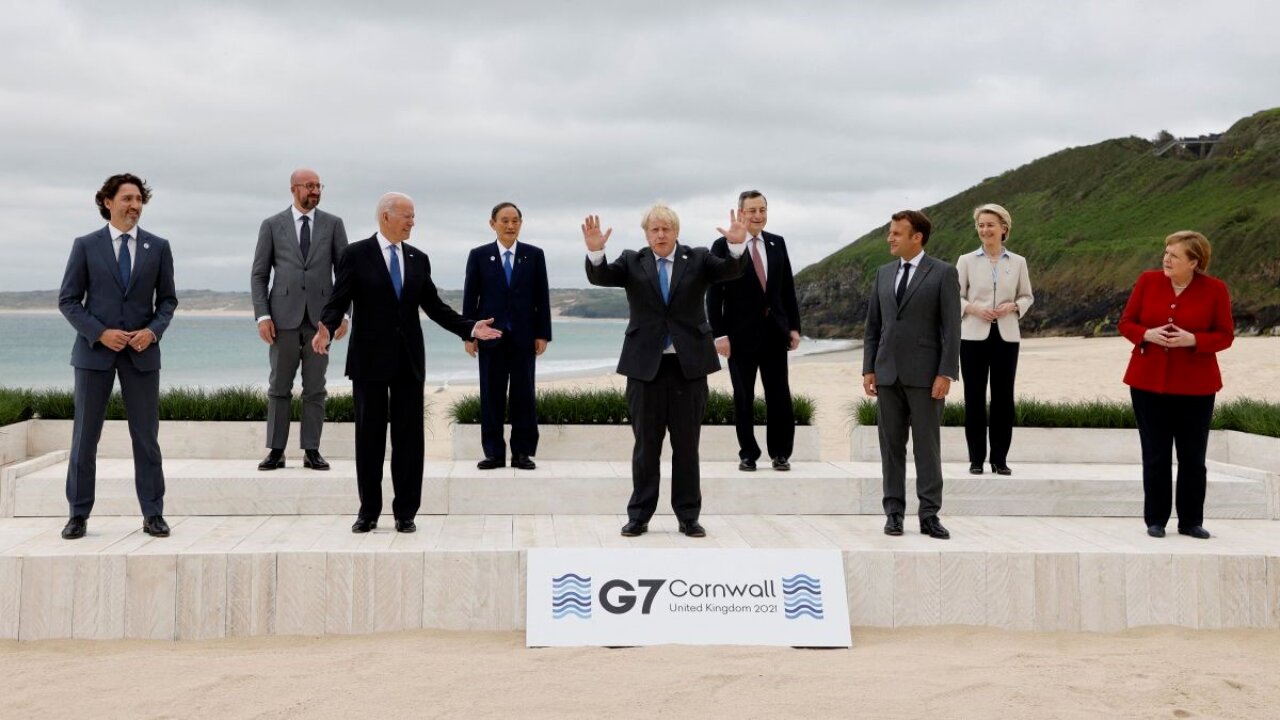
Recently, political leaders of the wealthiest “Group of 7 Nations” (G7) that include United States, France, Germany, England, Japan, Italy, Canada and representatives of the European Union met to discuss what they saw as the most pressing issues that they were facing. Among the topics discussed, was their perspective towards China.
Within the G7’s statements, in addition to some not-so-subtle provocations against Russia, there are several condemnations of the Chinese government’s influence over the world economy, and innuendos about the unsubstantiated theory that COVID-19 was leaked from a Wuhan lab. There were also condemnations about human rights issues such as the treatment of Uighur Muslim minority in Xinjiang as well as the extradition law that can be used against political opponents in Hong Kong.
Behind much of these denunciations is the concern of China’s growing economic influence in the world. Biden and the G7 have complained about China’s Belt and Road Initiative (BRI), which is a massive investment in infrastructure in other countries that positions China as a center in global trade. They argue that many of these infrastructure projects are traps to indebt other countries and make them beholden to China. To counter the Belt and Road Initiative, Biden and company are putting forward the $40 trillion Build Back Better World Partnership (B3W) investment project. China is essentially being accused of exactly what G7 countries have carried out over decades through institutions like the International Monetary Fund and World Bank. In light of this, how can we imagine that the Build Back Better World Partnership will somehow take a different course and actually be based on empowering poorer nations as they claim?
China along with all of the G7 countries build up infrastructure in developing countries in order to suck them dry of their resources, and leave them with massive debt (which allows them to profit from interest payments). Workers around the world are led to believe that their country is doing this (exploiting underdeveloped countries) in the “best way” somehow; the “proper way”. There is no “correct way” to exploit these countries. All of them, including the U.S.A. and China, are hypocrites with respect to these denunciations. Let’s not take the bait. This continued demonization of China is how they try to prepare us to accept greater conflict with China — and even possibly war — for their profits.
The Biden administration is falling in line with previous administrations in its growing hostility toward China. We saw this hostility in the Obama administration’s “pivot to Asia”, which highly militarized much of the Pacific and regions around China, and the Trump administration’s instigation of a trade war as its habit of consistently referring to the coronavirus as the “China virus.”
On questions of human rights, we should stand in solidarity with people in Xinjiang or Hong Kong who are fighting for basic rights. But to do so, should we look to the U.S. government or any other G7 government to champion these causes? Should we look to the U.S., which incarcerates more people, both in total numbers and in proportion, than any other country? Should we look to Germany, which recently confessed to carrying out a genocidal campaign in Namibia? Should we look to France, which helped create the conditions for the Rwandan genocide? Should we look to Japan, which denies basic rights to countless migrant workers?
Can we look to any of these hypocrites to champion the human rights of people in China?
Absolutely not.
For decades, the crisis that American workers have faced from de-industrialization and stagnant incomes have been blamed on countries like China. These hollow arguments have been repeated over and over by many politicians and even many leaders of American labor unions. But workers in China or anywhere else are not responsible for the precarious situation we find ourselves in. The heads of the big corporations, banks and politicians are responsible. Companies, whether from the U.S. or elsewhere, have made huge profits by exploiting the low wage workers in China and other countries. They have effectively used this tactic of pitting workers around the world against each other.
We should not fall for their latest efforts to whip up American nationalism as they intensify their competition with China.