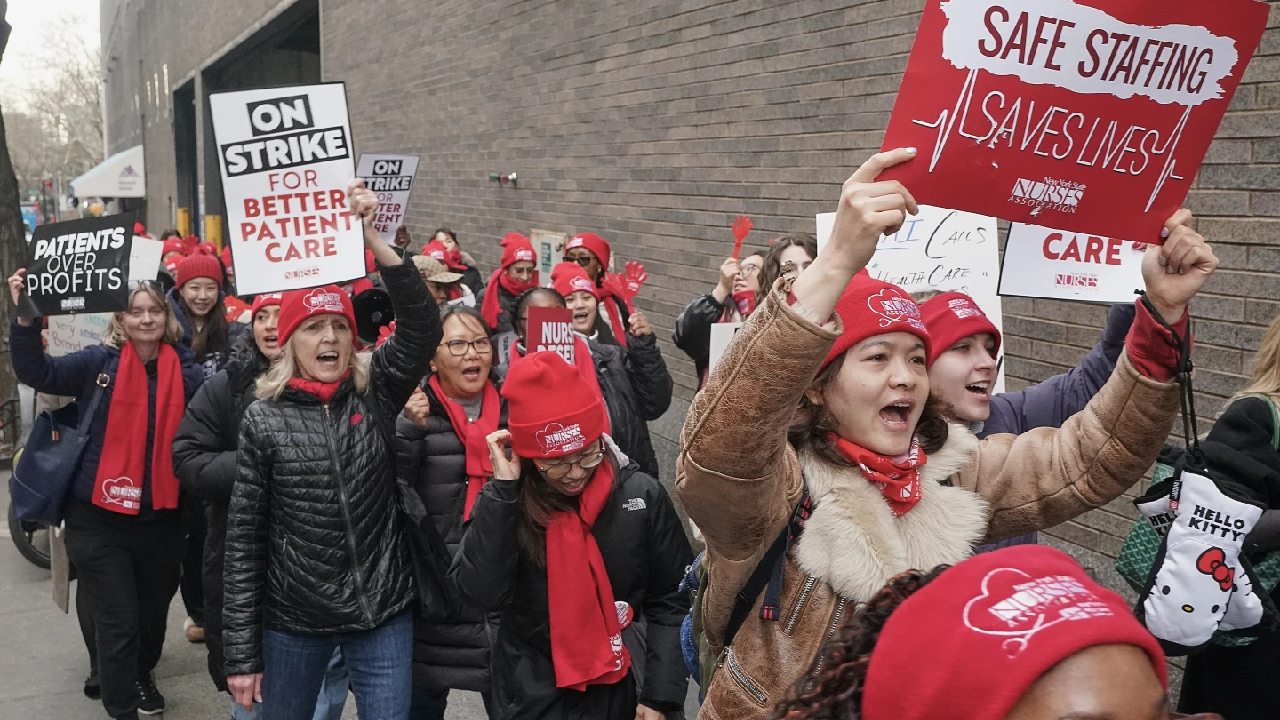
On Monday, January 12, nearly 15,000 nurses at three of New York City’s largest hospital systems went on strike. While they are demanding better pay, they are also fighting for improved work conditions and to protect benefits they already have. This strike is part of an ongoing nationwide conflict between health care workers and hospital systems in a period of nationwide funding cuts to health systems and health programs of all types.
Montefiore, Mount Sinai, and New York-Presbyterian hospitals are in the three major New York City health systems where workers are striking. All three are connected to universities that call themselves not-for-profit and train young nurses and doctors. But at all three, the obscene costs of health care are combining with cuts from the federal government to put a squeeze on any supposedly excess costs. This means that administrators in these and other systems are unwilling and/or unable to increase salaries or benefits for their workers, or to spend more on patient care and safety. In general this means that they will look to cut costs.
Not only do striking nurses and their union criticize the hospitals for continuing to short staff the facilities, which leads to more burnout and turnover among nursing staff. They also accuse the systems of not doing enough to maintain safety in the hospitals. Two recent incidents have highlighted their vulnerability while on the job, and rank-and-file nurses are nearly unanimous that their bosses aren’t doing enough to keep them and their patients safe. Their anger at this issue alone is perhaps the largest driver of the strike.
What’s more, Mount Sinai and New York-Presbyterian plan to either roll back or completely end their payments into the health care fund run by the nurse’s union, the New York State Nurses Association (NYSNA). This would mean cuts to or complete loss of health care not only for the 15,000 nurses in question, but to a total of nearly 44,000 other working people who are enrolled in the union-run health plan. This would mean that nurses and others who are expected to provide health care, might actually lose their own ability to receive health care!
At the same time as they plan to implement these measures, highly paid executives at these hospitals still make millions while workers can barely afford to live in the city. Nurses in all three of these systems have starting salaries of more than $100,000 per year, and all three groups have average base salaries in the mid-$100,000’s. But, while that may sound good, New York is the most expensive city in the United States and one of the most expensive in the world. Even a minimum cost of living in the city eats up a huge chunk of those salaries. In contrast, at the top of the hospital pay scale, the head of New York-Presbyterian Hospital took home $26 million in total compensation in 2024. This huge gap between his income and that of his thousands of employees isn’t much different than in a for-profit corporation, where owners, CEOs, and board members pull in millions or billions while their workers struggle to make ends meet.
And, at the same time that these three hospitals claim they don’t have enough money for nurse salaries and proper staffing, New York-Presbyterian alone spent $60 million to hire 1,700 replacement nurses to take the place of striking workers. In other words, even when money is supposedly tight, they can find large sums to fight workers. But rather than provide better conditions and benefits for their staffs or improve in-hospital care, their priority is to pay for outside replacements to win a struggle against their own nursing staffs.
The final piece to this puzzle is the context in which this strike is occurring. In recent years, and particularly now under the Trump administration, cuts to health and social programs of all sorts are being felt throughout the U.S. The hospital executives in New York are openly admitting that part of the reason they don’t want to pay nurses more is because their facilities will receive less federal health care money in the coming years. This is thanks directly to the elimination of health care subsidies, which is estimated to make health insurance unaffordable for perhaps ten million people or more. This is a clear example of cuts from the federal level trickling down and forcing cuts that affect working people. At a time when health care plans offered by private sector employers are nearly non-existent, and at a time when even mediocre health care plans are unaffordable to all but the very wealthy, cuts from the federal government will make all these trends far worse. The nurses and the patients in New York’s major hospitals are being squeezed by all of these trends.
But with their efforts to strengthen their unions and organize, and with their strike of 2023 and now this one, these nurses are organizing and fighting back. We support them in their struggle against the priorities of a system that doesn’t work for them or their patients.