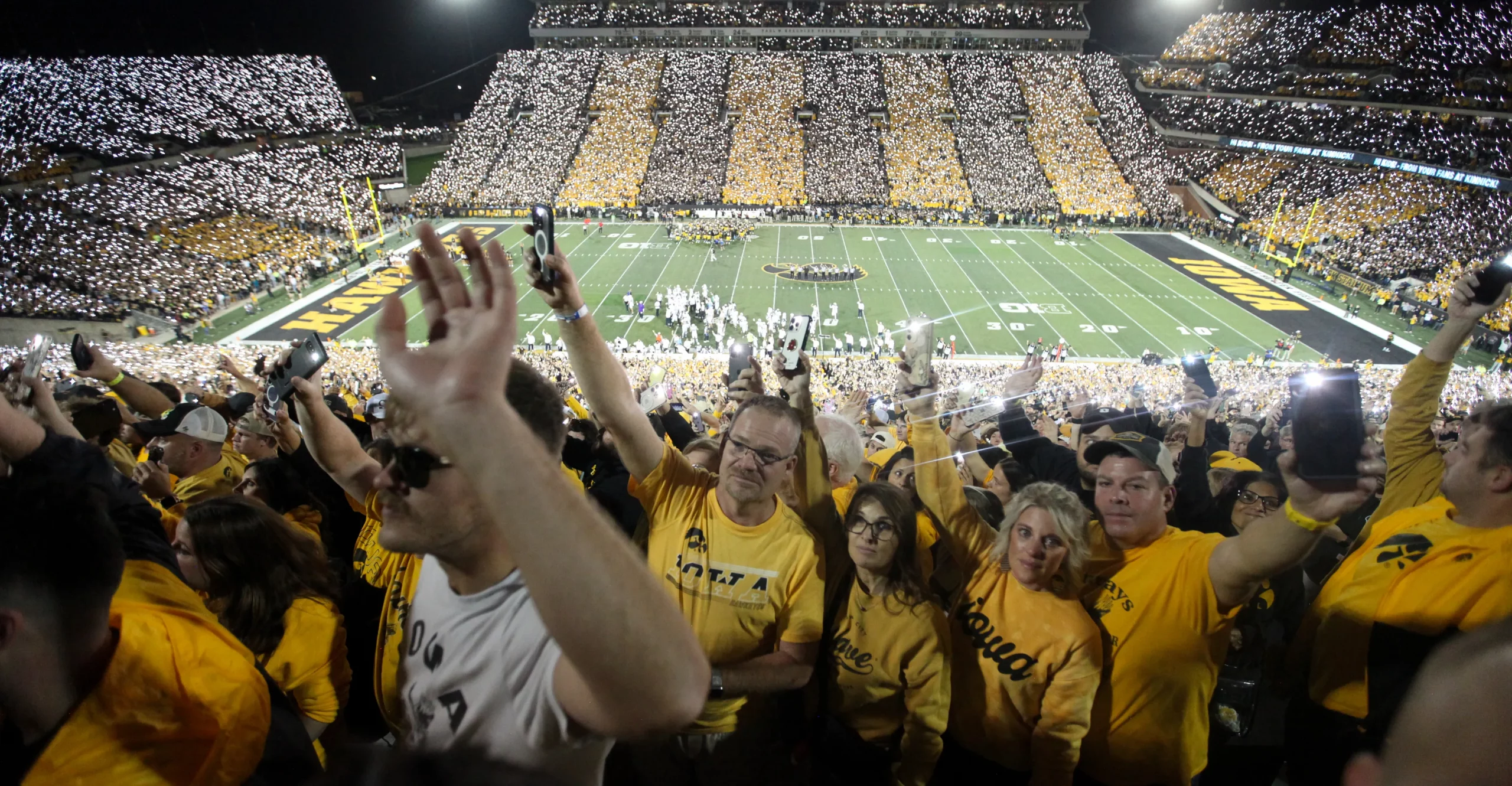
In early November, a quiet but important story came out of college football. At least in two big games during this year, the Department of Homeland Security has been silently running a surveillance platform called the Homeland Security Information Network, or HSIN. Most fans in the stadium had no idea that while they were cheering for their team, federal agencies were pulling live footage from drones, CCTV cameras, police bodycams, and even officers’ cell phones, and feeding them into one centralized system.
Documents obtained by reporters show that at the recent Ole Miss vs. Georgia game, HSIN was coordinating with at least eleven law enforcement agencies (from Ole Miss campus police to a military rapid-response team). Every camera feed, every aerial view was being streamed and analyzed. And DHS kept access to the footage long after the game had ended.
This isn’t just about football. HSIN has been used at the Super Bowl, Lollapalooza, and even the presidential debates. It’s also been used on college campuses to monitor political protests, including pro-Palestinian demonstrations. This is the kind of surveillance that doesn’t make headlines, but it should. It shows how easily monitoring systems grow once they’re in place.
This is far from new. Stadiums and big events have been used as testing grounds for surveillance for decades. In 2001, fans at the Super Bowl unknowingly walked into one of the country’s first mass facial-recognition experiments. Madison Square Garden in New York has used its own facial-recognition system not just for supposed security, but to ban critics and lawyers whose firms had taken the company to court. A fan was even stopped at the door because he wore a T-shirt criticizing the team owner.
These systems always start with the same message: “It’s for your safety.” That’s the narrative that makes surveillance seem normal, or even necessary. But safety is almost never the real goal. Instead, the more these tools spread, the more they get used to monitor political dissent, target specific groups, and control who gets to use public space and participate in public events.
At the end of the day, surveillance systems do not serve the people in the stands or in the streets. They serve the people in power. The point of them is not to monitor the comings and goings of the wealthy donors or corporate executives, but the students, the workers, the everyday fans. Surveillance is not neutral or unbiased. Its purpose is to keep a close eye on the public while leaving those in power untouched.
These systems also harm some people much more than others. Facial recognition has much higher error rates for Black people, women, and disabled people. Studies have shown error rates for those groups up to 100 times higher than for white men! When you combine that with policing, you get wrongful arrests, harassment, and life-threatening consequences. Technology is not helping remove our current biases but is instead automating them.
Public events like stadiums and concerts play an important role in people’s lives. They are some of the few places where working-class people gather together for fun and for building community. Turning these spaces into surveillance zones can make public life feel watched and controlled and can actually encourage self-censorship. Slowly, the social role of these experiences could get completely eroded.
And all of this is taking place with no public debate, with no real democratic decision making. Choices are made between DHS, police departments, tech companies, and stadium owners, while the people being scanned are left out of the loop. Our faces, movements, and identities become raw material for a surveillance industry that profits from turning human beings into data points. Under capitalism, even your identity becomes something to extract and sell.
If DHS is turning stadium crowds into test subjects, we have every right to push back. But we must realize that the people running these programs aren’t going to stop on their own. Real limits on surveillance will only come when ordinary people organize and demand a different path. We deserve public spaces that belong to us, not to police networks. And we deserve a society where technology is used to improve our lives, not track them. That kind of world is only possible if we build it together.