Public transit, like the rest of our society, is in an extraordinary crisis. Due to the pandemic and shelter in place orders, revenue for transit agencies has dropped off of the cliff. Yet, public transportation is vital for any community and must be preserved and expanded if we are to have a decent future. Not only does it provide a livelihood for many but it is the lifeline of poor and working class people, and with climate change bearing down on us should be the main form of transit for us all. Here is where we see the economy run for the One Percent taking us in transit.
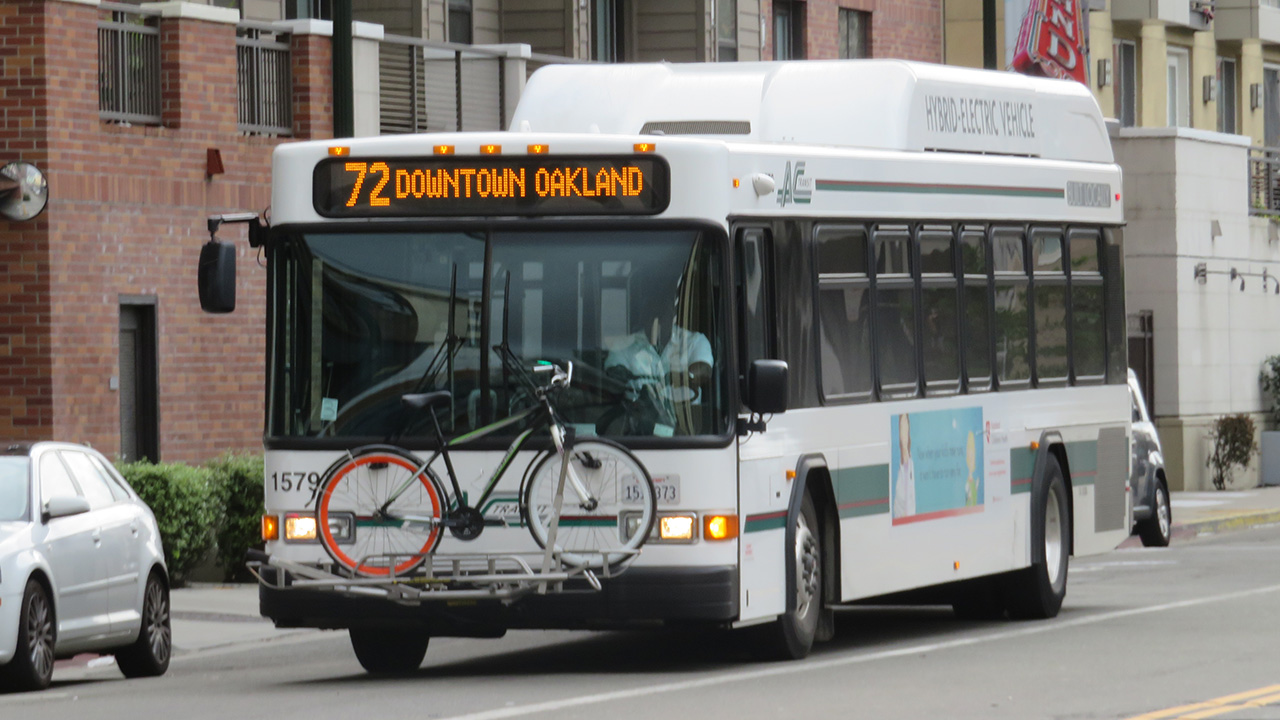
Most transit agencies in the big cities across our country get their revenue from fares and sales tax. The ratio depends on the agency. In the San Francisco Bay Area, fares generate 10 percent of the revenue for VTA (bus service around Palo Alto), nearly 17 percent for AC Transit (bus service in Alameda County), and one third of the revenue for BART (Bay Area Rapid Transit). At AC Transit, about 40 percent of the budget relies on sales tax of some sort. This is usual for large transit agencies. When ridership drops, fare revenues drop. And since people aren’t going out spending money as much, tax revenue has dropped also, leading to a crisis unseen in our lifetimes, much worse than what happened after 9/11 or the Great Recession.
Transit agencies across the country are projected to lose $40 billion in budget shortfalls, compared to the $2 billion loss following 2008.
BART and many other major transit agencies from across the country recently cosigned a letter calling on the federal government to allocate between $32 billion and $36 billion in relief funding for public transit in the next so-called “relief package.” The letter pointed out that together, the transit agencies move 22 million people a day in areas that generate “46 percent of the metropolitan gross domestic product.”
The top management from the various transit agencies detailed how ridership has plummeted upwards of 90 percent during the pandemic, causing fare gate revenue losses in the hundreds of millions. The chairman of New York’s Metropolitan Transportation Authority, our country’s largest transit system, said their fiscal situation was a “four-alarm fire.”
Yes, a crisis no doubt!
At AC Transit
After shelter-in-place was imposed, AC lost 72 percent of its ridership, from 189,000 to 53,000 weekday passengers. Social distancing has prevented operators from collecting fares, which amounts to about $5 million a month. And the dwindling sales tax revenue has led to a loss of $80 million.
Management is now considering drastic service cuts, somewhere between 15-30 percent, beginning next summer they say. But we cannot pretend time is in our favor. Service cuts of 15 percent would save $42 million and service cuts of 30 percent would save $85 million. Management says their goal is to reduce service and maintain staffing levels by reducing costs on fuel and overtime, by not filling vacant positions, and by relying on people retiring.
At BART
Ridership has plummeted roughly 90 percent. BART officials said in March that the ridership decline will amount to a loss of $40-60 million in fare gate revenue each month. Over the next three years this could mean a loss in revenue of roughly $1 billion. The BART Board of Directors has already voted to approve the agency’s $2.42 billion budget for fiscal year 2021, which includes nearly $200 million in cuts from the $1.016 billion preliminary operating budget. Management is saying their budget is also $39 million short of what they expected even given the funding that came from the CARES Act. As a result, they plan to “tighten the belt,” of the workers of course! Much of the funding cut will come from a one-year hiring freeze that will cut about $36 million. 672 vacant positions have been removed from the FY21 Budget and retiring workers will not be replaced. All OT will be limited.
Since the region’s pandemic-related shelter-in-place order began in mid-March, according to BART, among the folks riding BART trains: 59 percent do not have access to a car, 81 percent are people of color and 35 percent have a household income of less than $50,000. Working and poor people, especially people of color, will be bearing the burden of these cuts: the people who can least afford it. We say, no!
At Muni
Muni Metro (San Francisco’s light rail system) is set to lose more than half a billion dollars in revenue over the next four years, in what the director describes as a “transit death spiral.” The SFMTA Board of Directors approved a revised budget for fiscal years 2020-21 and 2021-22 that includes $200 million in cuts. This will translate into 40 of San Francisco’s 68 bus lines being cut, possibly permanently, after being put on hiatus at the beginning of the shelter-in-place orders. And at the very least, those 40 bus lines will remain suspended for the next two years.
The director of transportation said that Muni will not survive even if six feet of separation is enforced, and for mass transit to survive, U.S. cities should follow models in Europe and Asia, where agencies have strict cleaning regimens and all riders wear masks. No sh*#!
A Solution? Show Our Collective Power!
These budget cuts are drastic, and are likely to be just the tip of the iceberg of what is to come. We cannot believe the lie of “no money.” Of course there is a pandemic and a decline in revenue, but while public transit agencies beg for money, the federal government hands over billions of dollars to those who already have it!
Public transportation is crucial for our society, and the health of our communities. Rather than cutting this service it should be expanded! Not only does it provide a livelihood for many but it is the lifeline of poor and working class people, and with climate change bearing down on us should be the main form of transit for us all. We must pay attention to what is going on, and build connections with our fellow transit workers and our riders. Only if we come together will we have the power to defend our interests.
featured image credit: Wikimedia Commons