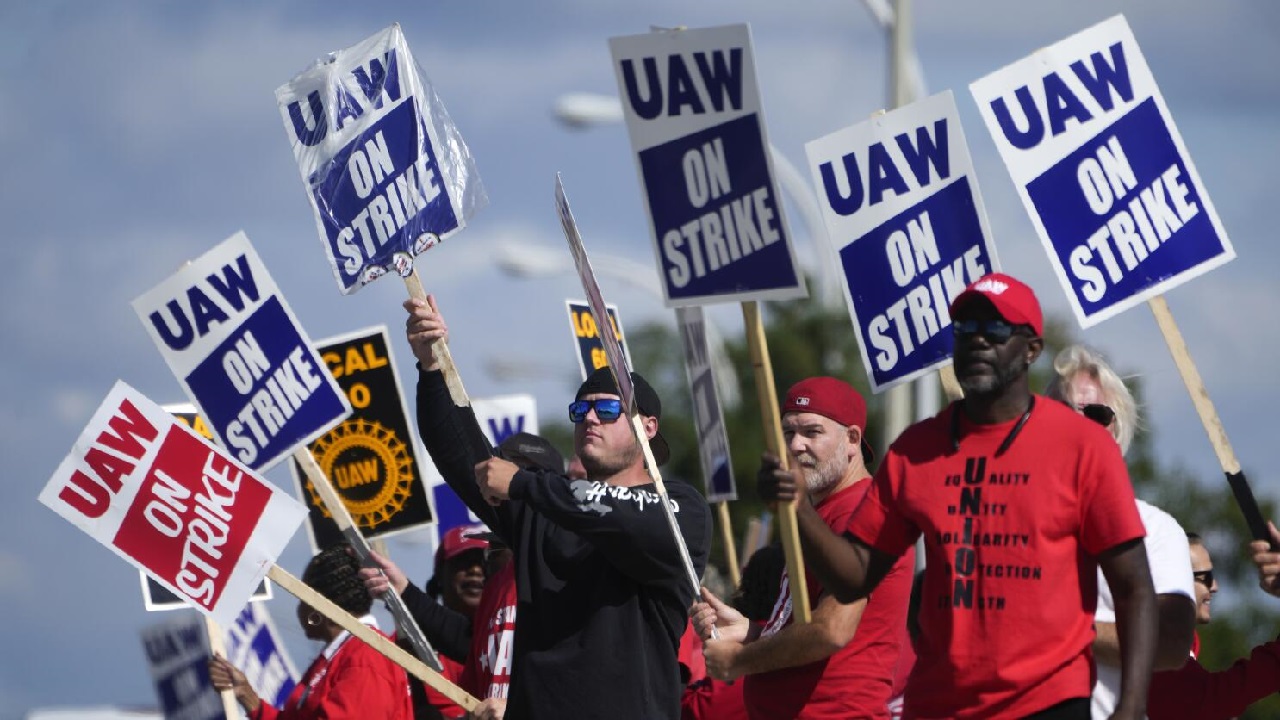
There are 150,000 members of the United Auto Workers who work at Ford, General Motors and Chrysler (Stellantis).
Yet UAW leaders decided that only 12,700 of its members should walk off the job when the contracts expired on September 14th, stopping production at only one plant of each of the three companies. The struck plants produce only about 10% of the total production and profits of these companies. The following week the union extended the strike to GM and Stellantis locations that distribute replacement parts to dealerships, bringing another 5,600 workers onto the picket lines. And now, as of Friday, September 29, the UAW called out two more plants, the Ford Assembly plant in Chicago and a G.M. factory in Lansing, Michigan, adding 7,000 workers to the strike force. Now a total of 25,000 autoworkers are on strike. Strikers receive $500 a week in strike pay from the union.
In the weeks before the old contracts expired, Sean Fein, the newly elected president of the UAW raised the expectations of the members that he and the UAW would lead a real fight. He highlighted the auto companies’ huge profits and said the union was committed to clawing back concessions made to the auto companies over the past 40 years. One hated concession allowed the companies to have two different pay scales (two tiers) for workers doing exactly the same work, with top pay for newly hired workers about $6/hour less than workers already on the job. Another concession was the elimination of wage increases designed to offset inflation (COLA). Before the strike, the Union said it was demanding a 46% wage increase and a shorter work week at no loss in pay. Shortly after the partial strike was announced, the union dropped the demand for a shorter work week and lowered its wage demand to 36% over the four year term of the new contract.
When the union leaders first announced it would only call out a small portion of its members there was an immediate pushback from members who wondered why the union did not bring everyone out on strike. The workers pushing the union to call a full strike understood that the companies would not give in unless they faced a strike which totally shut down their ability to make profits. The UAW president acknowledged this concern and said that the union would expand the strike if bargaining did not go well.
Reports in the media suggest that the companies are holding firm. Ford managed to settle a new contract that only grants Canadian auto workers about a 15% raise over three years. If UAW leaders really want to win big raises and other gains like they claim, gains that improve on what the Canadian autoworkers got from Ford, they will have to take all the workers out on strike at all three companies. The only thing the companies care about is their profits and the UAW’s tactics so far don’t hurt them very much. This has to change, otherwise, what is the point of going on strike at all?