
The words above were the words of MLK Jr. in March, 1967, at the height of the social movements that fought for racial justice, economic equality and an end to U.S. imperialist policy in Viet Nam. As we enter February, with its focus on Black history, those words are certainly quite relevant today.
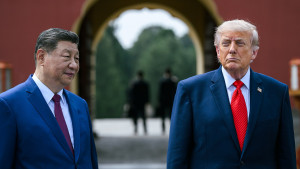
We are facing the fifth month of the genocidal Israeli war on the Palestinians, fully supported with our tax dollars and the U.S. military. And in the U.S., we see a growth of extreme right-wing political forces, spearheaded by Donald Trump, with increased attacks on our civil rights and civil liberties.
Martin Luther King Jr. was a Christian minister, and one of the most prominent leaders in the Civil Rights Movement, from 1955 until his assassination in 1968. He participated in and led marches in the South for the right to vote, desegregation, and labor rights. This included the 1955 Montgomery bus boycott, the 1963 protests in Birmingham, Alabama and many more. He was one of the leaders of the 1963 March on Washington, where he delivered his “I Have a Dream” speech. He helped organize two of the Selma-to-Montgomery marches, during the 1965 Selma, Alabama voting rights movement. He was arrested at least 29 times. The FBI made him an object of its secret COINTELPRO (Counter Intelligence Program) from 1963 until his assassination on April 4, 1968.
Despite strong pressure to stay silent, King spoke out loudly and publicly against the U.S. war on Viet Nam. He called the war “moral savagery” and said that the United States was “the greatest purveyor of violence in the world today.” He linked his opposition to the war to the fight for racial equality and economic justice. In his speech, at an anti-war rally on April 4, 1967, in New York City, he described “watching Negro and white boys on TV screens as they kill and die together for a nation that has been unable to seat them together in the same schools.”
He said, “A true revolution of values will soon look uneasily on the glaring contrast of poverty and wealth. With righteous indignation, it will look across the seas and see individual capitalists of the West investing huge sums of money in Asia, Africa, and South America, only to take the profits out with no concern for the social betterment of the countries…” He continued, “… we as a nation must undergo a radical revolution of values. We must rapidly begin the shift from a thing-oriented society to a person-oriented society.”
In addition to opposing the U.S. war on Viet Nam, he began to directly address the causes of poverty. In 1968, he began to plan a national occupation of Washington, D.C., to be called “The Poor People’s Campaign.” In March 1968, King went to Memphis, Tennessee, to support a strike by Black sanitation workers, fighting for higher wages and equal treatment with white workers. It was during this visit that he was assassinated. After his death, other activists organized the Poor People’s Campaign he had begun. It demanded economic and human rights for poor Americans of diverse backgrounds. The participants set up a 3,000-person camp for six weeks in the spring of 1968 and presented their demands to Congress.
He identified the problem, but not the path to a solution other than pressuring the powers that be. In the 1960s, many activists identified the capitalist system as the cause of their problems. And some began to organize to oppose the system itself.
Today, facing the threat of global war and climate change, and the rising extreme right-wing forces, we must go beyond just mobilizing to oppose capitalism’s deadly daily functioning. We need to organize in our workplaces, neighborhoods, schools and beyond. We need to unite the forces of poor and working people and our allies around the world – to end capitalism and the rule by a minority. Only then can we create a society run for and by the majority, based on equality, collaboration, and peace. Then we can finally bend the arc of the moral universe towards justice.