Blame is the name of the game, and with the coronavirus spreading rapidly through meat processing facilities, politicians are playing hard at blaming workers. From governors to judges, all sorts of politicians and pundits are going on about the crowded living conditions that workers live in, blaming workers for spreading the virus in their communities and homes. They’re blaming workers for not understanding directions. They are trying to feed anti-immigrant and racist ideas in the rest of the population.
A Wisconsin Supreme Court Justice said that the virus didn’t seem to have come from “regular folks.” South Dakota’s governor commented on a Smithfield pork plant closing, saying “99 percent of what’s going on today wasn’t happening inside the facility.” She said it was “more at home, where these employees were … spreading some of the virus.”
They want us to believe that inadequate housing among immigrant workers is the workers’ fault. They want U.S.-born people to believe that immigrants are stupid. And the politicians and bosses hope that the rest of us are stupid enough to believe all this.
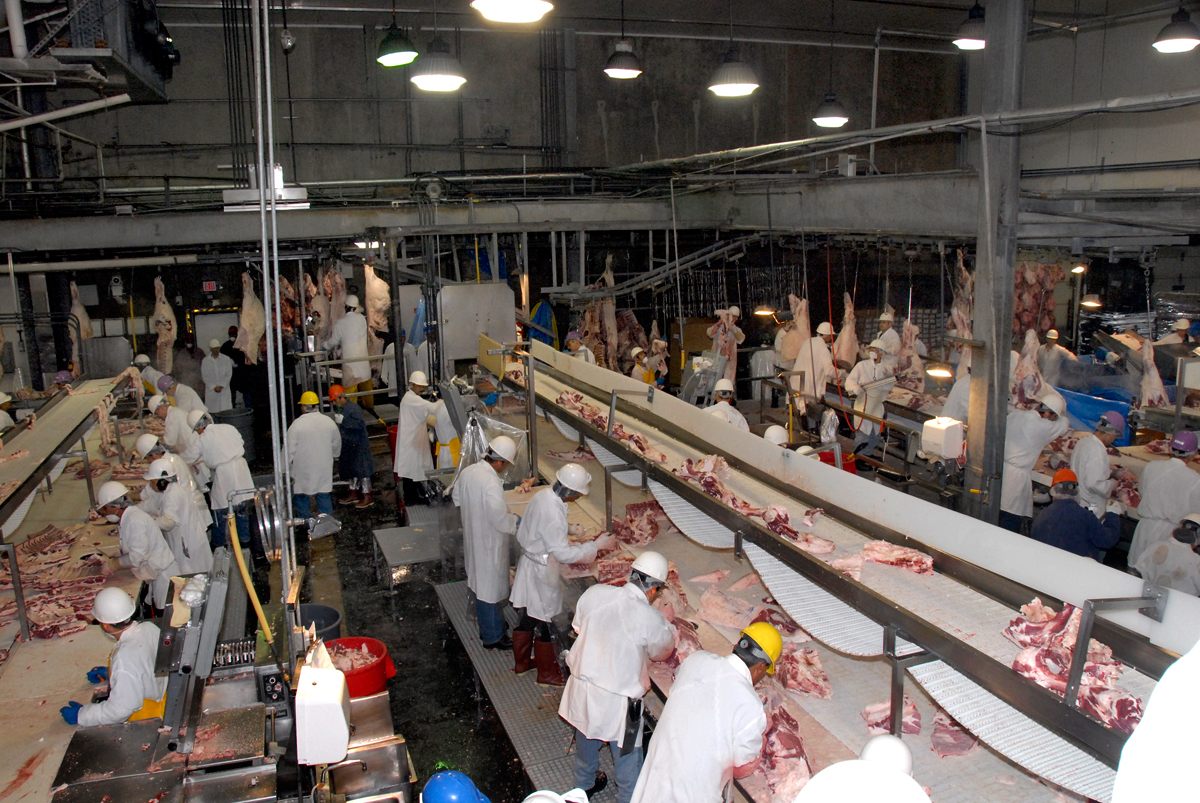
In reality, health experts, scientific data, and basic knowledge of the spread of the coronavirus all point to large meatpacking facilities, where hundreds of workers stand shoulder-to-shoulder on production lines, working at break-neck speeds. Across the U.S., over 13,000 meatpacking workers have been infected with COVID-19; at some plants over one third of the workers have tested positive. As of May 12, 52 meatpacking workers have died.
Some meatpacking plants shut down in late April due to the exploding rate of infections at plants. But that didn’t sit well with profit-hungry meat companies, and with a little help from politicians, including Trump’s order to reopen plants, many are up and running again.
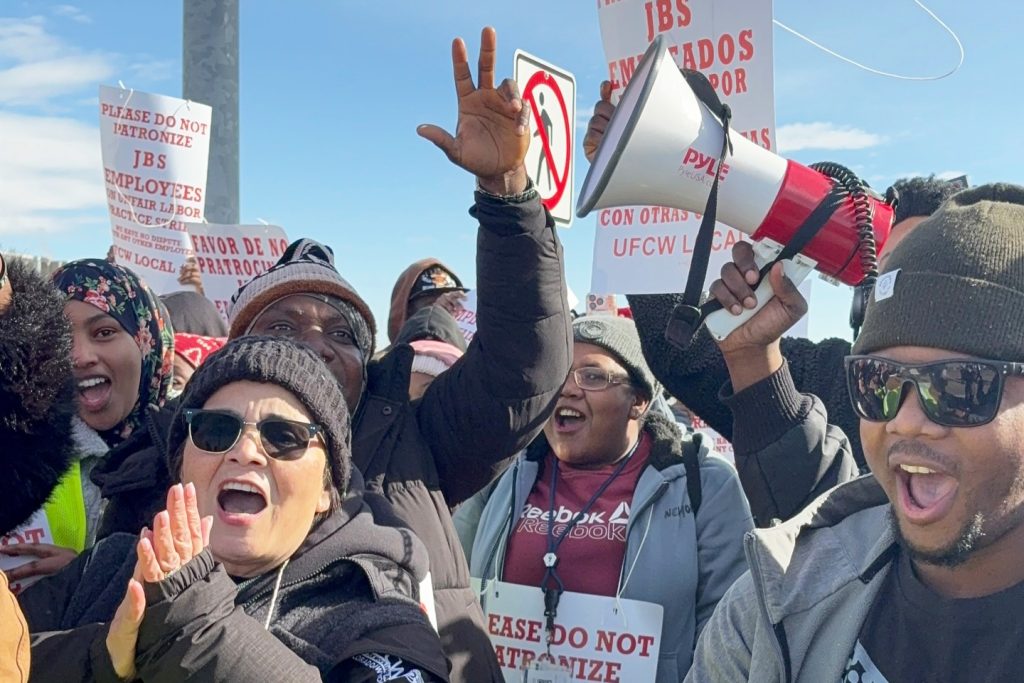
Some politicians are even arguing that the high rates of infections in workers have a silver lining: spreading immunity! There’s no clear evidence of immunity to this virus. The only thing that is spreading is fear, anger, and sickness in the working class. Meatpacking workers know this – it’s why some plants have stayed closed due to workers refusing to return to work.
Politicians are blaming workers for a crisis of their own making. The only silver lining in this situation is that the harder they try the more they’re exposed.
Featured image credit: Alice Welch / USDA