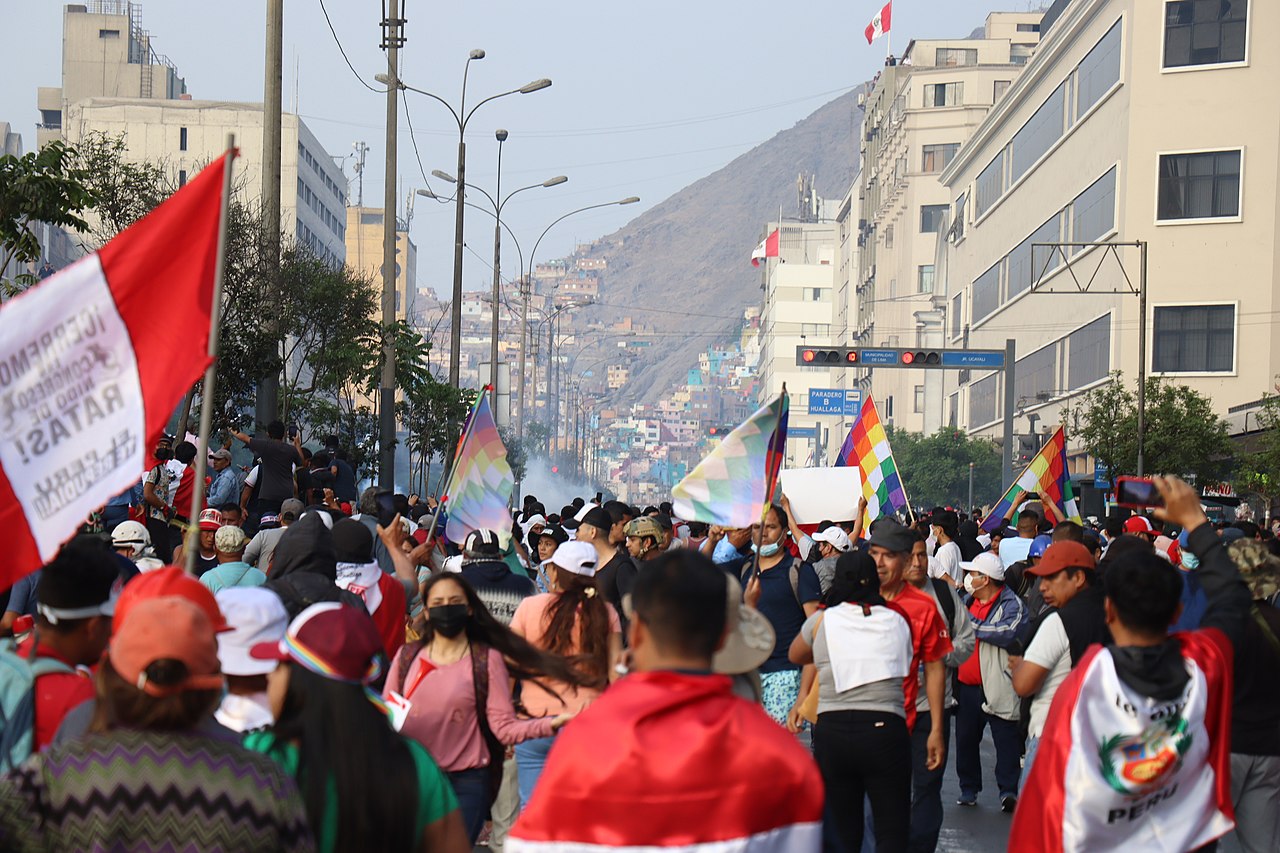
The President of Peru, Dina Boluarte, assumed power last December during a political crisis. She was not elected, but rather appointed by the Peruvian Congress which had essentially driven the previous president, Pedro Castillo, from power. This was a grab for power, driven by the right wing in Congress against the indigenous president Castillo who, though he offered little to no reforms for the poor and continued to allow Peru’s exploitation by international corporations, was the first indigenous president in the country’s history. This power grab by the Congress touched off some of the biggest protests in Peru’s recent history, with tens of thousands of indigenous people from the provinces marching on Lima and demanding a fundamental change to the country’s government.
The protests faced massive repression, with more than 60 people killed by government troops. Today, the Boluarte regime is under investigation for its violence by Peru’s top prosecutor. The accusation is that this repression represents a genocidal act against the indigenous people of Peru.
Since the protests, tensions remain at a high level. The Boluarte regime has invited U.S. troops to come in and train the Peruvian military. The regime has also moved to restrict the autonomy and political rights of indigenous Peruvian communities, though it has so far been blocked. In addition, the regime has raised the age of retirement to 75.
It comes as no surprise that the conflict between the government and the majority of Peruvian people is far from over. Indigenous and peasant organizations, along with trade unions and activist groups have called for a new protest on July 19 to at least remove the Boluarte regime from power, but also to hold new elections, and perhaps to rewrite the Peruvian constitution entirely. In the face of these new protests, the Boluarte government has reacted viciously. In a press conference on June 15, Boluarte asked “How many more deaths do you want?” to the organizers of the protest. The message could not be clearer – this government of the racist political establishment, representing the rich and international capitalism, has made it known that it is willing to use more violence. Violence cannot stop the struggle of the Peruvian majority!
July 19 may be the last day for Boluarte and the beginning of major changes in Peru, especially if the indigenous poor and working majority go beyond simply unseating the president and begin to impose their own solutions to the political and social crisis they face.