
The U.S. drone strike on January 3 that assassinated Iran’s top military general, Qassim Suleimani, along with five other commanders of the Iran-backed militias in Iraq, has led us to the brink of war. Iran launched a careful response – more than a dozen missiles at U.S. bases in Iraq, killing no one and attempting to avoid a major conflict. At the same time, the Iraqi Parliament, in reaction to major violations of its sovereignty by the U.S., has voted to expel U.S. troops from the country. In response, the U.S. has sent six additional B-52 nuclear-capable bombers within striking distance of Iran, along with 4,500 additional troops.
The murder of General Suleimani is an extraordinary act of war, and must be condemned! The equivalent would be an Iranian assassination of the U.S. Army Chief of Staff! This could easily spiral out of control and put the whole world at risk. And the Iranian military’s accidental attack on a commercial jet, which killed 176 people, only underlies the danger of the escalated tensions created by the U.S.
This is just the latest and most extreme episode in a series of provocations against Iran by the U.S. In 2015, a relative peace with Iran was agreed to through a UN-backed nuclear accord. In exchange for lifting many of the economic sanctions the U.S. and its allies had imposed, Iran agreed to limit the amount of nuclear fuel it would process. In 2018, the Trump regime pulled out of this agreement and re-imposed sanctions that further crippled Iran’s economy, restricting tens of billions of dollars in trade, from automobiles to pistachios to oil exports. These sanctions have hurt the Iranian people, especially workers and the poor, as they are denied access to daily necessities and face reduced employment opportunities.
Along with the new sanctions, in 2019 the U.S. sent about 14,000 additional troops to the Persian Gulf region, including 3,500 more to Saudi Arabia, as well as aircraft carriers, missile launch systems, B-52 bombers, and a host of armed Reaper drones, the kind used to assassinate Suleimani.
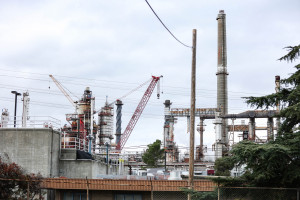
These harsh sanctions have crippled Iran’s economy and provoked military conflicts from drone strikes to attacks on oil tankers and refineries. In December 2019, after rockets were fired at a U.S. military base in Kirkuk, the U.S. retaliated by bombing and killing 25 Iranian-backed Iraqi militia members. The attacks sparked protests by supporters of the militia groups who stormed the U.S. Embassy – the event that led to the U.S. assassination of Suleimani.
Again the U.S. has brought the Middle East region to the brink of a terrifying war. For the people of Iran today, the nightmare of U.S. involvement is a constant threat – economically and militarily.
Outrage over U.S. intervention in Iran is not new. The history of U.S. involvement in Iran began in 1953 with the CIA overthrow of Iran’s democratically elected prime minister, Mohammad Mosaddegh. The U.S. was opposed to Mosaddegh’s plans to nationalize Iran’s British-owned oil fields, which threatened U.S. and European interests throughout the Middle East. The coup left power in the hands of the U.S.-backed Shah, Mohammad Reza Pahlavi.
The Shah’s brutal regime was overthrown by a revolution in 1979, which ended U.S. influence in Iran. Since then, Iran has been able to act more freely in the region, largely independent of U.S. dominance. In addition, while the U.S. ripped apart the Middle East with its wars on Iraq, Afghanistan, Syria, Libya and others, the Iranian regime has grown more influential. The U.S. would like nothing more than to overthrow the regime in Iran, ending its political influence in the region and bringing its vast oil fields under control.
We cannot let the U.S. government think it can get away with carrying out another brutal war against the people of Iran. There is nothing to support in the potential destruction of another country and the people who live there. Ordinary poor and working people in the U.S. have no interest in supporting this senseless brutality. It’s up to us to say NO to any further U.S. military aggression against Iran.
featured image credit: Andrew Caballero-Reynolds/AFP via Getty Images