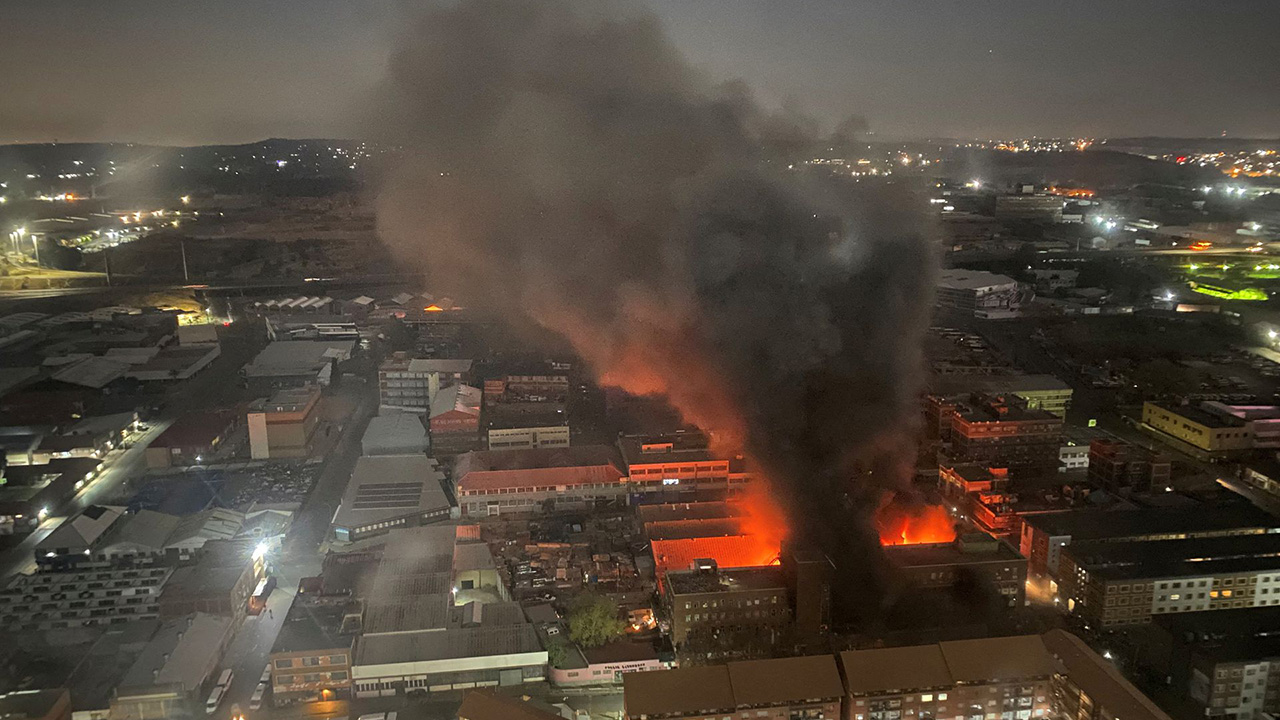
On August 31, a fast-moving blaze spread through a formerly abandoned five-story building in downtown Johannesburg, South Africa. Within minutes, dozens of people were trapped in and above the flames. Some managed to escape the inferno with only burns and broken bones. But at the end of the blaze, at least 74 had died. This fire is the tragic consequence of South Africa’s unique history of apartheid layered on top of the miserable poverty of urban capitalist development found all around the world.
For decades, downtown Johannesburg has been dotted by abandoned and empty office buildings, warehouses and factories that once hummed with economic activity. Unable to afford high rents in other parts of the city, many Black and other non-white South Africans (effectively the entire non-white population) as well as many vulnerable immigrants from Tanzania and Malawi have settled into these empty buildings, converting them over time into informal, illegal residences. Large buildings filled with corrugated tin shacks became mazes of humans in cramped, subdivided quarters without legal electricity or plumbing. Some were taken over or “hijacked” by gangs, who then rent space to desperate people. Conditions are unhealthy, miserable, and dangerous. The city had actually cut water and electric service to the building to discourage more squatting, yet at least 200 families were still living there at the time of the fire.
In these unregulated, impoverished conditions, fires became more common. One resident of the building who was interviewed after the blaze made clear the obvious danger: “The state of the building did indicate that at one point or the other, we will experience something bad. It’s just that we never knew that it would be this bad.”
These conditions developed under the watch of the African National Congress (ANC), the party that people thought would bring prosperity and equality after 1994. Instead, South Africa remains one of the most unequal societies on Earth, and millions of Black and other non-white South Africans remain mired in poverty with high rates of unemployment. It’s true that apartheid was dismantled, but that by itself did not end exploitation and oppressive conditions.
In the case of this tragedy, it seems clear that ANC officials in the city had been warned on numerous occasions about the dangers in the building, but did nothing.
The 74 people who died and the hundreds who are now homeless and have lost everything are victims of an unequal South African society and the unequal world in which we live. This was a completely predictable and avoidable human tragedy.