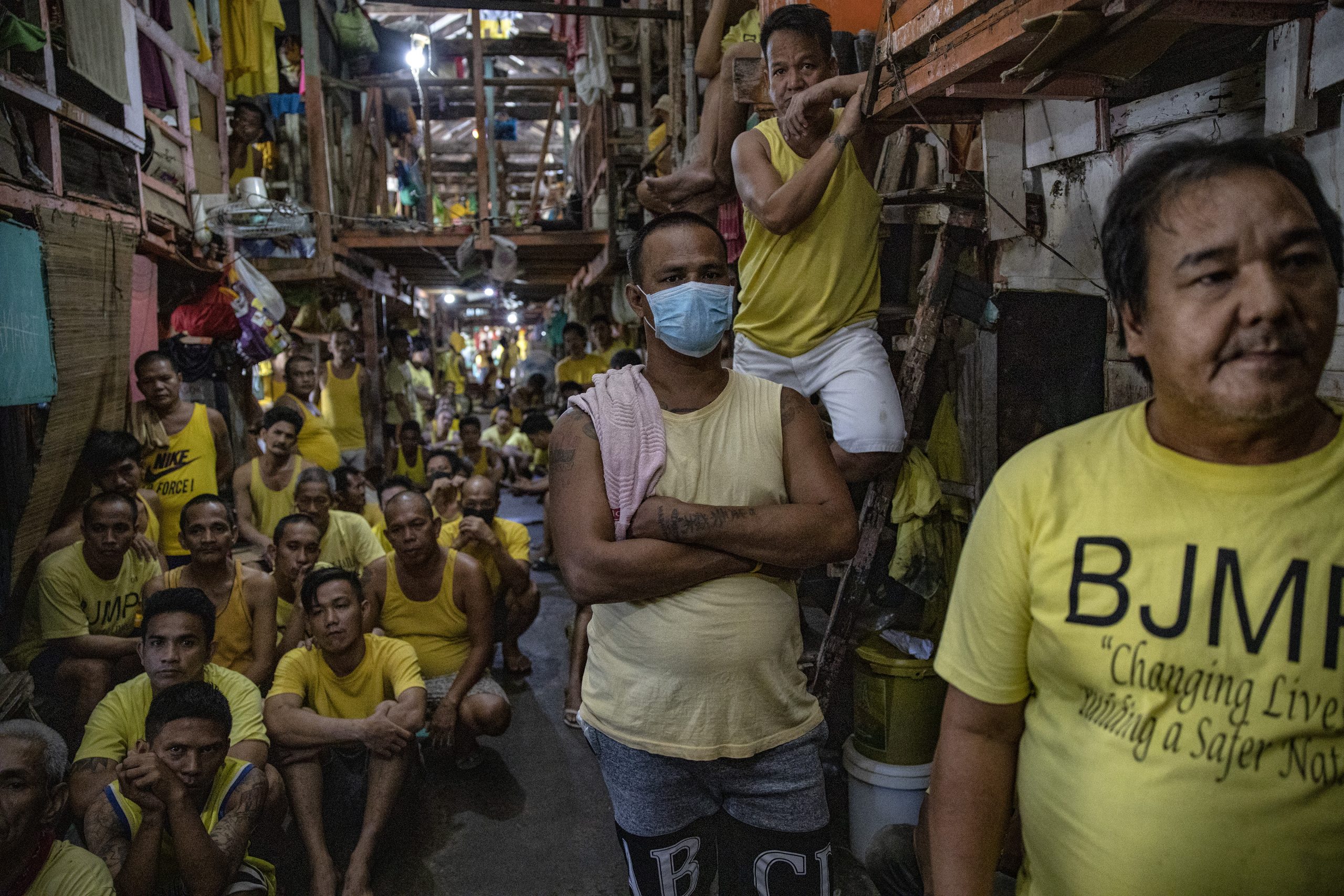
In countries all around the world, prisoners are stuck in dangerously overcrowded detention facilities where physical distancing and self-isolation are essentially impossible. In normal times, prisons are almost always extremely unhygienic, sometimes without soap or basic cleaning supplies.
Now in the context of the COVID-19 pandemic, the overcrowded mass incarceration system is turning out to be a death sentence for those trapped behind bars. But across the world, there is a growing wave of people who refuse to die on their knees. There has been an outbreak of resistance around the world, including the United States.
In Colombia, there was a massive attempt by prisoners to escape one of the country’s largest prisons. In Italy, revolts have rocked 22 prisons throughout the country, in some cases with prisoners totally taking over the facilities or even escaping entirely. In France, prison authorities have reported about 30 incidents of insubordination, most involving inmates refusing to return to crowded cells. In Brazil, as many as 1,000 inmates escaped from a prison in Sao Paulo.
The United States is the prison capital of the world, making up about 5 percent of the world’s population with close to 25 percent of all of the world’s prisoners. The U.S. has the largest prison population in the world. In this context, the COVID-19 pandemic has led to high levels of death throughout the U.S. prison system. In Rikers Island, New York City’s main jail, the infection rate is just under 2.8 percent, nearly 10 times higher than the rate in New York State. Some have claimed that as many as 100,000 U.S. prisoners could die from COVID-19.
Throughout the U.S., there have been at least 38 prisoner-led protests documented over the past few weeks ranging from petitions by people detained in an ICE detention center in Massachusetts, to hunger strikes in a New Jersey ICE detention center , to people refusing to follow guards’ orders at an ICE processing center in Louisiana. Demands have ranged anywhere from basic hygienic protections to immediate release from detention. In some cases, prisoners have actually stopped demanding their liberation from detention and started taking their liberation through collective escapes, such as the 9 women in South Dakota. After 12 inmates and 14 staff members tested positive for COVID-19 at the Lansing Correction Facility in Kansas, as many as 50 inmates were involved in taking over the cell block to demand basic protections.
The resistance has spread to the other side of the prison walls. In all of these cases, family members and supporters of prisoners have shown up and demanded their loved ones’ right to live. People have used tactics such as vigils, using their cars to block traffic in front of the prison and organizing “phone blasts” to disrupt the functioning of the prison’s communication infrastructure.
From Iran to Germany, California to New Jersey, the response of some government officials has been to release some “low level offenders.” Even the head of the United Nations, Michelle Bachelet, has called on governments around the world to “work quickly to reduce the number of people in detention.” If it makes sense to release these people at this time, why were these people locked up in the first place? But it is a fantasy to think that any of these modest reductions in prison populations could somehow make prisons into safe environments with respect to the COVID-19 pandemic or anything else.
Diseases like COVID-19 simply create a situation where incarceration for the most minor infraction could literally mean a death sentence. The revolt of prisoners is highlighting the fact that incarceration itself will always be a threat to their lives.
Featured image credit: Ezra Acayan / AFP