Dossier No. 37, June 26, 2025; this “dossier” is a collection of short articles by the New Anticapitalist Party-Revolutionaries (NPA-R) in France (translated from French)
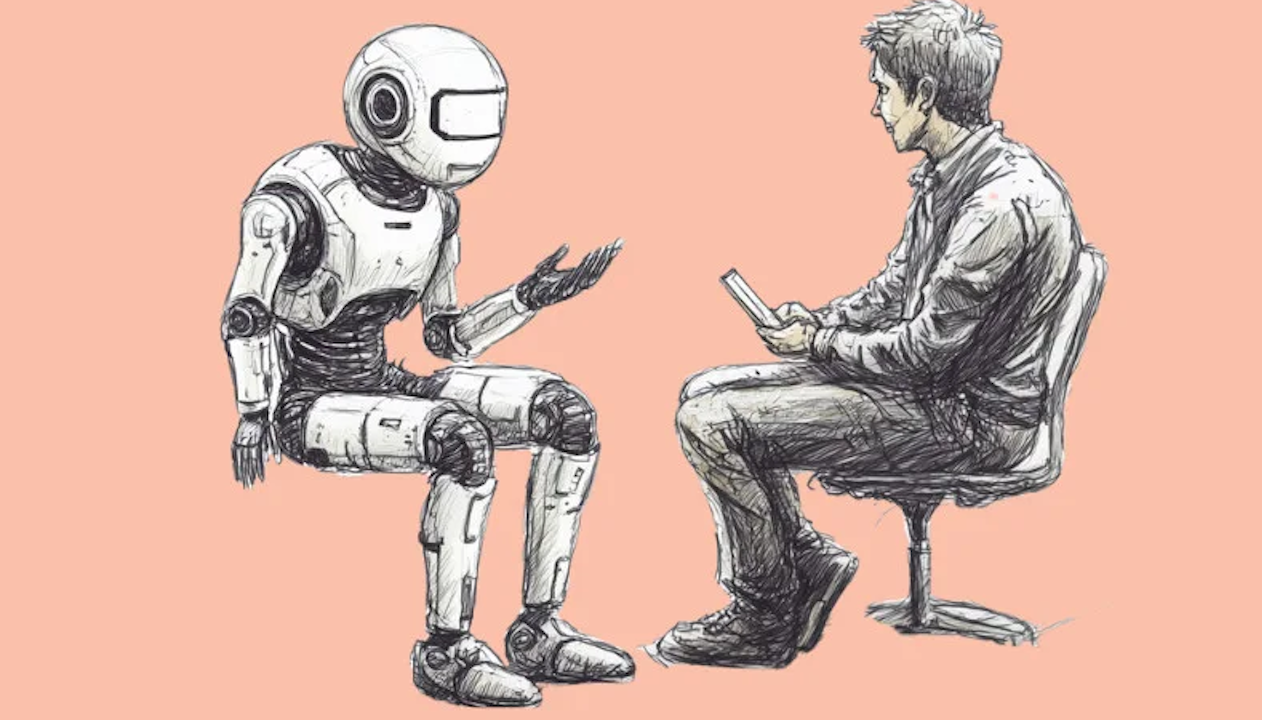
Although capitalists are trying to automate it, training artificial intelligence still requires enormous amounts of human labor, subject to particularly precarious conditions. Take the example of a self-driving car, which must be able to recognize signs and distinguish pedestrians. It must be provided with millions of images of road situations, “annotated” with useful content to train the program.
We all do some of this annotation work: when a Captcha on a website asks us to do a robot’s job (such as recognizing a red light) to prove that we are not one, it is not so much for IT security as it is to train robots.
Automation based on exploitation
But most of the annotation work is still done by “click workers” hired by various platforms such as Mechanical Turk1, created by Amazon in 2005. Client companies send repetitive tasks to be performed (such as circling “stop” signs in images) and the platform recruits workers who are paid a few cents for each micro-task completed.
This thriving sector now includes many companies, most of which are based in Europe or the United States and recruit in the Philippines, Kenya, or Madagascar, countries where they can hire low-cost, educated workers (who cannot find other jobs) to ensure high-quality annotation. To maximize profits, pay is aligned with each country’s minimum wage. An hour of annotation is billed at about ten times what employees are paid, who work up to twelve hours a day and feel like “robots training robots.”2
And yet! Even in this particularly precarious sector, Mechanical Turk workers have managed to forge bonds of solidarity via social media, organizing themselves and resisting downward pressure on pay. This is despite Amazon’s crackdown, which involves deleting the accounts of those who protest too loudly.
Annotating, training, aligning: work at every stage
Once the data has been annotated, the AI still needs to be trained using the right approach: sign recognition does not rely on the same techniques as machine translation. Engineers remain indispensable for this, even though research is underway to automate part of the process using artificial intelligence itself.
The final phase is alignment. Once ChatGPT had been trained on a large portion of the internet, it reflected society’s prejudices, and it had to be taught not to generate violent, racist, or sexist content. To do this, someone had to “annotate” what was problematic and what was not. This activity was outsourced to an American company paying Kenyan workers less than $2 an hour. Some report lasting trauma from exposure to this content.
From one end of the chain to the other, AI therefore relies on a great deal of human labor. It is far from being a technology created by a visionary boss or a handful of overpaid engineers!
Martin Castillan
- The name comes from the “Mechanical Turk,” a supposedly mechanical chess player invented by an engineer at the Court of Vienna in the 18th century. In reality, it was a human hidden under the table who guided the movement of the pieces. The name chosen by Amazon is therefore particularly relevant and cynical! ↩︎
- See the excellent Cash Investigation program “Has artificial intelligence already taken control of our daily lives?” : https://www.youtube.com/watch?v=JcyjQzNROOw {in French} ↩︎