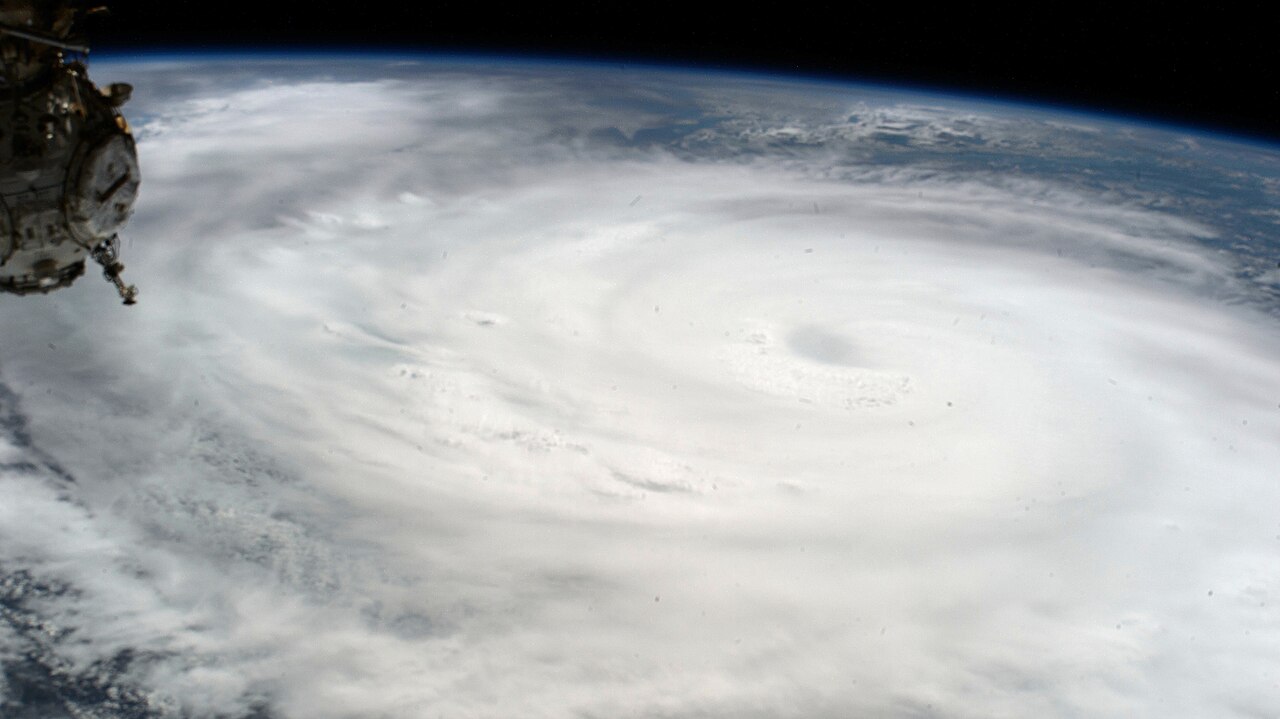
When we think of hurricanes, we usually think of them over the Caribbean Sea and the Gulf of Mexico, affecting coastal areas of Central America, Mexico, and states like Louisiana or Florida. Last week Hurricane Helene did hit the Gulf and West Coast of Florida with powerful winds and a massive storm surge, sending as much as 15 feet of salt water into people’s homes. It was bad even by Florida’s standards, as small coastal communities like Cedar Key, Keaton Beach and others were devastated. But while most storms lose power quickly once over land, Helene continued to dump huge amounts of rain through Georgia, Tennessee, and South and North Carolina. Floodwaters overflowed rivers and engulfed entire towns in those states. Asheville, North Carolina, a popular tourist destination nearly 500 miles from where the storm first touched land, has been almost completely destroyed by floodwaters, and people there have been cutoff from food, water, basic sanitation, and even cell phone service. At least 183 are dead, at least one-third of those from North Carolina, and hundreds of others remain missing.
Hurricane season was predicted to be hard-hitting this year. Helene marks the eighth Category 4 or higher hurricane to make landfall in the U.S. in the past eight years, equivalent to the total from all 57 years before that! But despite predictions from climate scientists, in no way were working people, local governments, or entire regions prepared for this level of destruction.
Since the Industrial Revolution, fossil fuel companies have found every way to build a global economy based on burning coal, oil, and gas. The carbon burnt from these fuels acts as a blanket around our atmosphere, trapping heat and warming the earth. Last year marked the hottest year ever on record, and this year is likely to match or surpass that. Currently, the world is on track to pass 1.5 degrees Celsius warming above pre-industrial levels, and the only way we can prevent this is by urgent action now. 2023 marked 1.45 degrees Celsius.
For the past 50 years, over 90% of the warming has been in the oceans. Every day for the past year, ocean temperatures have broken heat records. In 2023, ocean temperatures were .25 degrees Celsius warmer—usually the type of warming that happens over decades. As oceans warm, storms gather more water, supercharging them with larger quantities to dump over land. Forecasters vastly underestimated how much rainfall would be dumped by Helene. In some areas in western NC, almost 30 inches fell. There were at least 11 landslides in North Carolina alone.
Hotter oceans also mean storms are more likely to intensify more suddenly, making it harder to predict the danger of storms and give enough time for evacuations. Helene was only a category 1 hurricane when it left Mexico’s Yucatan Peninsula and went over the hot waters of the Gulf, where water temperatures have been at an all-time high for nearly one year. It sped up and intensified dramatically, becoming a category 4 in just less than 24 hours.
With global heating, ocean levels are rising due to melting ice caps. The Florida coastline is eight inches higher than 70 years ago. When a storm surge comes, it comes in much higher than before. The storm surge that Helene brought in was 15 feet! When Florida Governor Ron DeSantis, whose Republican Party still denies the reality of climate change, surveyed the damage where Helene made landfall, even he couldn’t deny the devastation: “almost every home was destroyed, or the vast majority, and some totally obliterated.”
People in Florida, accustomed to preparing for dangerous storms, scrambled to prepare and in many cases evacuate. While there was massive coastal damage, only a few deaths occurred there. But in other southeastern and east coast states, nobody was prepared for what was coming.
In the context of global heating, it truly is only a matter of time before extreme weather breaks infrastructure that was not designed for these conditions. The majority of dams in the United States are old, needing repairs, and were simply built before safety standards were what they are today. About one in six U.S. dams has a high hazard potential of failure.
The cost to repair homes and infrastructure will be insurmountable for far too many people, as home insurance does not cover flood damage. In disaster-prone regions like Florida, insurance companies have stopped selling new policies in high-risk areas. With each superstorm, companies increase their premiums or leave the market as profits become harder to come by with such high and frequent payouts. Some insurance companies go out of business, such as those after Hurricane Irma, where residents were forced to foot the bill and defaulted on their mortgages due to cost of repairs.
This tragedy could have been avoided. The heating of our atmosphere and our oceans is a direct effect of the fossil fuel industry, which is in turn a key part of the capitalist global economy. Scientists for some of the largest fossil fuel companies admitted internally in the 1950s through the 1970s that they knew how destructive fossil fuels were, and that their continued use would cause “severe” damage to our environment. Yet the companies continued to produce and promote fossil fuels as they continued to pursue ever greater profits. And in recent decades, other forces in capitalism, namely real estate developers, highway construction companies, and auto interests have encouraged people to move south and west, where they are promised lower costs of living, putting millions directly into the path of heat, wildfires and storms of the worsening climate catastrophe.
The capitalist political economy has done and continues to do whatever it takes to make profit. Millions worldwide are today facing the tragic consequences of the fossil fuel companies nearly suicidal pursuit of that profit. We cannot continue down this path. But they won’t stop. Neither will the politicians who work for them.
It’s up to us. We have limited time, and things are getting worse. We need to organize our forces, and we need to get rid of the capitalist system that is causing so much human suffering.