While politicians in the United States are always talking about how our society is based on true democracy and “consent of the governed,” the reality couldn’t be further from the truth. In fact, suppression of the Black vote has been a consistent feature of the U.S. political system since the founding of the country. Whenever voting rights have expanded for Black people, it has been because they have organized and risked their lives to fight for these changes.
During the formation of the country, many of the so-called Founding Fathers owned slaves and they all shared the view that their new government should exist to represent the interests of the wealthy. One way to ensure this was by limiting voting rights to powerful white men. As such, state laws in all the original 13 states ensured that only white male landowners or male owners of property could vote.
This initial policy of voter suppression was the status quo for decades until slavery was dismantled during and after the Civil War (1861-1865). The rebellion of Black slaves throughout the South and their joining the ranks of the Union army proved to be decisive in the victory of the Union and ending slavery. The determination of slaves to free themselves led to the expansion of voting rights enshrined in the Constitution in 1864—albeit for men only. Now men had the right to vote no matter their race or their former status as a slave.
These transformational changes to destroy the political and economic power of slaveowners were at the core of the Reconstruction period. This was a period after the Civil War in which federal Union troops maintained a military occupation of the South in order to enforce the end of slavery and the political power of the emerging capitalist class of the North against the former slave owners. During this period, the rights of former slaves to vote and run for political office were defended by the federal government, which helped former slaves and their allies build much more democratic and representative state governments than had ever existed within the United States. For example, at the height of Reconstruction just several years after slavery ended, there were approximately 1,500 Black elected officials throughout the nation. However, in 1877, the Northern politicians made a deal with the Southern ruling class of former slaveowners that they could reassert their power over the South as long as they did not try to secede from the U.S. again and challenge the dominance of capitalism.
As the Northern army pulled out of the South, former slaveowners began to regain political power in the South and reestablish white supremacist policies. The voting rights that Black men had gained after the Civil War were eroded and only existed on paper. This ushered in the “Jim Crow” period which developed and enforced brutal racial inequality and segregation in the South. The Black vote was suppressed again during this period through a variety of new laws and racist intimidation from the police and especially vigilante white supremacist groups such as the Ku Klux Klan. New laws such as grandfather clauses, poll taxes, and literacy tests were created which intentionally targeted poor Black people by creating requirements that they could not meet and thus suppress their vote. Those who tried to vote were often intimidated, beaten, or killed. For example, in Alabama in 1901, there were 180,000 Black men eligible to vote in Alabama. By 1903, there were fewer than 3,000 Black men eligible to vote in the state.
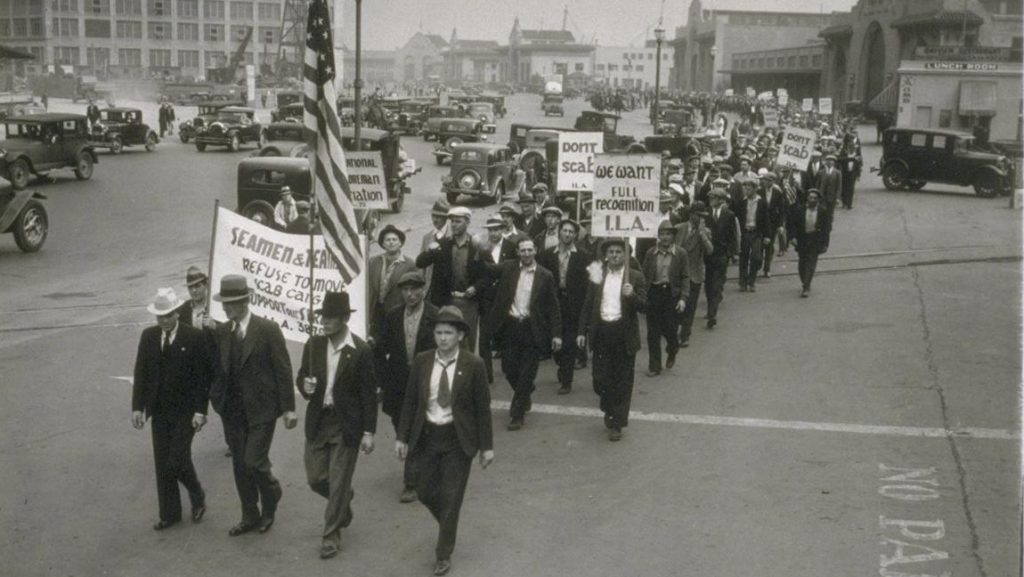
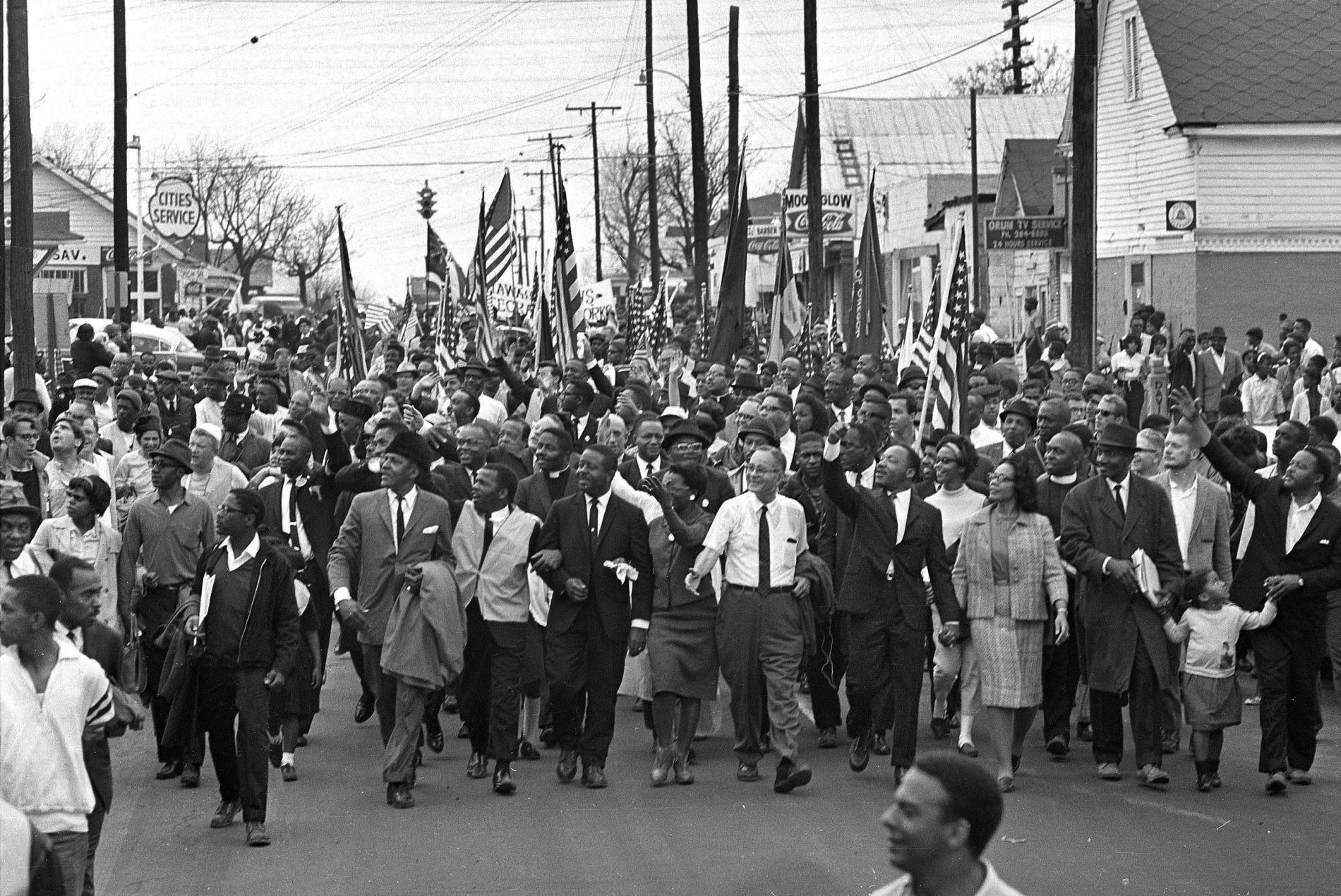
The Jim Crow period would last until the 1950s and 1960s when the Civil Rights Movement reached its high point. Thousands of Black activists built a mass movement throughout the South to challenge segregationist policies, and to demand federal voting rights legislation that would protect the right to vote for all Black people. This movement forced the government to pass the Voting Rights Act in 1965, which was meant to ensure that state governments could not carry out racial discrimination in voting.
However, similar to how the voting rights gains of the Civil War were reversed by the racist government practices that created the Jim Crow laws, similar reversals of the Voting Rights Act have occurred. In 2013, a majority on the Supreme Court ruled in Shelby County vs. Holder that most of the provisions of the Voting Rights Act were unconstitutional. This has allowed state governments to begin to create new voting laws designed to suppress the vote of Blacks and other racial minorities. In 2021 alone, nineteen states passed 34 laws making it more difficult to vote, and more than 440 bills restricting voting access were introduced in 49 states!
Black History Month reminds us, as we are faced with this current situation of heightened voter suppression, to remember the examples of how voting rights have been won and expanded in the past. It has only been when oppressed people have organized themselves and relied on their own forces to confront the system directly that things have changed. We can’t depend on politicians to do it for us.