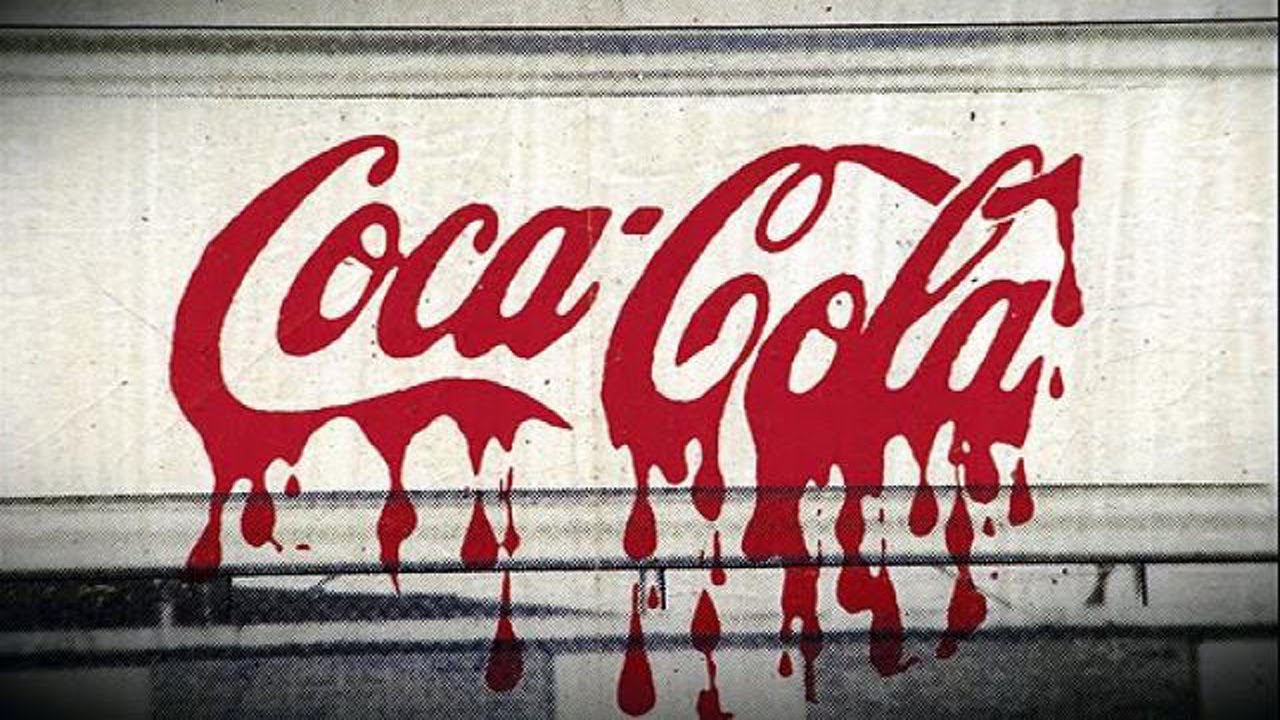
On July 20, 2001, 20 years ago today, a group of unions filed a lawsuit against the Coca Cola company, accusing Coca Cola’s Colombian subsidiary and business affiliates of using paramilitary death squads to murder, torture, kidnap and threaten union leaders at the company’s bottling plants. The suit was linked to the murder of union leader Isidro Segundo Gil in 1996 by hired thugs. The murder occurred not long after the owner of a Coca Cola bottling plant in Carepa, Antioquia, Richard Kirby (a businessman from Miami), said that he would do anything necessary to kill and disappear workers that tried to join trade unions.
The right-wing squads are widely held to be responsible for carrying out the assassinations of Colombian union activists. However, those who order the killings have managed to keep their doings under wraps. The Sinaltrainal v. Coca-Cola suit was the first to link a North American multinational corporation directly to this kind of atrocity. Understanding this link is important for working people in the U.S. to grasp how multinational corporations use the U.S. government to coerce workers in other countries into inhumane working conditions.
According to the complaint here is what happened: On December 5, 1996, a right-wing paramilitary squad of the AUC (United Self-Defenses of Colombia, a far-right paramilitary and drug trafficking group active from 1997 to 2006) showed up at the gate of the Coke bottling plant in Carepa at 8:30 in the morning. Segundo Gil, who was a member of the union’s executive board, walked outside to find out what they wanted. The paramilitaries shot him dead. Following the assassination they kidnapped another union leader, but this man escaped, and fled to Bogotá, the capital. At 8:00 p.m, the same military group broke into the union’s offices, destroyed their equipment, and set the entire building on fire along with all the union’s records.
On the next day, this paramilitary band went inside the bottling plant, called the workers together for a meeting and told them they had until 4:00 p.m. to resign from the union. Edgar Paez, Gil’s coworker, remembers that they said, “if they didn’t resign, the same thing would happen to them that happened to Gil — they would be killed.” All the union members resigned, fearing for their lives. Some workers quit their jobs entirely. This was not the first time that union leaders at the Coca Cola company were killed or threatened in Colombia. In 1994, José David and Luis Granado were killed in Carepa in another episode of paramilitaries telling union activists: quit the union or die.
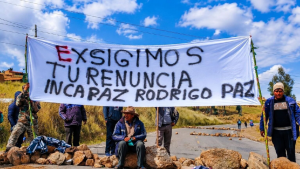
Today, Ivan Duque, President of Colombia, the current loyal representative of the rich Colombian business owners and multinational corporations like Coca Cola, is currently using the power of the military, along with ESMAD (The “Mobil Anti-Disturbance Squadron”) against the organizations of workers, indigenous people and the youth of Colombia in their fight for dignity and a decent living. ESMAD itself was created with the backing of President Bill Clinton in 1999, just as the assassination and union busting was taking place at the bottling plant in Carepa as part of a military-assistance program called “Plan Colombia.” The U.S. government claimed the plan was put in place to fight the FARC (Revolutionary Armed Forces of Colombia) and drug cartels (part of the U.S.’s “war on drugs”). But in reality, this is a war against workers who are organizing and fighting for a better life, be it on sugar or banana plantations, or in factories.
Today under President Biden, the U.S. government is funding the Colombian government with more U.S. dollars than ever before, in spite of the outrage against the murders and disappearances of the organizers in the streets under President Duque’s regime. To date in 2021 the U.S. has spent $118 million in funding out of an appropriation of over $400 million. Just this July, Congress agreed to increase the amount allocated to $461 million in aid for Colombia, which is a little more than the $453 million requested by the Biden administration. But due to the pressure felt in Congress by popular outrage against the Duque regime’s violence, the funds for the National Police will only be transferred if the State Department certifies that Colombian authorities are “effectively investigating and punishing human rights violations committed by the security forces.” But it is the very same people who helped arrange for the paramilitary killings of union activists in order to protect corporate profits that will be the ones to certify that they are “effectively investigating and punishing human rights violations.”
These token restrictions to U.S. funding are meaningless, and are not intended to protect workers’ rights. The future is in the hands of workers who have mobilized to fight this rotten regime, and in the hands of the workers here in the U.S. who understand that the U.S. “foreign aid” packages are not aid to help working people, but to reinforce a regime that keeps wages low and profits flowing to U.S. capitalists. These are our tax dollars being used against the Colombian workers, and also against workers here, as the purpose of the funds is to keep wages low in other countries, which in turn helps keep wages down in the U.S. too. When jobs on U.S. soil can be easily outsourced to poor countries, U.S. workers are presented with the usual threat from their bosses: “accept these horrible conditions and low wages, or we’ll outsource your jobs to other countries.”
The suit 20 years ago publicized Coca Cola’s crimes, another piece of evidence showing who the U.S. government really serves – Wall Street and the giant corporations that rule the world.
Watch the documentary The Coca Cola Case (free streaming) about the murder of labor activists and the “Stop Killer Coke!” campaign.