
Where does this practice come from that allows a customer to decide on the spot what a worker should be paid, and allows the employer to pay as little as $2.13 per hour? The United States is one of the only countries in the world that allows businesses to put the responsibility to pay workers a living wage on customers.
This custom originated in Europe, where aristocrats gave a bonus to servants they favored – a master-serf practice that went back to the Middle Ages. It was a habit that in early U.S. history was blamed for encouraging subservience and degrading America’s supposedly democratic, anti-aristocratic ethic.
After the Civil War, white business owners were looking for ways to continue to super-exploit Black labor. They instituted the practice of paying Black workers “tips” instead of wages in order to continue to reap the benefit of unpaid Black labor. Tipping became the only source of income in areas of labor where the majority of the workforce was Black. This was most evident in the hospitality industry — restaurants and hotels. The Pullman train company tried to impose this system as well, but the opposition of the union of the Black porters, led by A. Philip Randolph, was too strong. They fought for higher wages and won, with tips being additional rather than the source of their living. In restaurants, however, workers who were mostly women were not so organized, and tips as wages remained the norm.
When Franklin Roosevelt signed the nation’s first minimum wage into law, it left restaurant workers out. In 1966, following the height of the Civil Rights Movement, the first federal minimum wage was established for these workers, far below the minimum for other workers. The consequences of this are that many workers in hospitality not only can’t make ends meet, but also are subjected to the humiliation of being at the mercy of racists, sexists and those with other prejudices.
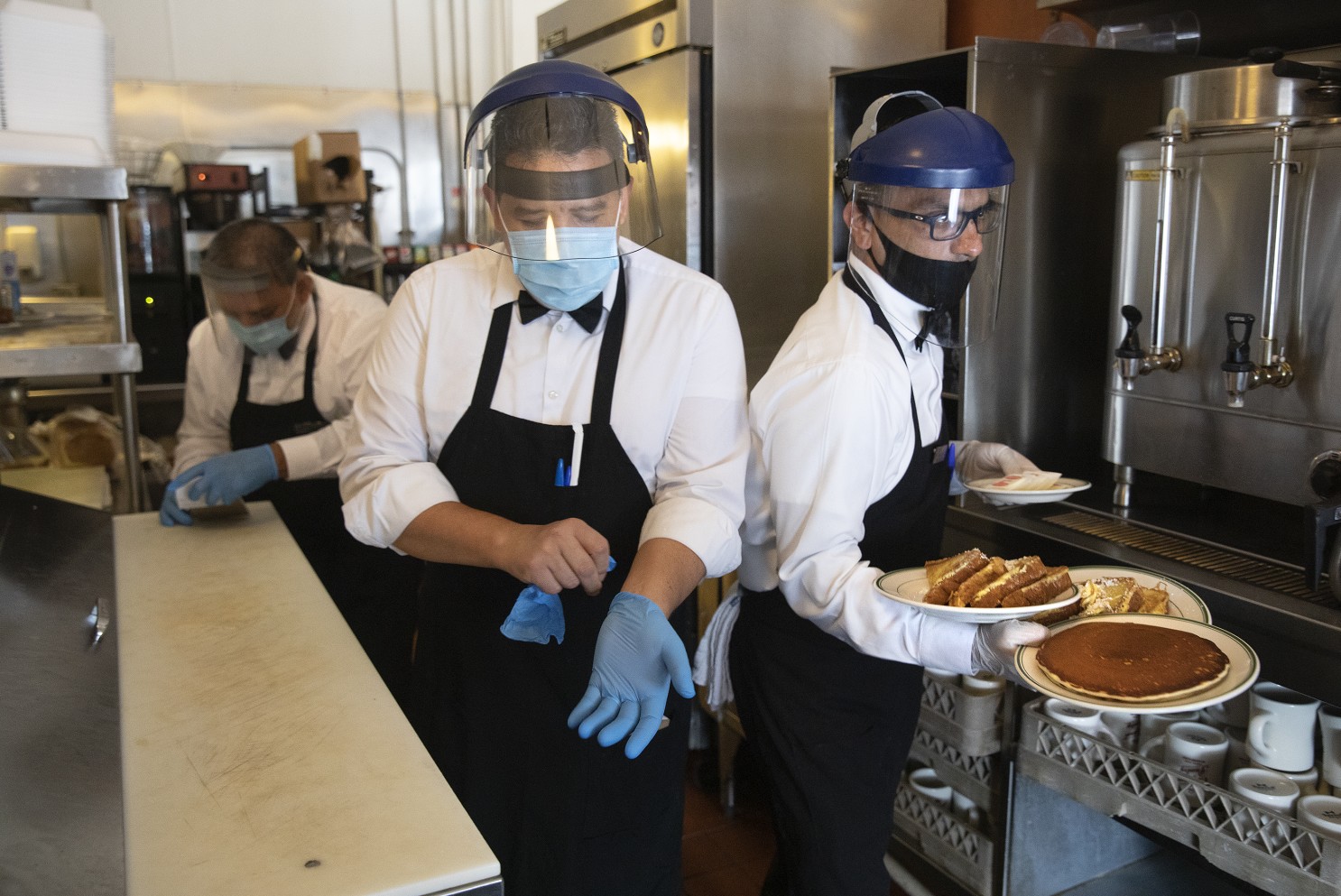
Today tipping perpetuates a legacy of racism, sexism and overall degradation, allowing customers to pressure workers to perform in whatever demeaning manner they see fit. Under the pandemic, Black workers have been more likely to be punished by angry customers for attempting to protect themselves while they work by enforcing mask-wearing than other workers. According Michelle Alexander in her recent New York Times article, 73 percent of Black workers reported that their tips decreased due to enforcing Covid-19 safety measures, compared to 62 percent of all workers.
No worker of any race or gender should have their livelihood subjected to pleasing the whims of individual clients. This racist legacy should be abolished, and living wages should be guaranteed for all labor.