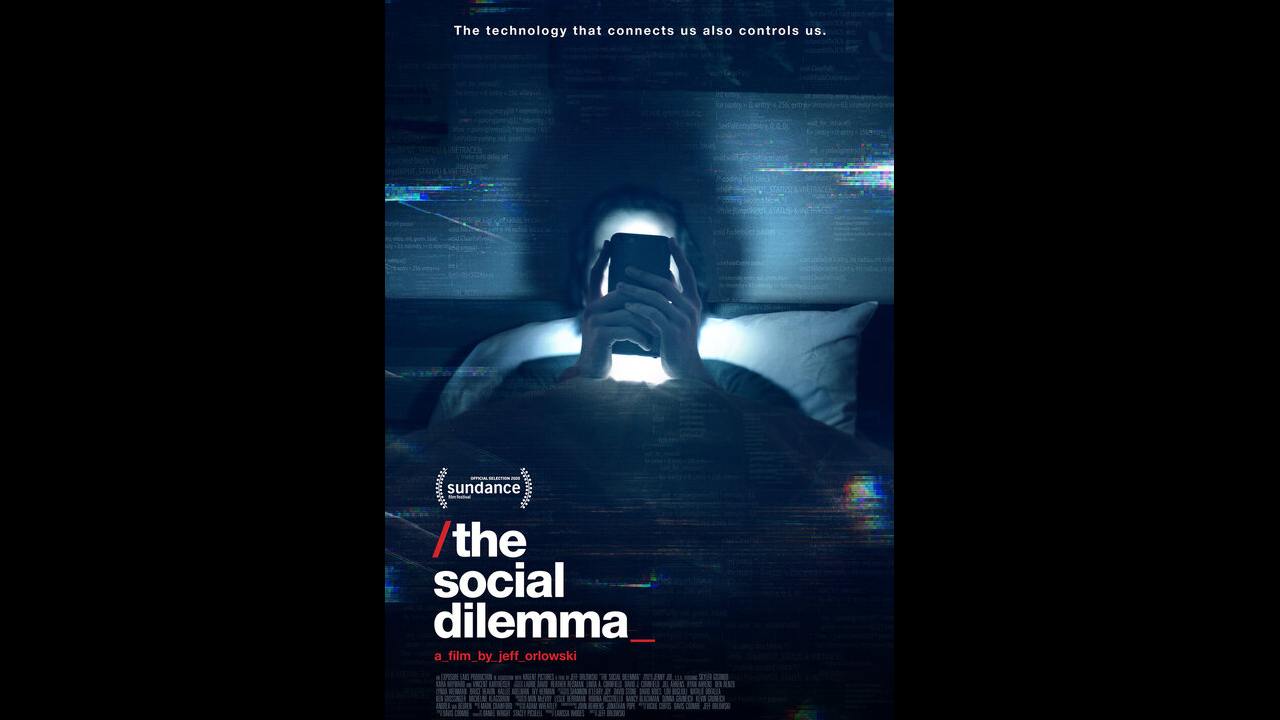
The Social Dilemma attempts to explain the global phenomena that is social media, describing it as one of the most important tools for shaping society. It rightly points out the negative psychological consequences of these technologies. After all, they use sophisticated algorithms to addict us to their platforms, constantly bombarding us with ads, selective news stories, and carefully crafted stories of what others’ lives look like. However, it seems to assign social media an Illuminati-like role – as though a small group of individuals is pulling the strings and shaping our political views and personal habits through apps like Facebook and Instagram. In doing this, it seems to underestimate the vital context in which we find this technology: capitalism.
Like the movie explains, it has been shown that social media has a negative impact on us. Social media use has been tied to increased mental health issues and suicide rates. It can especially be dangerous for teenagers, who can never meet up to the ideals created through Instagram filters and Photoshop. But not situating this technology in the system in which it was created confuses our understanding of what the phenomena of social media is. When you realize the same people who own and control all of the resources of this society are the ones who own and control the news outlets, TV stations, and social media platforms, it makes more sense. Of course social media is going to be structured for the greatest amount of engagement. If an app can make itself more addictive, it will. These platforms are structured, like everything else in our society, to generate profit. And what is structured to make profit, is rarely what’s in our best interest.
The movie also rightly questions the chaos and destitution that is in our society today. After all, inequality is getting worse, suicide rates are ever increasing, and we just have to look at the latest U.S. election results to see that people are more polarized than ever. At one point the main protagonist, co-founder of the Center for Humane Technology, Tristan Harris, talks as though he’s discovered the true underlying problem behind all the madness. His answer though, is not the inherently exploitative economic system we live under that is buttressed by racism, sexism, and nationalism. Nor is it the profit drive that pushes tech companies to increase ad revenues by maximizing user engagement (regardless of emotional impact), nor the advertisers who employ increasingly complicated psychological techniques to more efficiently capture consumer interest. Instead he assigns this causative role to social media. He blames it for the polarization of our politics, dampening the moral fabric of our society, leading us all down a dangerous road to societal collapse. In this analysis, he gives far too much importance to his role and the role of other tech employees. As though their positions as the addictive algorithm creators and engaging interface designers are to blame for the negative social ramifications of social media. It’s an individualistic and self-important response that puts the burden on techies, rather than a system at large that is driving people to social despair. Techies aren’t truly the problem, and they alone can’t fix it.
Another person in the film, older than the majority of the interviewees who are presumably in their twenties and thirties, brings up that social media is just the newest form of popular media. When television came out, some thought it would revolutionize the world. And in some ways it did – more widespread dissemination of popular culture, news of events happening across the world, and targeted advertising. In many ways, social media is just the newest step, though it is clearly more insidious. It’s an incredibly effective method for spreading news, ideas, and information. It’s capable of tapping into parts of our psyches and creating addictions. Its algorithms know our interests, fears, likes, dislikes, and uses these to advertise in more focused ways – whether for political purposes or to sell us a product. Social media also provides social connectivity never imagined at the beginning of the century, which has both its upsides and downsides. But like television, it hasn’t fundamentally changed the functioning of our society. There are still a few people at the top, while the rest of us toil below, working ourselves to death in increasingly isolated ways. So, we’re also primed for addiction to these platforms that let us escape our lives. We can be whoever we want on social media. We can connect with people virtually, avoiding social isolation or substituting it for real life connections.
Some of this is discussed in The Social Dilemma. And the movie is well worth seeing. The interviewees also rightly point out that these free technologies are never truly free. While we don’t pay to use them, they in fact profit off of selling our data. They data mine our habits and likes, selling this information to the same advertisers that then pop up on our feeds. It’s a recurring cycle, leading us to the question: who really profits from social media?